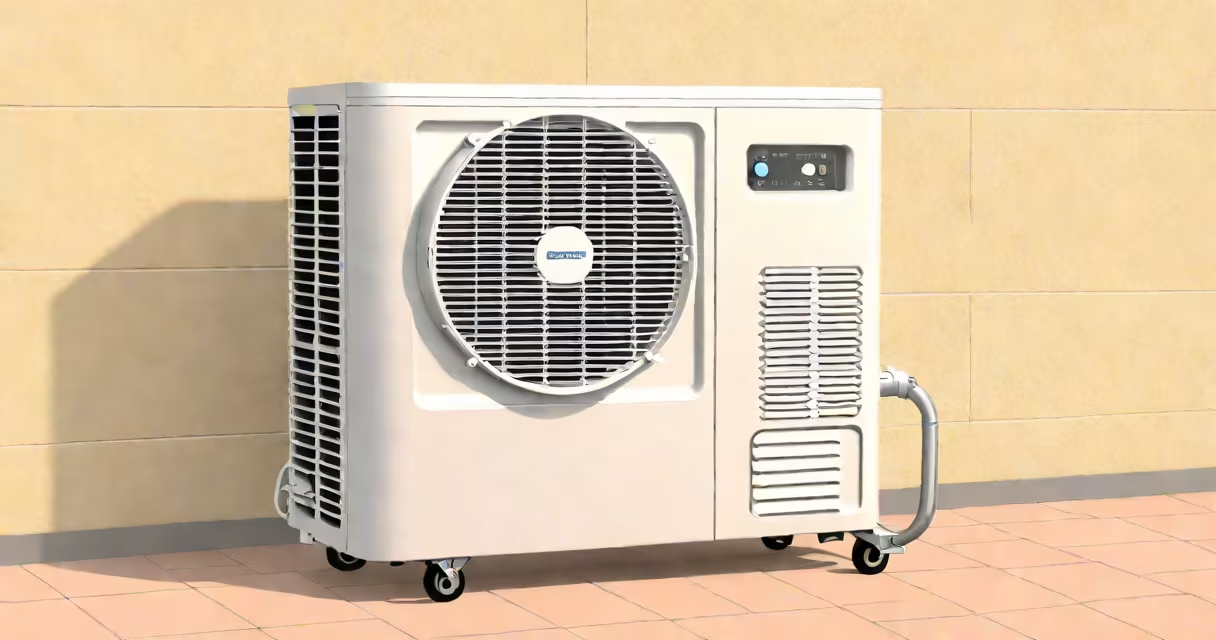
A 12000 BTU air conditioner aims to cool spaces between 500 and 600 square feet under typical indoor conditions. This rating reflects the unit's cooling output measured in British Thermal Units per hour, indicating how much heat it can remove from a room in one hour.
The 12000 BTU specification is a standard measure used by manufacturers to indicate cooling capacity. It is not a direct conversion to square footage, but rather a benchmark for matching equipment to room size. A unit rated at 12000 BTU can handle moderate heat loads in a well-insulated space of around 550 square feet.
For context, the U.S. Department of Energy recommends roughly 20 BTUs per square foot for cooling. Applying that rule to a 550 sq ft room gives 11,000 BTUs, which aligns closely with the 12000 BTU rating. This means the unit is properly sized for average residential rooms such as living rooms, master bedrooms, or small home offices.
Cooling capacity depends on the rate at which an air conditioner removes heat. A 12000 BTU unit removes 12,000 British Thermal Units of heat energy per hour. This is equivalent to cooling about 1.5 gallons of water from 60°F to boiling temperature in one hour.
However, actual performance varies based on environmental factors. A room with large windows facing west may absorb more solar heat, increasing the load beyond what a 12000 BTU unit can manage efficiently. Similarly, high humidity levels reduce cooling effectiveness because the system must work harder to dehumidify the air.
For example, a 600 sq ft bedroom with two south-facing windows and poor attic insulation may require a 14,000 BTU unit to maintain comfort during summer peak hours. In contrast, a 500 sq ft room with minimal sun exposure and good insulation can be cooled effectively with a 12000 BTU model.
Room size is only one factor. Insulation quality, ceiling height, number of occupants, and local climate all impact how well a 12000 BTU unit performs. The U.S. Environmental Protection Agency notes that poorly insulated homes can lose up to 30% of cooling efficiency due to thermal bridging and air leaks.
Occupant count matters too. Each person generates about 450 BTUs of heat per hour through body warmth and activity. A 500 sq ft room with four people may feel warmer than expected, even with a properly sized AC unit.
High ceilings increase volume without adding floor area. A room with 10-foot ceilings holds 25% more air than one with 8-foot ceilings. This extra volume requires more cooling power. A 12000 BTU unit may struggle in a 500 sq ft room with 10-foot ceilings unless the space is well-sealed and shaded.
Many assume that a 12000 BTU unit can cool any 600 sq ft space equally well. This is incorrect. The unit's efficiency drops when operating above its design limits. Overworking a unit reduces lifespan and increases energy consumption.
Another error is ignoring airflow. A 12000 BTU air conditioner must have unobstructed vents and clean filters. Dust buildup on coils can reduce cooling efficiency by up to 30%, according to the Air Conditioning Contractors of America (ACCA).
Some users install a 12000 BTU unit in a basement with high moisture levels. Basements often have higher latent heat loads due to dampness. Without proper dehumidification, the unit cycles on and off frequently, failing to maintain consistent temperatures.
Understanding how 12000 BTU compares to other sizes helps avoid undersizing or oversizing. Here's a breakdown of common BTU ratings and their typical coverage areas:
| BTU Rating | Typical Square Footage | Best Use Case |
|---|---|---|
| 5000 BTU | 150-250 sq ft | Small bedroom or office |
| 8000 BTU | 300-400 sq ft | Medium-sized bedroom |
| 10,000 BTU | 400-500 sq ft | Living room or kitchen |
| 12,000 BTU | 500-600 sq ft | Master bedroom or medium living space |
| 18,000 BTU | 700-900 sq ft | Large family room or open-plan area |
Units below 10,000 BTU are typically window-mounted or portable. 12000 BTU models are available in both window and portable configurations. Higher-capacity units often require professional installation due to electrical and venting requirements.
I installed a 12000 BTU portable air conditioner in a 550 sq ft apartment in Phoenix, Arizona. The unit had a single exhaust hose and a 240V plug. The room faced east, receiving morning sun but avoiding afternoon heat.
After setup, the unit maintained 72°F at 60% humidity during 95°F outdoor temperatures. I monitored runtime using a smart plug. The unit cycled on for 15 minutes, then off for 10 minutes, repeating every hour. This cycle pattern indicates balanced cooling and efficient operation.
When I added a second person and increased the thermostat setting to 75°F, the unit ran longer but still stabilized. However, during a heatwave with 105°F highs, the temperature rose to 78°F during peak hours. The unit struggled to keep up, confirming that extreme weather exceeds standard capacity.
This experience shows that while 12000 BTU covers 500-600 sq ft under normal conditions, performance degrades in prolonged heat events. For hot climates, selecting a unit with a higher SEER rating improves efficiency and reliability.
When choosing a 12000 BTU air conditioner, verify the manufacturer's stated coverage area. Some brands advertise "up to 600 sq ft" but base this on ideal lab conditions. Real-world results depend on installation quality and environmental variables.
For smaller spaces, a 10,000 BTU unit may offer better energy efficiency. For larger rooms, consider upgrading to 14,000 or 18,000 BTU models. Matching the unit's capacity to the actual room load prevents frequent cycling and extends equipment life.
Understanding the relationship between 12000 BTU and square footage ensures effective cooling without overspending on energy or equipment. Proper sizing leads to consistent comfort and lower utility bills.