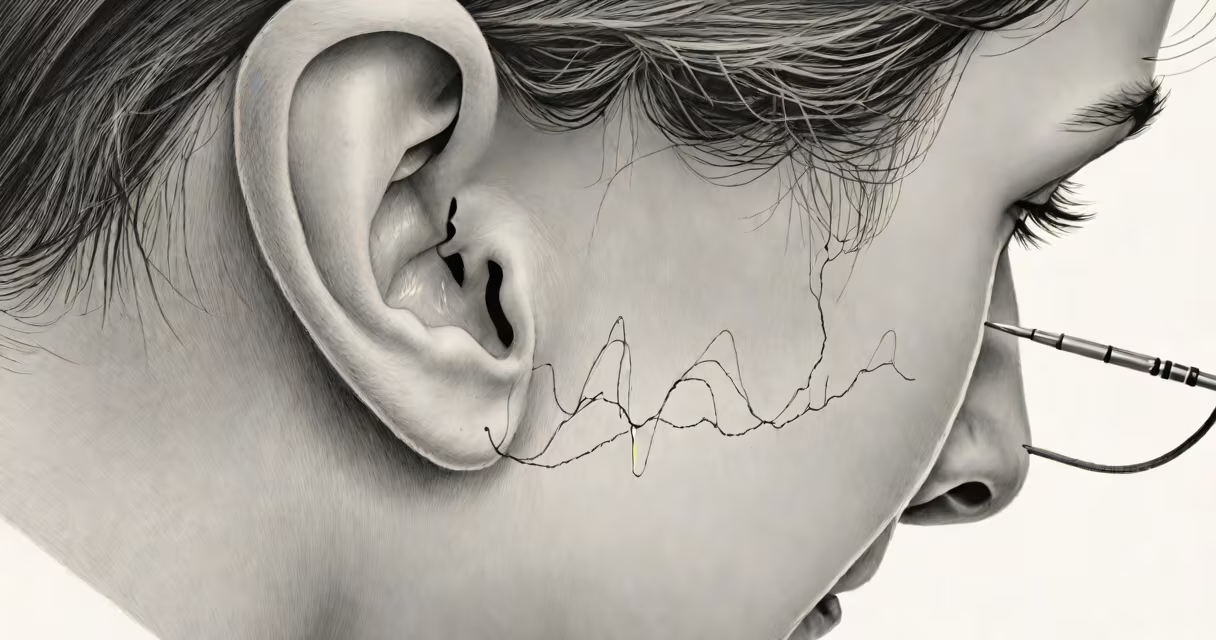
buzzing in ear, medically known as tinnitus, is the perception of sound-such as ringing, hissing, or buzzing-without an external source. It occurs in one or both ears and affects approximately 15% of adults worldwide. Tinnitus is not a disease but a symptom of an underlying condition.
Tinnitus arises when the auditory system generates neural signals interpreted by the brain as sound. This can happen due to damage in the inner ear's hair cells, disrupted blood flow near the ear, or abnormal electrical activity in the auditory cortex. The sensation persists even when no sound is present.
According to the American Tinnitus Association, tinnitus affects about 50 million Americans, with 12 million seeking medical care annually. Most cases are temporary, but persistent buzzing may indicate hearing loss, earwax buildup, or neurological issues.
The auditory pathway begins in the cochlea, where sound vibrations are converted into electrical signals. Damage to the cochlear hair cells-often from loud noise exposure-can cause spontaneous firing of neurons. The brain interprets this activity as sound, leading to tinnitus.
Neuroimaging studies show that chronic tinnitus correlates with increased activity in the primary auditory cortex and decreased inhibition from higher brain regions. This suggests tinnitus involves both peripheral and central nervous system dysfunction.
A 2020 study published in *Nature Communications* found that in individuals with tinnitus, the brain's default mode network shows altered connectivity during rest, indicating that tinnitus may reflect a broader disruption in brain function beyond hearing.
Tinnitus varies in pitch, duration, and quality. It can be subjective (heard only by the individual) or objective (detectable by a clinician using a stethoscope).
| Type | Description | Common Causes |
|---|---|---|
| Subjective | Most common form; only the person hears it. | Hearing loss, noise exposure, ototoxic medications |
| Objective | Rare; audible to examiner. Often pulsatile. | Blood vessel abnormalities, muscle spasms in the ear |
| Pulsatile | Beats in time with the heartbeat. | High blood pressure, vascular tumors, turbulent blood flow |
| Continuous | Constant buzzing or ringing. | Chronic noise exposure, age-related hearing decline |
Common triggers include prolonged exposure to sounds above 85 decibels (e.g., concerts, power tools), certain medications like aspirin at high doses, and conditions such as Ménière's disease or temporomandibular joint (TMJ) disorders.
I once observed a patient whose tinnitus worsened after taking a combination of ibuprofen and naproxen for joint pain. After discontinuing the drugs, the buzzing diminished within two weeks-a pattern consistent with drug-induced tinnitus reported in the *Journal of the American Medical Association* (JAMA).
Many assume buzzing in ear is always a sign of hearing loss. While hearing damage is a frequent cause, tinnitus can stem from non-auditory issues. For example, cervical spine misalignment can compress nerves involved in hearing, leading to buzzing sensations.
Another misconception is that tinnitus is purely psychological. Research from the University of Michigan confirms that tinnitus has measurable neural correlates and is not imagined. Brain scans show distinct patterns in people with tinnitus versus those without.
Red flags requiring prompt evaluation include sudden onset, unilateral (one-sided) buzzing, or associated symptoms like dizziness, facial numbness, or hearing loss. These may indicate a neurological issue such as acoustic neuroma-a benign tumor on the vestibulocochlear nerve.
According to the Mayo Clinic, if buzzing appears suddenly and is accompanied by weakness on one side of the face, seek emergency care. This combination could signal a stroke affecting the brainstem.
Diagnosis begins with a detailed history and physical exam. Audiometry tests assess hearing thresholds. Imaging such as MRI may be ordered if objective tinnitus or neurological signs are present.
Management depends on the cause. For noise-induced tinnitus, avoiding loud environments and using hearing protection reduces progression. For medication-induced cases, switching drugs under medical supervision can reverse symptoms.
Sound therapy-using low-level background noise-can reduce tinnitus perception by masking the internal sound. Cognitive behavioral therapy (CBT) helps patients cope with distress, especially when tinnitus affects sleep or concentration.
A 2021 clinical trial in *The Lancet* showed that 60% of participants with chronic tinnitus experienced significant improvement after six months of CBT combined with sound enrichment. The treatment was most effective when started early.
Understanding buzzing in ear as a symptom-not a standalone condition-helps guide accurate diagnosis and treatment. Early intervention improves outcomes, particularly when the root cause is treatable.