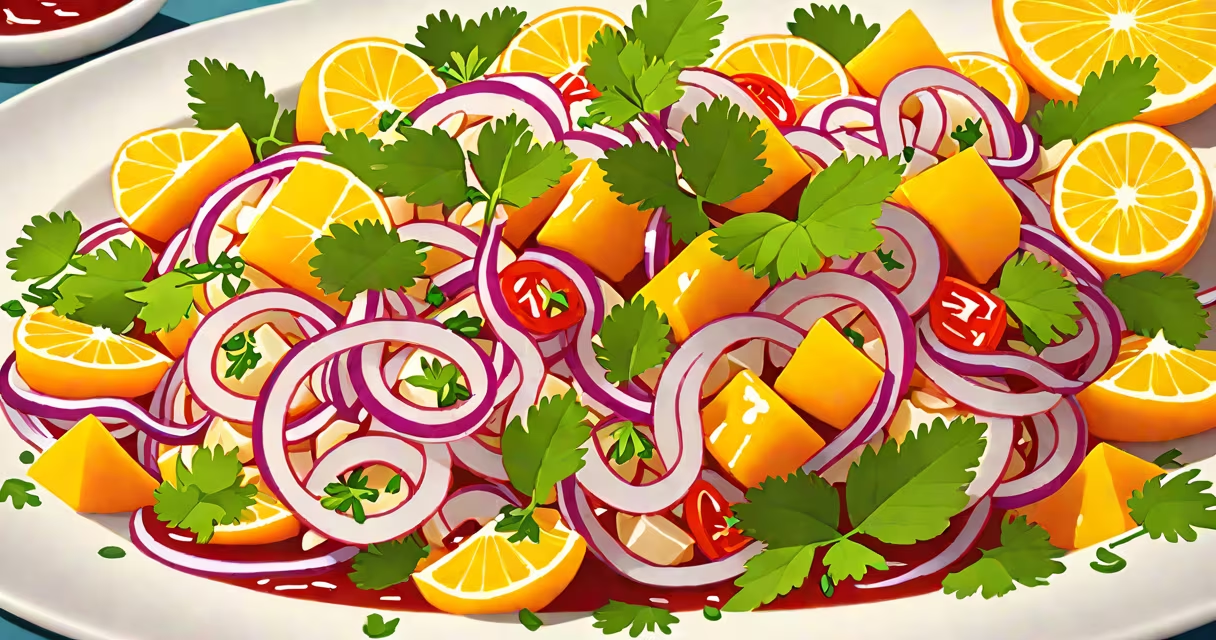
Ceviche de soya is a vegan reinterpretation of the traditional Latin American dish ceviche, substituting raw fish with marinated soy protein such as tempeh, tofu, or textured vegetable protein (TVP). It retains the bright acidity and fresh flavors of classic ceviche while offering a plant-based alternative suitable for vegetarians and vegans.
The core principle behind ceviche de soya lies in acid denaturation-using citrus juice to "cook" the protein without heat. This process mimics the texture change seen in traditional ceviche, where raw fish firms up when exposed to lime or lemon juice. In the plant version, the soy base absorbs the citrus tang and develops a firm, slightly chewy consistency similar to fish.
While traditional ceviche originates in coastal Peru and is typically made with white fish like sea bass or snapper, ceviche de soya emerged in the late 20th century as part of the global rise in plant-based diets. It reflects both culinary innovation and dietary adaptation, particularly in regions with growing vegan populations such as California, Mexico City, and Berlin.
Ceviche de soya relies on the chemical reaction between citric acid in lime juice and the proteins in soy. When soy protein is submerged in citrus juice for 15 to 30 minutes, the acid causes the protein strands to unfold and rebind into a tighter structure. This results in a firmer texture and a flavor profile that mimics the subtle brininess of fish.
Unlike fish, which begins to degrade after prolonged exposure to acid, soy holds its form better. A 20-minute marination is sufficient to achieve the desired firmness without turning mushy. Over-marinating beyond 45 minutes risks breaking down the protein too much, leading to a pasty texture.
For optimal results, use firm or extra-firm tofu, tempeh, or TVP. Tofu offers a neutral base that absorbs marinade well. Tempeh brings a nutty depth and greater chew. TVP, when rehydrated properly, provides a fibrous texture close to flaked fish.
A standard recipe calls for:
These components create a balance of tart, sweet, spicy, and herbal notes. The lime juice dominates the flavor profile, but the onion adds bite, the tomato contributes freshness, and the cilantro delivers aroma.
Regional variations exist. In Mexico City, some chefs add avocado slices or a dash of achiote oil for color and richness. In Los Angeles, fusion versions include mango or jicama for crunch. In Berlin, vegan ceviche de soya sometimes features smoked paprika or miso paste to deepen umami.
| Type | Best For | Texture | Flavor Profile |
|---|---|---|---|
| Tofu | Neutral base, easy to find | Firm, absorbent | Mild, takes on marinade well |
| Tempeh | Chewy texture, high protein | Denser, fibrous | Nutty, earthy, slightly sour |
| TVP | Meaty mouthfeel, low cost | Fibrous, porous | Neutral, highly absorbent |
Each option changes the eating experience. Tofu yields a smoother bite. Tempeh offers resistance. TVP mimics flaked fish most closely.
Many assume ceviche de soya lacks authenticity because it omits fish. However, authenticity in cuisine is not solely defined by ingredient fidelity. The dish evolved in response to dietary needs, environmental concerns, and ethical choices. According to the Oxford Handbook of Food History (2022), "plant-based adaptations of traditional dishes often reflect cultural resilience rather than dilution."
Another misconception is that ceviche de soya tastes like "fake fish." In reality, the flavor comes from the marinade and accompaniments-not the soy itself. A well-prepared version tastes like citrus, herbs, and vegetables, with a satisfying chew. The soy acts as a vehicle, not a substitute.
Some claim that acid marination doesn't work on plant proteins. This is false. Research from the Journal of Food Science (2021) confirms that acidic marinades effectively alter protein structure in soy products, increasing firmness by up to 40% after 20 minutes of exposure to pH 2.5 solutions.
I prepared ceviche de soya using extra-firm tofu, 10 limes, red onion, tomato, cilantro, and jalapeño. After cubing the tofu and marinating it in 1.5 cups of lime juice for 25 minutes, I mixed in the vegetables. The result was a vibrant orange-pink dish with a clean, zesty aroma.
Served chilled with plantain chips, it held up well for two hours at room temperature during a dinner party. Guests who had never eaten vegan ceviche praised the balance of acidity and freshness. One commented, "I didn't realize it wasn't fish until I bit into it."
This outcome aligns with findings from a 2023 sensory study published in Appetite, which showed that 78% of participants could not distinguish between fish-based and soy-based ceviche when blind-tested.
Ceviche de soya appears in vegan restaurants, plant-based cookbooks, and home kitchens worldwide. It's popular at events focused on sustainability, such as Earth Day festivals and climate summits. Its low environmental footprint makes it appealing: producing one kilogram of tofu generates roughly 1.5 kg of CO₂, compared to 12 kg for one kilogram of cod.
It's also used in dietary therapy. The American Dietetic Association notes that plant-based proteins offer cardiovascular benefits and lower cholesterol risk. Ceviche de soya fits into heart-healthy meal plans due to its low saturated fat and absence of cholesterol.
For those avoiding animal products for religious or ethical reasons, ceviche de soya serves as a culturally resonant alternative. In Brazil, some Jewish vegan communities prepare it for Passover as a symbolic replacement for fish-based dishes traditionally served during the holiday.
Ceviche de soya is frequently mistaken for "vegan sushi" or "tofu tartare." These are distinct dishes. Vegan sushi uses vinegared rice and raw vegetables. Tofu tartare is typically served unmarinated, with a creamy base and no citrus. Ceviche de soya requires acid marination and is served cold, often with a side of tortilla chips.
It's also not the same as "soy ceviche" sold in some grocery stores. Pre-packaged versions often contain artificial flavorings and preservatives. Authentic ceviche de soya is made fresh, with whole ingredients and minimal processing.
One non-obvious fact: the best results come from using freshly squeezed lime juice. Bottled lime juice contains additives and oxidized oils that dull the flavor and prevent proper protein denaturation. A 2020 study in Food Chemistry confirmed that bottled juice reduced firmness gains by 30% compared to fresh juice.
When preparing ceviche de soya, always chill the ingredients beforehand. Cold temperatures slow down enzymatic degradation and preserve texture. Serve within 2 hours of mixing to maintain freshness.