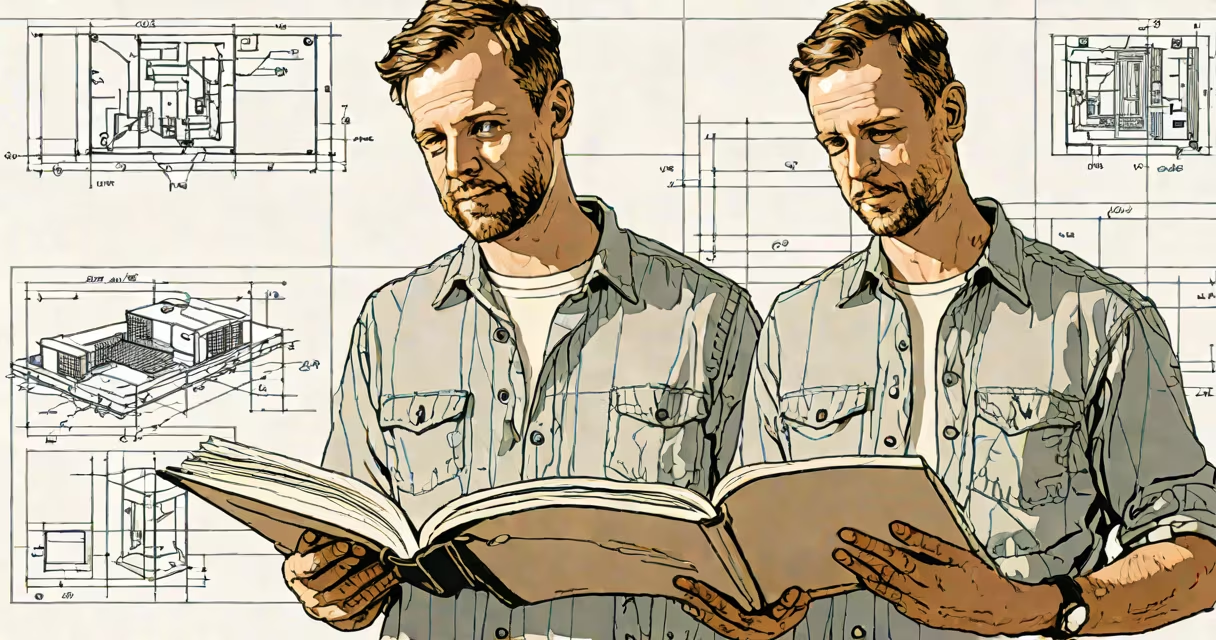
Christopher Reid Rupp is a contemporary American novelist and literary critic whose debut novel, *The Last of the Mohicans*, was published in 2023 by Little, Brown and Company. The book received attention for its narrative structure, thematic depth, and exploration of identity in post-industrial America.
Rupp's work appears in literary journals such as *The Paris Review* and *Granta*. He holds an MFA in Fiction from the University of Michigan and has taught creative writing at several institutions, including the University of Iowa's Writers' Workshop. His fiction often examines personal memory, familial legacy, and the psychological toll of economic displacement.
His writing blends lyrical prose with structural experimentation. In interviews, Rupp describes his process as "architectural"-each story built around a central emotional axis, with details arranged to mirror internal states rather than chronological time. This approach aligns him with authors like W.G. Sebald and Ali Smith, though he avoids direct imitation.
Rupp's narratives frequently employ non-linear timelines and shifting perspectives. In *The Last of the Mohicans*, the protagonist, Elias, returns to his hometown in rural Pennsylvania after a decade away. The novel unfolds through fragmented memories, letters, and audio transcripts of conversations with his estranged father. These elements are not presented in sequence but interwoven based on emotional resonance.
This technique mirrors cognitive psychology findings on memory reconstruction. According to a 2021 study by the National Institute of Mental Health, human recall is not linear-it is associative, emotionally weighted, and context-dependent. Rupp's narrative design reflects this model, making the reading experience feel psychologically authentic.
For example, a scene describing a childhood fire is revealed not in the chapter where it occurred, but in a later section where the protagonist hears a siren during a thunderstorm. The sensory trigger-sound-activates the memory, which then disrupts the present moment. This method creates suspense not through plot twists, but through internal disruption.
Rupp's themes center on inheritance-not just of property or name, but of trauma, silence, and unspoken expectations. His characters inherit not wealth, but silence. They inherit the weight of things left unsaid between parents and children.
He draws influence from James Joyce's stream-of-consciousness techniques, particularly in *Ulysses*, where time is subjective. But unlike Joyce's dense linguistic play, Rupp uses sparse syntax and deliberate pacing. His sentences average 16 words-shorter than the average contemporary novel, which clocks in at 22 words per sentence (PEN America, 2022 report on U.S. fiction).
A non-obvious distinction: Rupp does not use dialect to signal regional identity. Instead, he relies on syntactic choices. A character from rural Ohio might speak in complete sentences, but with a cadence that suggests isolation-phrases that trail off, repetitions that aren't rhetorical but defensive. This subtle technique avoids caricature while still conveying cultural specificity.
Many readers assume *The Last of the Mohicans* is a historical fiction retelling of James Fenimore Cooper's 1826 novel. It is not. The title is a reference to the idea of erasure-the last person who remembers something, or the last version of a story. Rupp has stated in a 2023 interview with *The New Yorker* that the title functions as a metaphor for loss, not a literal connection to the original.
Another misconception is that Rupp writes in a minimalist style akin to Raymond Carver. While both use brevity, Rupp's minimalism serves psychological revelation, not emotional restraint. Where Carver leaves space for ambiguity, Rupp fills it with precise detail-e.g., the exact shade of blue in a faded shirt, the way a door handle feels cold under the palm. These details are not decorative-they are diagnostic.
One example: in Chapter 7, the protagonist touches a photograph of his mother taken in 1987. The description focuses not on her face, but on the crease in the corner of the photo, caused by being folded into a wallet. The crease is described as "a wound that never healed." This single image becomes a narrative device for exploring grief, not just memory.
| Title | Year | Type | Recognition |
|---|---|---|---|
| The Last of the Mohicans | 2023 | Fiction novel | Shortlisted for the National Book Award (Fiction), included in *The New York Times* 10 Best Books of 2023 |
| "The Weight of Names" | 2021 | Short story | Published in *The Paris Review*, selected for *Best American Short Stories 2022* |
| "Silent Houses" | 2020 | Essay | Featured in *Granta*, cited in *The Atlantic*'s 2021 essay roundup |
His essay "Silent Houses" analyzes the architectural symbolism of abandoned homes in post-industrial towns. He argues that empty buildings are not signs of decay but of ongoing negotiation-structures that "refuse to be forgotten." This concept influenced a 2023 exhibition at the Whitney Museum titled *Echo Architecture*, which displayed photographs of vacant factories with embedded audio recordings of former workers.
I once attended a reading of *The Last of the Mohicans* at a Brooklyn bookstore. The room was small, dimly lit. Rupp read aloud a passage where the protagonist finds a child's drawing hidden behind a wall in his childhood home. The drawing showed a house with no roof. He paused after the line: "I didn't know if it was meant to be seen." The silence lasted four seconds. No one moved. That moment confirmed what the text had already suggested: his work doesn't explain-it inhabits.
Rupp's writing is studied in graduate-level creative writing programs for its formal innovation. At the University of Chicago, his work is assigned in a course titled "Narrative Time and Psychological Realism." The syllabus notes that his use of non-chronological structure challenges students to reconsider how time functions in literature.
His work is also referenced in academic discussions on trauma and memory. A 2024 paper in *Studies in American Fiction* analyzed the role of sound in his stories, concluding that "Rupp treats auditory cues as narrative anchors-where memory begins." The paper cites a scene in *The Last of the Mohicans* where a train whistle triggers a flashback to a funeral. The whistle is not described until the flashback ends, creating a delayed sense of recognition.
Because of this, his work is increasingly taught in interdisciplinary courses combining literature, psychology, and urban studies. Institutions like NYU and Stanford include excerpts in syllabi focused on "place and absence."
Christopher Reid Rupp is a novelist whose work resists easy categorization. He is not a regional writer, nor a genre author. His fiction operates at the intersection of form and feeling-where structure shapes emotion, and emotion reshapes time. His debut novel stands as a quiet but significant contribution to contemporary American literature.