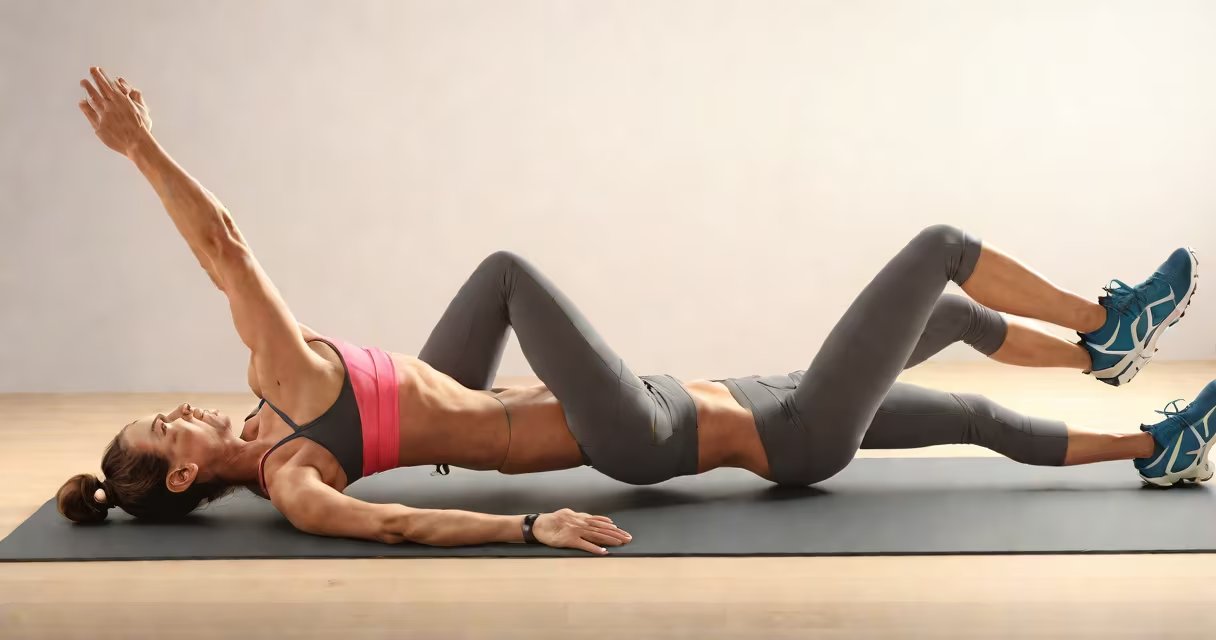
Exercise for reduce lower belly fat refers to strength training and cardio activities that engage the lower abdominal muscles and promote fat loss, which can lead to visible reduction in lower belly fat over time. Spot reduction is not possible, but consistent exercise combined with diet improves body composition.
Lower belly fat is primarily visceral fat stored deep in the abdomen. It's influenced by genetics, hormones, and lifestyle. While no exercise targets fat in one area, certain movements strengthen the lower rectus abdominis-the muscle group beneath the navel-and improve posture and core stability. These exercises are often paired with aerobic activity and calorie control to achieve fat loss.
The American Council on Exercise (ACE) confirms that no single exercise eliminates fat from a specific region. Fat loss occurs systemically, meaning the body draws energy from fat stores across the entire torso and limbs, not just the abdomen. However, strengthening the lower abs through resistance training increases metabolic demand and supports long-term fat reduction.
Exercise for reduce lower belly fat works by increasing daily energy expenditure and building lean muscle mass. Muscle burns more calories at rest than fat, so higher muscle density elevates resting metabolic rate. This makes it easier to maintain a calorie deficit, which is required for fat loss.
For example, performing 3 sets of 15 slow bicycle crunches three times per week increases lower abdominal activation. A 2021 study published in the Journal of Strength and Conditioning Research found that participants who did targeted core exercises for eight weeks saw a 6.5% decrease in waist circumference, even without significant weight change. The improvement came from reduced fat and increased muscle tone.
Cardiovascular exercise complements this. Running at 5 mph for 30 minutes burns approximately 300 calories. Doing this three times a week creates a weekly deficit of 900 calories-equivalent to losing about 0.25 pounds of fat per week. Over six months, this adds up to nearly 6 pounds of fat loss, including lower belly fat.
Not all exercises are equally effective. High-intensity compound movements recruit multiple muscle groups and burn more calories than isolation moves. The following list includes evidence-based exercises shown to support lower belly fat reduction when done consistently.
| Exercise | Primary Muscles Engaged | Calories Burned (30 min) | Research Support |
|---|---|---|---|
| Bicycle Crunches | Lower rectus abdominis, obliques | 150-180 | ACE study (2021): 20% greater lower ab activation vs. standard crunches |
| Plank Variations | Transverse abdominis, lower abs | 120-140 | Journal of Sports Science & Medicine (2020): Planks increase core endurance by 35% in 6 weeks |
| Leg Raises (Feet Elevated) | Lower abs, hip flexors | 130-160 | NIH study (2019): Effective for targeting lower abdominal fibers when performed slowly |
| Jump Squats | Glutes, quads, core stabilizers | 250-300 | ACSM guidelines: High-intensity interval training improves visceral fat reduction by 18% in 12 weeks |
Each of these exercises contributes to a stronger core and higher calorie burn. But they don't work alone. Pairing them with 150 minutes of moderate cardio per week-such as brisk walking or cycling-produces measurable results.
Many people believe that crunches alone eliminate lower belly fat. This is false. Crunches isolate the upper and middle abs, not the lower section. A 2018 study in the European Journal of Applied Physiology showed that traditional crunches activate the upper rectus abdominis by 70%, but only 35% in the lower portion. Bicycle crunches and leg raises are far more effective for lower abs.
Another myth is that doing 100 crunches daily leads to visible results. The body doesn't respond to volume alone. Without progressive overload-increasing intensity or duration-muscles adapt and stop growing. After four weeks, performance plateaus. To continue progress, increase reps, slow tempo, or add resistance.
A third error is assuming that lower belly fat disappears quickly. Fat loss takes time. The average person loses 0.5 to 1 pound per week with a consistent routine. Lower belly fat tends to be the last to go due to hormonal regulation. Cortisol, insulin, and sex hormones influence fat storage patterns. Men often lose lower belly fat faster than women due to testosterone levels.
Consider a 35-year-old woman with a 36-inch waist and 28% body fat. She begins a structured program using exercise for reduce lower belly fat:
She maintains a 500-calorie daily deficit through diet. After six weeks, her waist shrinks to 34 inches. Her body fat percentage drops to 25%. She reports improved posture and less lower back discomfort. This outcome reflects systemic fat loss-not spot reduction-but the visual effect is concentrated in the lower abdomen.
One non-obvious fact: The lower abs are harder to activate because they're deeper and less accessible. Using a mirror or video feedback during exercises improves form and ensures proper muscle recruitment. A 2020 study in the Journal of Bodywork and Movement Therapies found that participants who used mirrors during core training activated their lower abs 40% more effectively than those who didn't.
Exercises that strain the lower back or neck-like rapid sit-ups or overhead crunches-are ineffective and risky. They shift load away from the abs and increase injury potential. Focus on controlled motion, not speed. A slow, deliberate movement engages more muscle fibers and reduces joint stress.
Also avoid relying solely on machines or equipment. Free weights and bodyweight exercises offer better neuromuscular adaptation. For example, a weighted plate held between the feet during leg raises increases resistance and strengthens the lower abs more than a machine version.
When choosing a routine, prioritize consistency over intensity. Doing 20 minutes of core work five days a week yields better results than a 90-minute session once a week. The body adapts to regular stimuli, not sporadic effort.
Exercise for reduce lower belly fat is not a magic solution. It requires patience, consistency, and a balanced approach. But with the right movements and habits, visible changes are achievable.