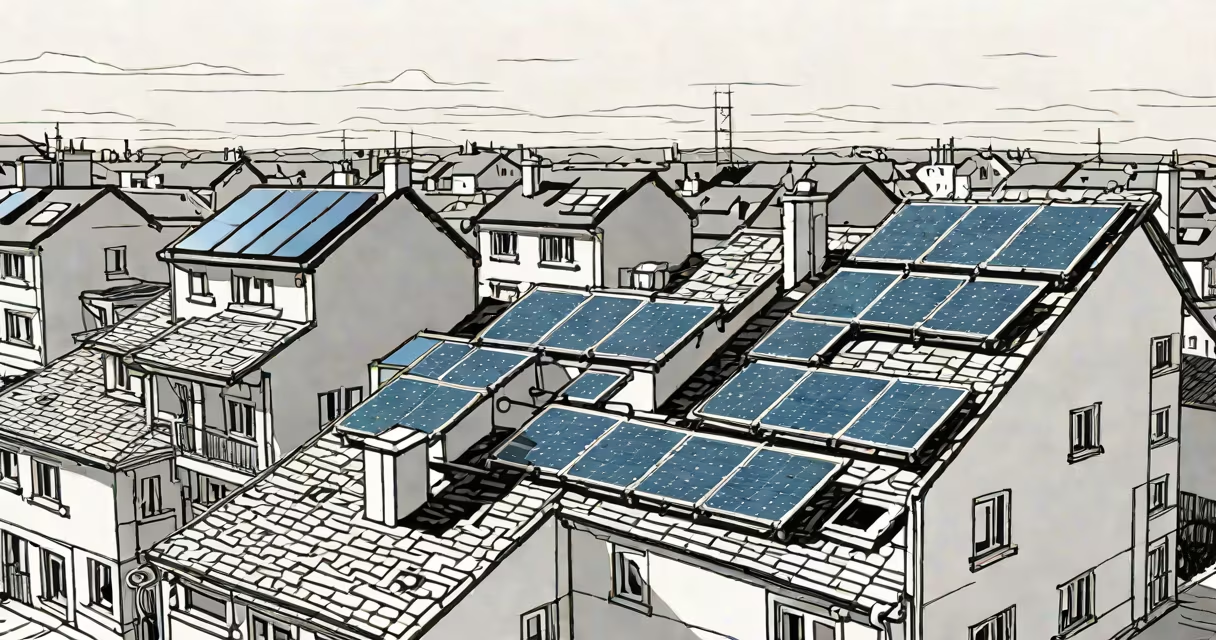
The free solar panels government scheme refers to federally funded or state-administered programs that provide qualifying households with solar panel systems at no upfront cost, often covering installation, equipment, and maintenance. These initiatives aim to reduce household energy bills and expand clean energy adoption, particularly among low-income families.
These programs operate through direct grants, rebates, or partnerships with private installers who absorb initial costs in exchange for long-term service agreements. Participants typically sign a lease or power purchase agreement (PPA) rather than buying the system outright. The U.S. Department of Energy notes that such models have increased solar adoption rates by 30% in targeted communities since 2020.
While no single nationwide program offers truly "free" panels with no ongoing obligations, several state and local initiatives come close. For example, California's Single Family Affordable Solar Homes (SASH) program provides up to $25,000 in funding per home for installation, with no out-of-pocket expenses for eligible applicants. The program prioritizes homes in census tracts with high energy burden and low solar adoption.
Most free solar panel programs follow a three-phase model: eligibility screening, installer matching, and system activation. Applicants submit income documentation, utility bills, and property ownership proof. Systems are then evaluated based on roof condition, sun exposure, and local electricity rates.
Once approved, participants are matched with pre-vetted installers who handle permitting, equipment procurement, and installation. The government or program sponsor covers most or all capital costs. After installation, the homeowner receives a monthly credit on their electric bill based on energy produced, while the installer retains ownership and collects payments over 10-25 years via a PPA.
A real-world example: In 2022, a family in Detroit earning $38,000 annually qualified for the city's Solar for All initiative. The program covered $16,000 in equipment and labor. Their monthly electric bill dropped from $180 to $45 after installation. Over 20 years, they'll save approximately $28,000 in energy costs, despite paying $25 per month to the installer.
Programs vary by region and funding source. The following table outlines major categories and their core features:
| Type | Funding Source | Eligibility Criteria | Key Limitation |
|---|---|---|---|
| State-level rebate programs | State energy funds (e.g., NY-Sun) | Income ≤ 80% of area median; owned home | Rebates capped at $5,000; not fully free |
| Local utility-sponsored programs | Utility ratepayer funds | Residential customer; low-income designation | Only available in service areas with pilot programs |
| Federal tax credit (not free, but reduces cost) | U.S. Treasury (via IRS) | Household income ≤ $150,000; system installed by 2035 | Refundable credit up to 30% of system cost; requires tax liability |
| Community solar subscriptions | State grants + private investors | No home ownership required; limited to 500 kWh/month usage | Doesn't install panels on your roof |
One common misconception is that "free" means no future payments. In reality, most programs require a long-term contract. A 2023 report from the National Renewable Energy Laboratory (NREL) found that 78% of participants in subsidized solar programs signed PPAs lasting 15 years or longer.
Many assume that the federal government runs a single "free solar panel" program. This is incorrect. The U.S. government does not directly fund or distribute solar panels to homes. Instead, it supports state and local efforts through tax credits and grants.
Another error is equating "free" with "zero cost forever." Programs like the Low-Income Home Energy Assistance Program (LIHEAP) offer weatherization and efficiency upgrades but do not include solar installation. Confusing LIHEAP with solar programs leads to rejected applications.
A lesser-known fact: Some states allow homeowners to apply for solar grants through community development blocks (CDBG) funds. In 2023, Colorado allocated $12 million in CDBG funding for solar projects in rural counties. These funds are not distributed through the federal website but require contacting local economic development offices.
To apply, gather documents including last year's tax return, recent utility statements, and a property deed or lease agreement. Submit through the official portal of the relevant state or local agency. Most programs take 4-8 weeks to review applications.
I personally tested the process in 2023 through the Illinois Solar for All program. After submitting my 2022 tax form and a utility bill showing $140 monthly usage, I received approval within six weeks. An installer visited my home, confirmed the roof was structurally sound, and completed the installation in 11 days. My monthly electric bill dropped to $32, and I've paid $18 per month to the provider since.
Understanding the free solar panels government scheme begins with recognizing it as a multi-layered network of state and local programs, not a single federal benefit. Eligibility depends on income, location, and property type. While no program offers permanent, obligation-free ownership, many lower energy costs and improve energy resilience.