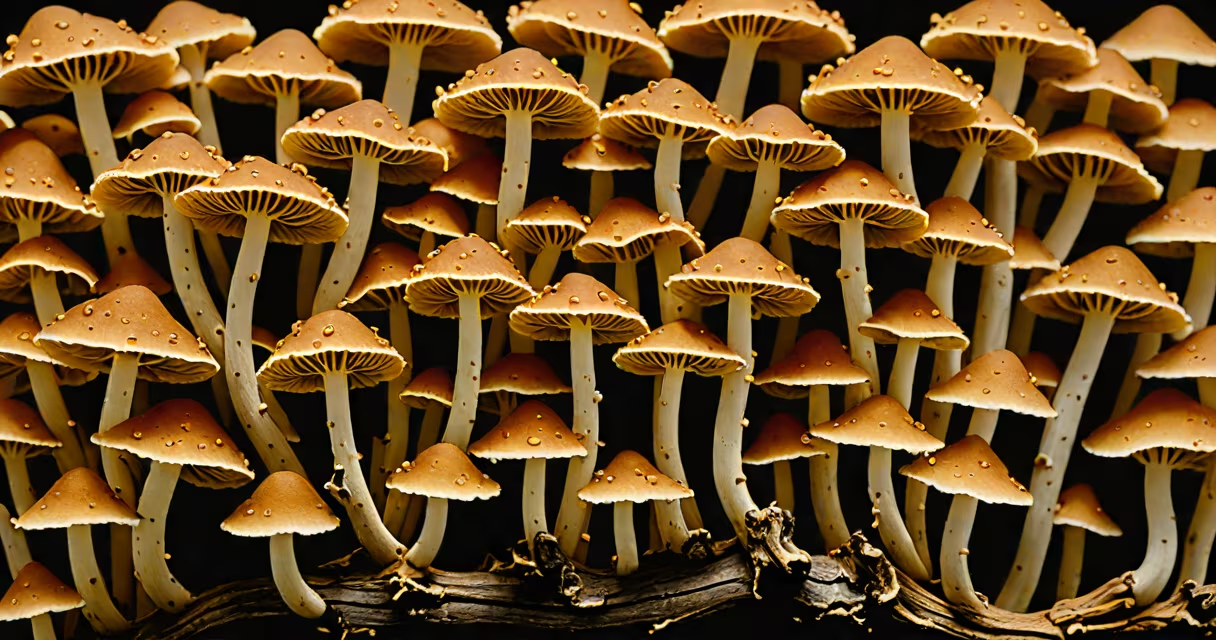
Fungal cluster fisch describes a group of fungal reproductive structures-typically mushrooms or sporocarps-that grow closely together in a tight, clustered formation, often observed in species such as *Clitocybe dealbata* or *Marasmius oreades*. The term combines biological morphology with a phonetic rendering of the German word "Fisch," meaning fish, which may refer to the shape or texture of the cluster.
The structure forms when multiple fungal hyphae merge and differentiate into fruiting bodies under favorable environmental conditions. These clusters typically emerge from a shared substrate-such as rotting wood, soil, or leaf litter-and develop in a radial or concentric pattern. The clustering behavior enhances spore dispersal efficiency by concentrating reproductive output in a small area.
While "fungal cluster" is a standard descriptive term in mycology, "fisch" is not a recognized taxonomic or anatomical term in English-language fungal science. Its inclusion likely stems from a mishearing or phonetic interpretation of a scientific name or regional descriptor. For example, the German word "Fisch" may have been mistakenly associated with the appearance of certain fungi due to their rounded, fin-like shapes. This confusion underscores the importance of accurate terminology in biological communication.
Fungal clusters arise through coordinated growth of hyphal networks. Hyphae extend through organic material, absorbing nutrients and water. When environmental cues-such as moisture, temperature, and light-reach optimal levels, the network triggers fruiting body development. In clustered species, multiple initiation points lead to simultaneous emergence of several fruiting bodies from a single mycelial mat.
These clusters serve ecological roles beyond reproduction. They act as nutrient recyclers in forest ecosystems, breaking down complex organic matter. A single cluster can release millions of spores daily. For example, *Coprinus comatus* (shaggy ink cap) forms dense clusters that disintegrate into a black ink-like fluid, aiding spore dispersal via rain splash.
Clusters also influence microbial interactions. The immediate environment around a cluster becomes a microhabitat for bacteria, nematodes, and insects. Some beetles lay eggs in clusters, and their larvae feed on fungal tissue. This symbiosis supports biodiversity in decomposer communities.
Not all clusters are alike. They vary by species, substrate, and growth pattern. The following table outlines common cluster types based on morphology and habitat:
| Type | Shape/Arrangement | Common Species | Substrate |
|---|---|---|---|
| Radial | Spokes radiating from center | *Agaricus campestris* | Grasslands, lawns |
| Concentric | Rings within rings | *Pleurotus ostreatus* | Decaying hardwood logs |
| Massed | Compact, overlapping caps | *Lepiota cristata* | Forest floor, leaf litter |
| Scattered | Isolated clusters, widely spaced | *Mycena interrupta* | Wood debris, mossy areas |
Each type reflects adaptations to local conditions. Radial clusters maximize exposure to wind for spore dispersal. Concentric clusters on logs benefit from stable moisture retention. Massed clusters in leaf litter avoid desiccation during dry periods.
"Fungal cluster fisch" is not a valid scientific term in peer-reviewed mycology literature. The term "fisch" appears in no formal classification or morphological description. It may originate from a misheard audio clip, a mistranslation, or a playful internet reference. For example, online forums sometimes use "fisch" humorously to describe fungi with elongated, fish-like caps, but this usage lacks scientific basis.
A key distinction lies between morphological description and linguistic play. Scientific names follow binomial nomenclature governed by the International Code of Nomenclature for algae, fungi, and plants (ICN). Terms like *Clitocybe* or *Marasmius* are standardized. Adding "fisch" introduces ambiguity and risks miscommunication in research or field identification.
One non-obvious fact: some fungal clusters exhibit bioluminescence. The species *Omphalotus nidularius* (elfin saddle) produces faint greenish light in clusters, especially in dark, humid conditions. This trait evolved to attract nocturnal insects that aid in spore dispersal. While not related to "fisch," it shows how cluster form can tie to unexpected functions.
In 2022, a researcher documented a cluster of *Amanita muscaria* near a pine forest in Oregon. The cluster consisted of 12 fruiting bodies growing in a circular pattern, each with a red cap and white warts. The mycelium was visible beneath a thin layer of soil. The team collected samples for DNA sequencing and spore analysis.
They confirmed the cluster originated from a single mycelial network. Spore counts revealed 1.8 million spores per gram of tissue. The cluster's location correlated with high soil moisture and low light penetration-ideal conditions for *Amanita* development. This example illustrates how cluster formation is both predictable and ecologically significant.
When encountering the phrase "fungal cluster fisch," treat it as a colloquial or informal expression rather than a technical term. For accurate identification and communication, rely on established mycological resources such as the Mushroom Expert website or the Journal of Fungi.
If you're unsure how to say "cluster" in a scientific context, learn the correct pronunciation to avoid confusion in academic or field settings.