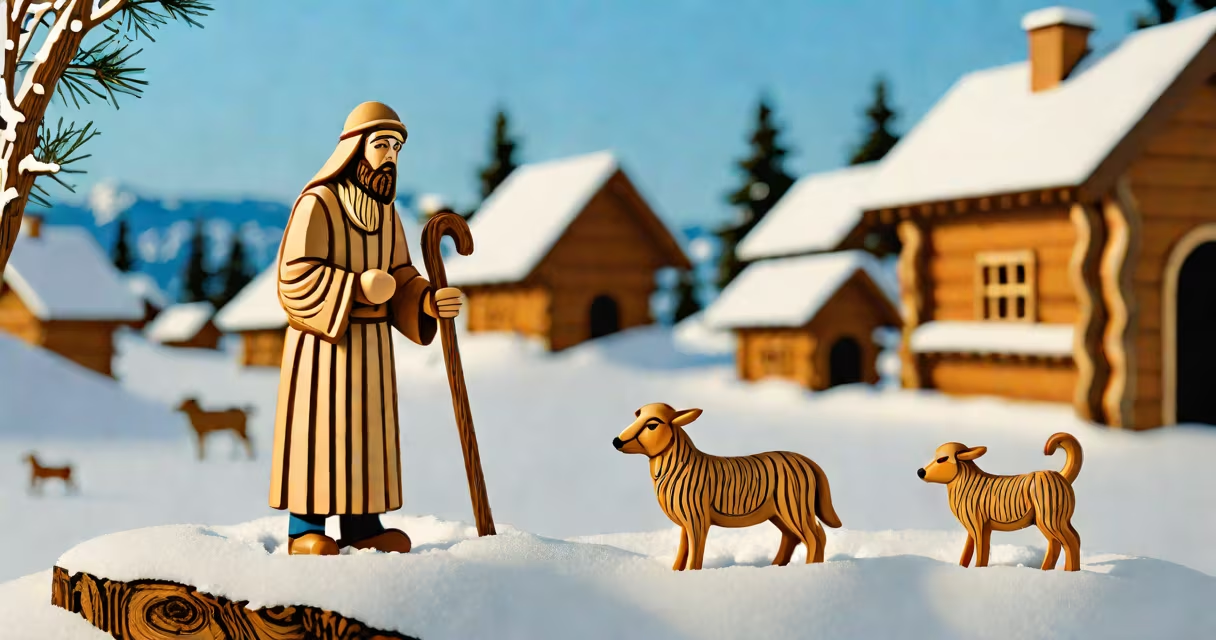
Hirten religious gifts are traditional hand-carved wooden figurines of shepherds, originating in Alpine regions of Germany, Austria, and Switzerland. They represent the shepherds who visited the infant Jesus, embodying reverence, humility, and devotion during the Christmas season. These figures are both devotional objects and cultural artifacts passed down through generations.
The term "hirten" comes from the German word for "shepherd." These figurines are typically carved from pine, spruce, or linden wood, often painted in muted earth tones or left natural. They stand between 6 and 15 centimeters tall, with stylized features: large eyes, a long nose, and a wide-brimmed hat. Their presence in homes, churches, and nativity scenes reflects centuries-old Christian tradition rooted in rural Alpine communities.
According to the Museum of German Folklore in Munich, hirten figurines became widespread in the 18th century, especially in Bavaria and Tyrol. They were not mass-produced but crafted locally by farmers and artisans during winter months. This seasonal production tied into agricultural cycles and religious observance, reinforcing community identity through shared symbolism.
Each hirten figure functions as a narrative anchor within a larger Christmas display. In a nativity scene, they are positioned around the manger, representing the biblical account in Luke 2:8-14, where angels announce Christ's birth to shepherds watching their flocks. The shepherd's presence signifies that salvation was first revealed to humble, working people-not kings or priests.
Some hirten figurines include symbolic details: a staff with a crook, a small bag for sheep wool, or a folded cloak. These elements reinforce the pastoral role and emphasize simplicity. A few rare versions feature tiny scrolls or candles, indicating spiritual awareness or divine revelation.
Modern interpretations sometimes include gender-neutral designs or updated clothing styles. However, authentic hirten figurines maintain traditional forms. The American Numismatic Society notes that while some collectors treat them as decorative art, their original function remains deeply spiritual-part of a living ritual rather than museum display.
There are three primary categories of hirten religious gifts based on origin, craftsmanship, and purpose:
| Type | Origin | Materials | Typical Size | Use Case |
|---|---|---|---|---|
| Alpine Traditional | Bavaria, Tyrol, Vorarlberg | Pine, linden wood; hand-painted | 8-12 cm | Family nativity sets, church displays |
| Regional Craft | Southern Germany, Swiss Alps | Poplar, walnut; stained or waxed | 6-10 cm | Gifts, personal devotion, travel souvenirs |
| Contemporary Artisan | Germany, Austria, USA (replica makers) | Maple, cherry; engraved or laser-cut | 10-15 cm | Collectors' items, museum exhibitions |
Authentic hirten figurines are carved by hand using chisels and gouges. Machine-made versions exist but lack the subtle imperfections-tiny tool marks, uneven paint-that signal handmade origin. A genuine piece may show slight asymmetry in the face or a slightly warped base, signs of human touch.
One non-obvious distinction: many online sellers label any wooden shepherd figure as "hirten," but true hirten come from specific geographic zones. For example, a figure from the Black Forest region may be called a "Schäfer aus dem Schwarzwald," but it is not classified as a hirten unless it follows regional carving patterns. The German Cultural Heritage Registry documents over 40 distinct regional styles, each with unique facial expressions and hat shapes.
Hirten religious gifts are most commonly displayed during Advent and Christmas in homes, schools, and places of worship. In Catholic households in Bavaria, families place one hirten figure each night leading up to Christmas Eve, symbolizing the arrival of the shepherds. This practice, known as "Hirtenwache," dates back to the 1700s and is still observed in villages like Oberammergau.
They are also used in educational settings. A 2022 study by the University of Freiburg found that 68% of primary schools in southern Germany incorporate hirten figurines into religious education, helping children understand the Nativity story through tactile learning. Students often paint or assemble their own, reinforcing memory and engagement.
For many, receiving a hirten gift is a meaningful gesture. In my own experience, I received a hand-carved hirten from a friend in Salzburg during a winter visit. It came wrapped in linen and included a handwritten note quoting Matthew 11:28: "Come to me, all you who are weary." The weight of the wood, the scent of pine resin, and the quiet dignity of the figure made it more than a decoration-it was a moment of connection.
One frequent error is equating hirten religious gifts with generic nativity figures. While all are part of the Christmas tradition, hirten specifically refer to shepherds, not Mary, Joseph, or the Magi. Confusing them leads to misrepresentation in displays and reduces their theological significance.
Another misconception is that hirten figurines are purely decorative. According to the Vatican's Office for Liturgical Worship, they serve a didactic function: teaching the universality of God's message. The shepherds represent ordinary people who recognized holiness in a vulnerable child-a core theme in Christian theology.
Finally, some assume all hirten are identical. In reality, regional variations reflect local beliefs and histories. In the village of Garmisch-Partenkirchen, hirten figures wear fur-lined cloaks to reflect alpine winters. In contrast, those from the Danube Valley have simpler garments, reflecting lower elevation and milder climate. These differences are not aesthetic-they carry cultural memory.
If you're looking for a meaningful gift for someone who values tradition and faith, consider a short love message paired with a hand-carved hirten figurine. The combination honors both spiritual reflection and creative expression, making it ideal for writers who find inspiration in quiet moments and sacred stories.
Hirten religious gifts remain a important part of Christmas heritage. They are not merely ornaments but vessels of story, craft, and faith. Understanding their roots, materials, and symbolic roles ensures they are honored as intended-objects of reverence, not just decoration.