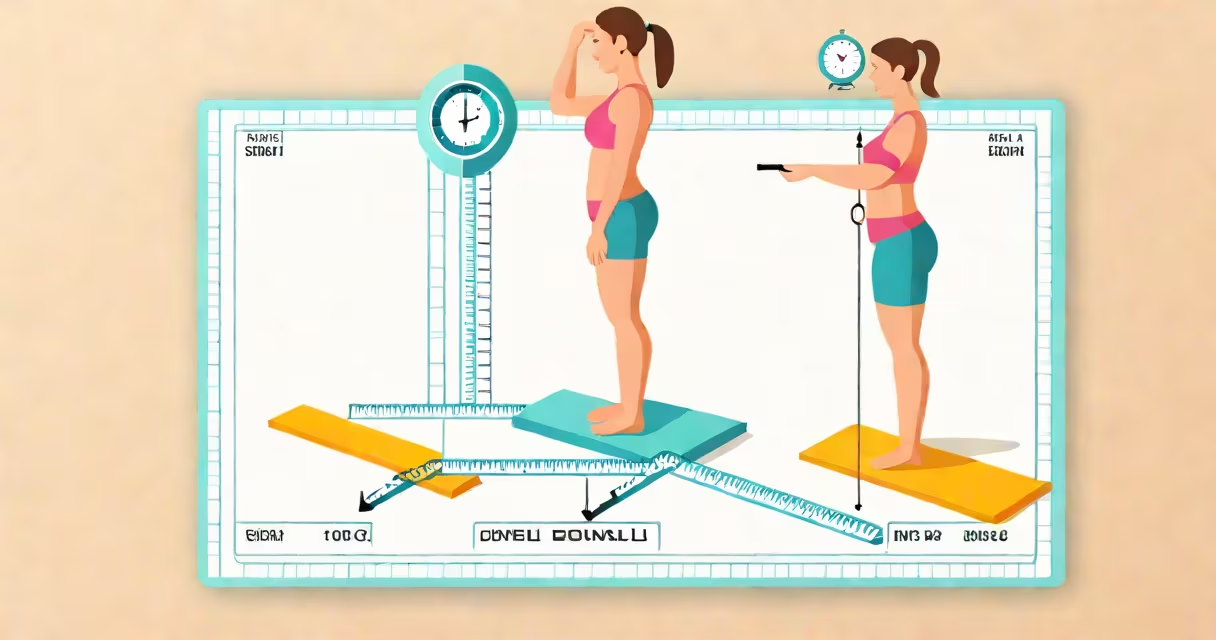
Body Mass Index (BMI) is a numerical value derived from your weight and height that estimates body fat and assesses health risk related to weight. It's calculated using a simple formula: weight in kilograms divided by the square of height in meters.
BMI serves as a screening tool to categorize individuals into underweight, normal weight, overweight, or obese ranges. While it doesn't measure body fat directly, it correlates strongly with health outcomes such as cardiovascular disease and type 2 diabetes. The World Health Organization (WHO) uses BMI thresholds to define global weight categories, making it a standard metric in clinical and public health settings.
The calculation is straightforward: divide your weight in kilograms by your height in meters squared. For example, a person weighing 70 kg and standing 1.75 m tall has a BMI of 22.86 (70 ÷ 1.75² = 70 ÷ 3.0625 ≈ 22.86). This falls within the "normal weight" range according to WHO guidelines.
The standard BMI formula is: BMI = weight (kg) / [height (m)]². This equation applies universally across populations, though interpretations vary slightly by region and demographic group. Using consistent units is critical-converting pounds and inches to kilograms and meters ensures accuracy.
To convert pounds to kilograms, divide by 2.2046. To convert inches to meters, multiply by 0.0254. A 150-pound individual (68.04 kg) who is 5'6" (1.676 m) tall has a BMI of 24.0 (68.04 ÷ 1.676² ≈ 68.04 ÷ 2.809 ≈ 24.0).
Many online tools automate this process. However, relying solely on automated calculators without understanding the inputs can lead to errors-especially when users misreport their height or weight. Always verify unit conversions manually if you're calculating by hand.
According to the World Health Organization, BMI values are grouped as follows:
| BMI Range | Category | Health Risk Level |
|---|---|---|
| <18.5 | Underweight | Increased risk of malnutrition and osteoporosis |
| 18.5-24.9 | Normal weight | Lowest risk for chronic diseases |
| 25.0-29.9 | Overweight | Moderate increase in heart disease and diabetes risk |
| ≥30.0 | Obese | High risk for metabolic syndrome, joint issues, and early mortality |
These categories are based on large-scale epidemiological studies linking BMI to mortality rates. For instance, a 2016 analysis published in *The Lancet* found that people with a BMI below 18.5 had a 20% higher risk of death over 10 years compared to those in the normal range.
However, BMI has limitations. It doesn't distinguish between muscle and fat mass. An athlete with high lean body mass may have a BMI in the "overweight" or even "obese" range despite low body fat. Conversely, someone with normal BMI can carry excess visceral fat, known as "normal-weight obesity," which increases metabolic risk.
BMI is often misused as a diagnostic tool rather than a screening indicator. It cannot confirm conditions like insulin resistance or fatty liver disease. A person with a BMI of 26 may still be metabolically healthy, while another with a BMI of 22 could have elevated triglycerides and high blood pressure.
Another misconception is that BMI applies equally to all populations. The National Institutes of Health (NIH) notes that Asian populations tend to face increased health risks at lower BMI thresholds-diabetes risk rises at BMI ≥23 for many East Asian groups, compared to ≥25 in White populations.
A less-known fact: BMI was originally developed in the 1830s by Belgian statistician Adolphe Quetelet, not for medical diagnosis but for social science research on population health. Its adoption in medicine came decades later, and it remains a proxy, not a direct measure of health.
Consider a 35-year-old woman who weighs 145 pounds and is 5'4" tall. First, convert to metric: 145 ÷ 2.2046 ≈ 65.77 kg. Height: 5'4" = 64 inches × 0.0254 = 1.6256 m. Now calculate: 65.77 ÷ (1.6256)² = 65.77 ÷ 2.642 ≈ 24.89.
Her BMI is approximately 24.9, placing her in the "normal weight" category. According to NIH guidelines, this indicates low risk for most weight-related conditions. However, if she reports fatigue, irregular periods, or difficulty losing weight despite dieting, further evaluation-including waist circumference and blood tests-is warranted.
I once used this formula during a community health fair to assess participants' risk profiles. One man reported a BMI of 27.3 based on a clinic scale. Upon recalculating with his actual height and weight, we found he'd entered 5'10" instead of 5'11"-a 1-inch error that skewed his result. Correcting it dropped his BMI to 26.1, still overweight but not in the obese range. This illustrates how small input errors affect outcomes.
BMI is useful for tracking trends in populations and identifying individuals who may benefit from lifestyle interventions. It's widely used in clinical trials, insurance underwriting, and public health policy. But it should not replace personalized assessment.
Understanding how to work out your BMI isn't just about plugging numbers into a formula. It's about knowing what the result means, what it doesn't tell you, and when to seek deeper evaluation. Use it as a starting point-not a verdict.