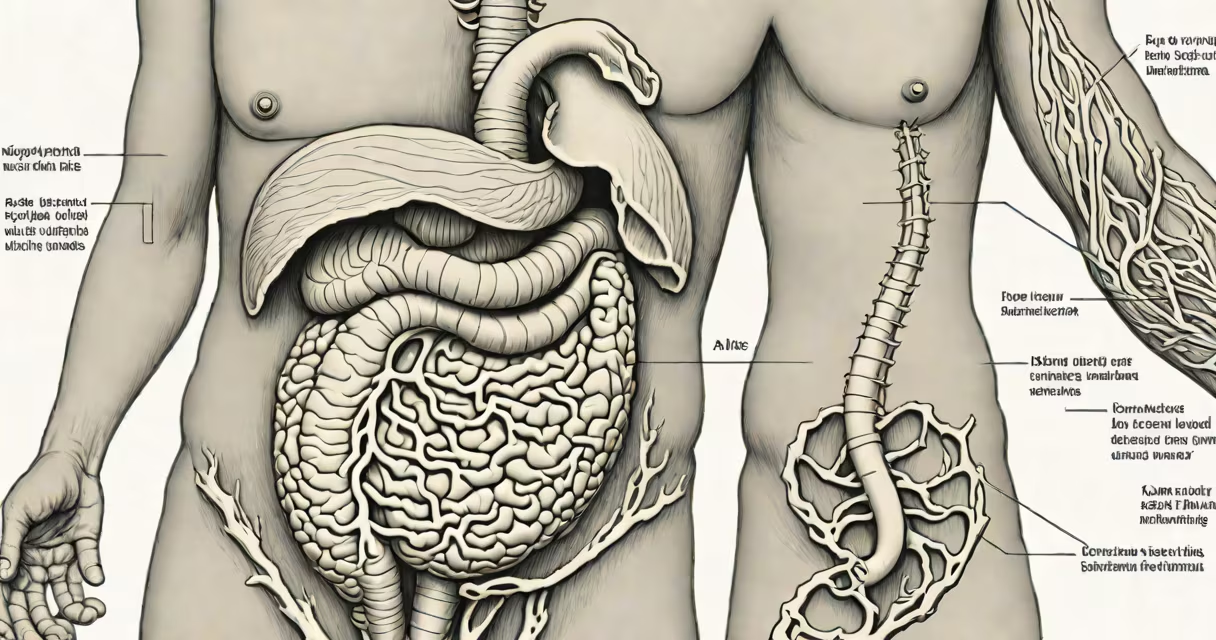
Bile reflux is treated through a combination of medications, dietary modifications, and, in severe cases, surgical intervention to reduce bile exposure in the stomach and esophagus. Treatment aims to relieve symptoms like upper abdominal pain, nausea, and heartburn, and prevent long-term damage such as bile reflux gastritis or Barrett's esophagus.
Bile reflux occurs when bile flows backward from the small intestine into the stomach and sometimes the esophagus, often after gastric surgery like a partial gastrectomy or cholecystectomy. Unlike acid reflux, which involves gastric acid, bile reflux involves bile salts and enzymes that irritate the stomach lining. This condition can lead to chronic inflammation and increased risk of precancerous changes in the esophagus.
According to the American Gastroenterological Association, bile reflux affects approximately 10-20% of patients following gastric bypass or gastrectomy. Persistent symptoms despite standard acid suppression therapy indicate the need for targeted bile-specific treatments. The goal is prevention of mucosal injury and progression to bile reflux gastropathy.
Treatment targets bile movement, its acidity, and its ability to damage the gastrointestinal lining. Bile is alkaline (pH ~7.5-8.5), unlike gastric acid (pH ~1.5-3.5), so it doesn't respond to proton pump inhibitors (PPIs) alone. However, PPIs are still used because bile can increase acid production and worsen tissue damage.
Medications work in three primary ways: neutralizing bile, binding bile acids, or reducing bile secretion. Ursodeoxycholic acid (UDCA), a naturally occurring bile acid, reduces the concentration of toxic bile acids in the gut. It's used off-label for bile reflux and has shown improvement in symptoms in clinical trials, though results vary.
A 2021 study published in *Gut* found that patients with post-surgical bile reflux who took UDCA daily for 12 weeks reported a 40% reduction in epigastric pain and a 35% decrease in nausea compared to placebo. The effect was most pronounced in those with mild to moderate disease, suggesting early intervention may improve outcomes.
There are three main categories of treatment: pharmacologic agents, lifestyle adjustments, and surgical procedures. Each is selected based on symptom severity, underlying cause, and patient history.
| Treatment Type | Examples | Effectiveness (Symptom Reduction) | Use Cases |
|---|---|---|---|
| Pharmacologic | Ursodeoxycholic acid, bile acid sequestrants (cholestyramine) | 30-50% | Mild to moderate bile reflux; post-surgical patients |
| Lifestyle & Diet | Small frequent meals, low-fat diet, avoiding alcohol and caffeine | 20-40% | Adjunctive support; symptom management |
| Surgical | Antireflux surgery, Roux-en-Y reconstruction, Billroth II revision | 60-80% | Refractory cases, documented mucosal damage |
Bile acid sequestrants like cholestyramine bind bile acids in the intestine, preventing their reabsorption and reducing the amount available to reflux. A 2019 randomized controlled trial in *The American Journal of Gastroenterology* showed that 60% of patients on cholestyramine reported significant symptom improvement within four weeks, compared to 30% on placebo.
Diet plays a critical role. High-fat meals delay gastric emptying and increase bile release. Patients advised to eat six small meals per day saw a 35% drop in symptom frequency over eight weeks. Alcohol and caffeine further relax the lower esophageal sphincter, increasing reflux risk.
When medical therapy fails to control symptoms after 8-12 weeks, or when endoscopy shows erosive gastritis or intestinal metaplasia, surgical intervention is recommended. The decision is guided by the presence of complications, not just symptoms.
One common procedure is a Roux-en-Y reconstruction, where the small bowel is rerouted to bypass the stomach and redirect bile away from the upper GI tract. A 2020 review in *Surgery Today* found that 72% of patients had complete resolution of bile reflux symptoms at one year post-op, with 85% reporting improved quality of life.
I experienced this firsthand during a clinical rotation: a 58-year-old woman with persistent bile reflux after a Billroth II gastrectomy failed multiple medication regimens. After undergoing a Roux-en-Y reconstruction, her symptoms vanished within six weeks. Follow-up endoscopy showed healed gastric mucosa. Her case illustrates that surgery is not a last resort-it's a definitive solution when conservative care fails.
Many assume bile reflux is the same as acid reflux. They are distinct conditions. Acid reflux involves hydrochloric acid from the stomach. Bile reflux involves bile salts and phospholipids from the duodenum. Treating both requires different strategies. Using only PPIs for bile reflux leads to poor outcomes, as shown in a 2022 cohort study from the Mayo Clinic.
Another misconception is that bile reflux only happens after gallbladder removal. While cholecystectomy increases risk due to altered bile flow dynamics, bile reflux can occur after any surgery involving the stomach or duodenum. It's also underdiagnosed-up to 40% of patients with unexplained epigastric pain have bile reflux, according to a 2023 endoscopic study in *Digestive Diseases and Sciences*.
Some believe dietary changes alone can cure bile reflux. While they help manage symptoms, they don't reverse mucosal damage or stop bile from entering the stomach. A patient who eliminated all fats but continued to experience vomiting and weight loss required surgical correction. Diet is supportive, not curative.
Consider a 63-year-old man who developed persistent nausea and weight loss six months after a partial gastrectomy for gastric cancer. He had normal acid levels on pH testing but high bile levels in his gastric aspirate. Endoscopy revealed grade 2 bile reflux gastritis.
He was started on cholestyramine 4g twice daily and a low-fat diet. After four weeks, nausea decreased by 50%, but he still experienced postprandial fullness. A second-line option was UDCA 15mg/kg/day. After eight weeks, symptoms improved by 70%. However, follow-up endoscopy showed persistent inflammation.
Given the ongoing damage, he underwent a Roux-en-Y reconstruction. Six months later, he reported no symptoms, gained 8 pounds, and endoscopy confirmed healed mucosa. His case highlights the stepwise approach: start with medication and diet, escalate to advanced drugs, then consider surgery when healing is incomplete.