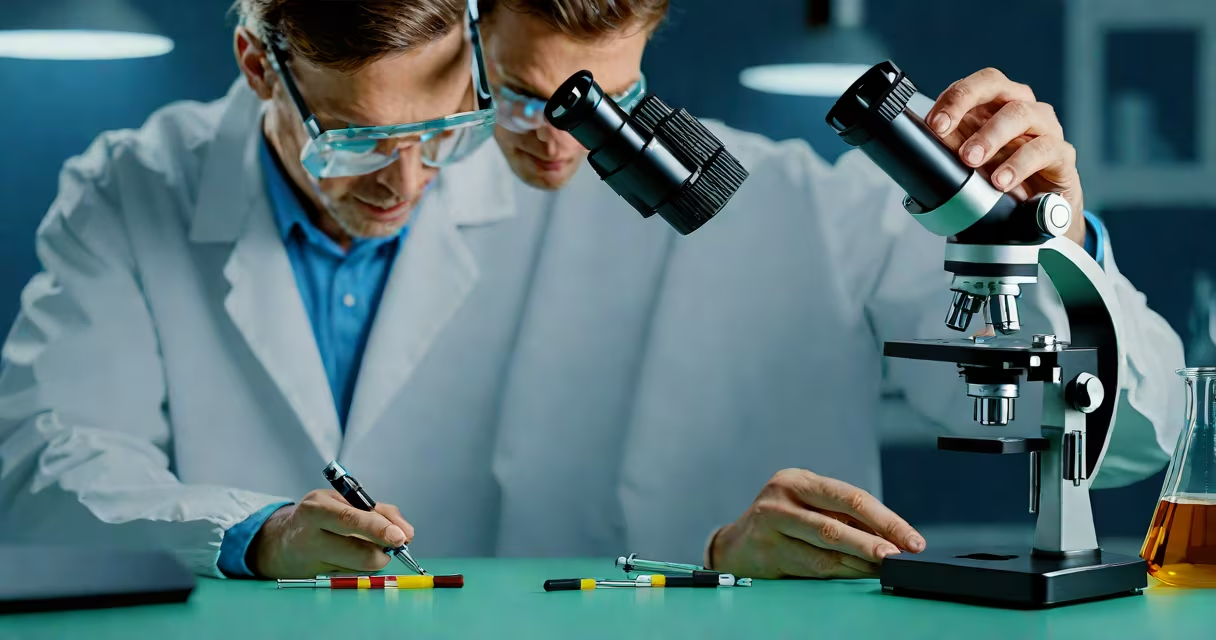
To become a forensic scientist, you must earn at least a bachelor's degree in a natural science such as chemistry, biology, or forensic science, complete specialized training, and often gain certification. This career involves analyzing physical evidence from crime scenes to support criminal investigations.
Forensic scientists work in laboratories or field settings, applying scientific methods to analyze bloodstains, DNA samples, fingerprints, drugs, and trace materials. Their findings help law enforcement identify suspects, confirm alibis, or exonerate the innocent. The role requires precision, attention to detail, and strict adherence to chain-of-custody protocols.
The U.S. Bureau of Labor Statistics reports that forensic science technicians earned a median annual wage of $60,590 in 2022, with employment projected to grow 14% between 2022 and 2032-faster than average for all occupations. Demand is driven by increased reliance on DNA analysis and digital forensics in solving crimes.
A bachelor's degree in a hard science is the minimum requirement. Common majors include chemistry, biology, physics, or forensic science. Programs in forensic science often include courses in criminalistics, toxicology, ballistics, and crime scene reconstruction.
Students must complete lab-intensive coursework. For example, a typical forensic chemistry curriculum includes organic chemistry, analytical chemistry, and instrumental analysis using tools like gas chromatography-mass spectrometry (GC-MS). These skills are essential for identifying controlled substances or detecting trace explosives residue.
After earning a bachelor's degree, many forensic scientists pursue advanced certifications. The American Board of Criminalistics (ABC) offers certification in areas like drug analysis, firearms examination, and fingerprint analysis. Certification is not mandatory in all states but improves job prospects and credibility in court testimony.
Forensic science is not a single discipline. Scientists specialize based on their training and interests. Common specializations include:
| Specialization | Focus Area | Typical Employer |
|---|---|---|
| DNA Analyst | Genetic profiling from biological samples | Federal agencies, state labs |
| Trace Evidence Examiner | Analysis of fibers, paint chips, soil | Local police departments, FBI |
| Firearms Examiner | Ballistic comparison of bullets and casings | State forensic bureaus |
| Digital Forensics Specialist | Recovery of data from computers and mobile devices | Law enforcement cyber units |
Each specialization demands distinct technical training. A DNA analyst must understand polymerase chain reaction (PCR) and capillary electrophoresis. A digital forensics expert uses software like EnCase or FTK Imager to recover deleted files from smartphones.
Non-obvious fact: Not all forensic scientists work in labs. Some serve as crime scene investigators (CSIs), collecting evidence at the scene. These roles require physical stamina, documentation rigor, and photography skills. The FBI's Crime Scene Investigator program trains agents in proper evidence packaging and preservation techniques.
Hands-on experience is critical. Many students intern with local crime labs or participate in university-led mock crime scenes. During one such exercise, I observed a team reconstruct a staged burglary using shoe print casts, blood spatter patterns, and altered door lock mechanisms. The simulation revealed how easily contamination occurs-even a single touch can compromise evidence integrity.
Real cases show the impact of forensic work. In 2018, the Innocence Project used DNA testing to overturn the wrongful conviction of a man imprisoned for 20 years. The original case relied on eyewitness testimony; later analysis proved the suspect was not present at the scene. This case underscores how forensic science corrects errors in the justice system.
Employers value candidates with documented experience. Internships with state forensic services or participation in national competitions like the National Forensic Science Technology Center's training programs improve resumes. Some universities offer dual-degree tracks combining forensic science with criminal justice or law.
People often confuse forensic scientists with crime scene TV detectives. In reality, most forensic scientists do not visit crime scenes. They analyze evidence collected by others. The TV portrayal of immediate results and dramatic courtroom showdowns oversimplifies the process.
Another misconception: forensic science is infallible. In fact, the National Academy of Sciences (2009) report noted that many forensic disciplines lack standardized validation. For example, fingerprint matching relies on subjective interpretation, and error rates in some analyses remain unquantified. This has led to calls for greater scientific rigor and transparency in reporting.
Not all forensic scientists are sworn officers. Most work as civilian employees under state or federal agencies. Only a few, such as FBI Special Agents with forensic backgrounds, hold law enforcement authority.
To begin your process, enroll in a bachelor's program accredited by the Forensic Science Education Programs Accreditation Commission (FSEPC). Look for schools offering hands-on lab experiences and internship partnerships. Consider joining professional organizations like the American Academy of Forensic Sciences (AAFS) for networking and continuing education.
Once employed, stay current through workshops and recertification. The field evolves rapidly-new technologies like rapid DNA analyzers and AI-assisted pattern recognition are being adopted in major labs.
Understanding how to become a forensic scientist begins with choosing the right foundation. With the right education, training, and ethical commitment, you can contribute to accurate, science-based justice outcomes.