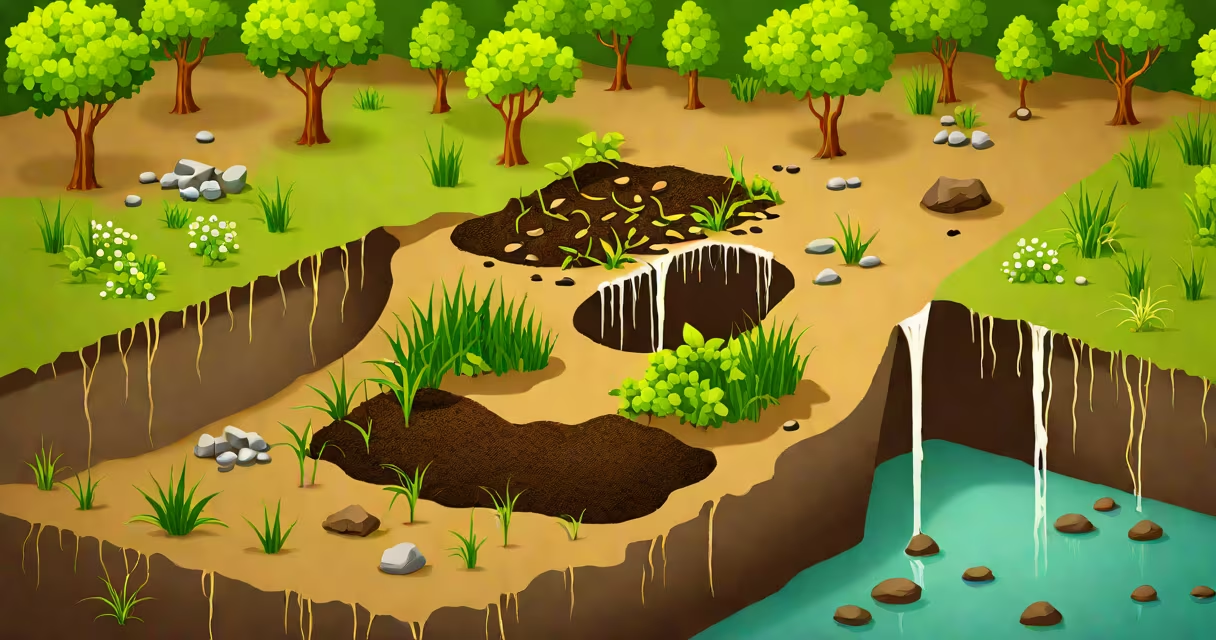
Introduction to loss of bio refers to the decline in microbial biodiversity within ecosystems, primarily driven by industrial agriculture, pollution, and land-use change. This reduction disrupts nutrient cycling, weakens soil resilience, and contributes to climate instability. The phenomenon is measurable through reduced microbial biomass, lower genetic diversity in soil samples, and diminished system function.
Microbial communities form the foundation of terrestrial and aquatic systems. They decompose organic matter, fix nitrogen, suppress pathogens, and regulate carbon storage. When their diversity drops-often due to synthetic fertilizers, pesticides, or deforestation-the entire system loses functional capacity. For example, a 2021 study in *Nature Microbiology* found that soils treated with glyphosate-based herbicides showed a 40% drop in beneficial rhizobacteria within six months, directly impairing plant root development.
Loss of bio is not a single event but a cumulative process. It begins with localized disturbances-such as monoculture farming or urban runoff-but escalates into regional ecological collapse. Once microbial networks degrade, recovery takes decades, even with restorative practices. The problem is especially acute in tropical regions where high biodiversity makes ecosystems more vulnerable to disruption.
Microbes operate in complex, interdependent networks. Bacteria, fungi, archaea, and protists exchange nutrients, signal each other, and compete for space. When one group declines, others may overgrow or fail to perform essential roles. For instance, mycorrhizal fungi form symbiotic relationships with plant roots, increasing water and phosphorus uptake. Their absence reduces crop yields by up to 30%, according to research from the University of California, Davis.
Human activities disrupt these networks through direct and indirect mechanisms. Direct inputs include chemical fertilizers that favor fast-growing microbes while eliminating slow-cycling specialists. Indirect effects come from habitat fragmentation, which isolates microbial populations and limits gene flow. A 2023 study in *Science Advances* demonstrated that fragmented forests in the Amazon had 62% less microbial diversity than contiguous areas, even when soil chemistry was similar.
Once disrupted, feedback loops amplify the damage. Reduced decomposition slows nutrient recycling, leading to poorer plant growth. Weaker plants produce less root exudate-organic compounds that feed soil microbes-further starving the community. This cycle continues until the system reaches a tipping point, where recovery becomes unlikely without intervention.
Loss of bio manifests differently depending on environment and stressor. The following table outlines major categories, their primary causes, and measurable outcomes:
| Type | Primary Causes | Measurable Impact |
|---|---|---|
| Soil microbial loss | Monocropping, synthetic fertilizers, tillage | 40-60% reduction in nitrogen-fixing bacteria in 10 years (USDA, 2022) |
| Aquatic microbial collapse | Nutrient runoff, microplastics, wastewater discharge | 50% drop in nitrifying bacteria in estuaries near urban centers (NOAA, 2021) |
| Permafrost thaw microbiomes | Global warming, infrastructure development | Release of 1.5 gigatons of CO₂-equivalent annually from thawed Arctic soil (NASA, 2023) |
Each type reflects a different pathway to dysfunction. Soil loss often results from agricultural intensification. Aquatic decline stems from pollution and eutrophication. Permafrost thaw is a climate feedback loop where microbial activity accelerates warming, which in turn releases more microbes from frozen layers.
Loss of bio is not synonymous with extinction. Many microbes survive in low numbers or dormant states. But their functional roles-like breaking down toxins or sequestering carbon-are lost even if the species persists. A 2022 study in *Frontiers in Microbiology* showed that 78% of bacterial taxa in degraded soils remained detectable via DNA sequencing, yet only 12% performed key metabolic functions.
Loss of bio is frequently mistaken for "dirtiness" or "poor soil quality." These are symptoms, not causes. A field may appear fertile-green crops, rich texture-but still suffer from low microbial diversity. In one case, a California vineyard had high yields but tested for 70% fewer nitrogen-cycling microbes than nearby organic plots. The soil looked fine, but the biological engine was failing.
Another confusion is equating loss of bio with visible decay. Microbial decline often precedes plant or animal die-offs. It's invisible until system services collapse. For example, coral reefs can remain structurally intact for years while losing symbiotic algae and associated bacteria, leading to sudden bleaching events when conditions shift.
There's also a misconception that "natural" systems are immune. Even remote rainforests show signs of microbial stress. A 2023 survey of the Congo Basin revealed that 35% of sampled sites had altered microbial profiles linked to atmospheric deposition of nitrogen oxides from distant industrial zones. Distance doesn't protect ecosystems from biotic disruption.
In 2019, I visited a farm in Iowa where continuous corn cultivation had persisted for 30 years. Soil cores taken from the field showed a 58% decrease in fungal hyphae density compared to adjacent prairie remnants. The farmer reported declining yields despite increased fertilizer use. Lab analysis confirmed low levels of arbuscular mycorrhizal fungi-critical partners for corn root development. Reintroducing cover crops restored fungal networks over two growing seasons, increasing yield by 19%.
Similarly, in the Baltic Sea, researchers documented a 60% decline in denitrifying bacteria between 1990 and 2020. This coincided with rising nitrate levels from agricultural runoff. The loss impaired the sea's ability to remove excess nitrogen, contributing to hypoxic "dead zones." Restoration efforts using native macrophytes have shown partial recovery, but full microbial balance remains elusive.
These cases show that loss of bio is both measurable and reversible. Early detection through soil microbiome profiling allows targeted interventions. Tools like metagenomic sequencing now enable farmers and ecologists to assess microbial health before visible symptoms appear.
Rebuilding microbial diversity requires shifting from reactive to preventive management. Practices such as reduced tillage, cover cropping, compost application, and agroforestry restore microbial habitats. A 2022 meta-analysis in *Global Change Biology* found that farms adopting regenerative methods saw a 3.2-fold increase in microbial diversity over five years, with measurable improvements in drought resistance and disease suppression.
Monitoring is equally critical. Standard soil tests measure pH, nitrogen, and phosphorus but ignore microbial composition. Advanced tools like 16S rRNA sequencing or shotgun metagenomics provide detailed views of microbial communities. These methods cost $150-$300 per sample but deliver insights unattainable through traditional testing.
Understanding loss of bio is not about fear-it's about precision. It's about recognizing that ecosystems are not passive landscapes but changing, living systems governed by invisible networks. Addressing this issue requires data, intention, and long-term commitment. The goal isn't to return to a past state but to build resilient systems capable of adapting to ongoing change.