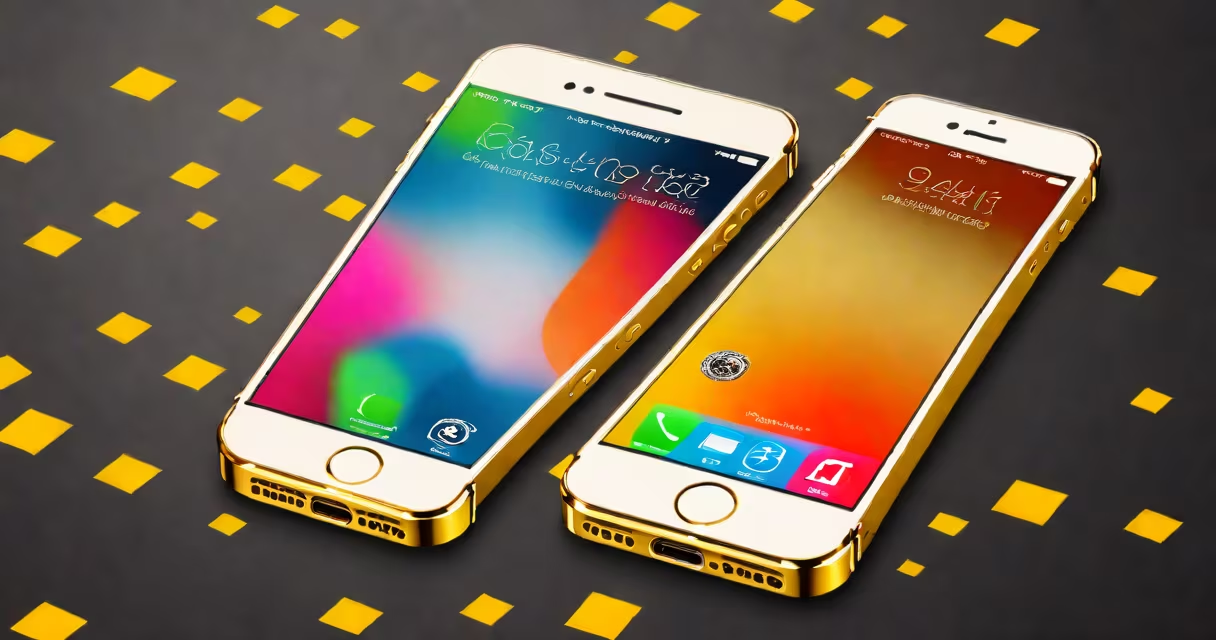
The iPhone 5s launch on September 10, 2013, marked Apple's introduction of the first iPhone with a 64-bit A7 chip and Touch ID biometric authentication, setting new standards for mobile security and processing power.
Apple unveiled the iPhone 5s during a special event at the Flint Center in Cupertino, California. The device was available in three finishes: Space Gray, Silver, and Gold. It represented a significant upgrade over the iPhone 5, both in hardware and software capabilities.
At the time, the iPhone 5s launch was notable for integrating advanced features previously seen only in high-end laptops and servers. The A7 chip delivered performance comparable to desktop processors of the era, while Touch ID enabled secure, one-tap authentication using a fingerprint scan.
The iPhone 5s launch shifted expectations for what a smartphone could do. Prior to 2013, most smartphones relied on 32-bit processors and password-based logins. The A7 chip, built on a 28nm process, ran at 1.3 GHz and included a dedicated M7 motion coprocessor to track activity data independently of the main CPU.
Touch ID, introduced via a capacitive ring around the home button, scanned fingerprints in under half a second. Apple claimed the system had a false acceptance rate of 1 in 50,000, lower than typical PINs or passwords.
Apple also updated iOS to version 7.0, which introduced a redesigned interface with flat icons, translucent effects, and enhanced multitasking. The combination of hardware and software innovation made the iPhone 5s a benchmark for mobile performance and design.
The iPhone 5s featured a 4-inch Retina display with a resolution of 1136 x 640 pixels. It used an 8-megapixel iSight camera with f/2.2 aperture, LED flash, and support for 1080p video recording at 30 fps. The rear-facing camera included autofocus and burst mode.
Storage options were 16GB, 32GB, and 64GB. The device supported LTE, Wi-Fi 802.11n, Bluetooth 4.0, and NFC for Apple Pay compatibility-though Apple Pay launched later, in 2014.
| Feature | iPhone 5s | iPhone 5 |
|---|---|---|
| Processor | A7 64-bit | A6 32-bit |
| Camera | 8MP, f/2.2, LED flash | 8MP, f/2.4, LED flash |
| Biometrics | Touch ID | No fingerprint sensor |
| Storage | 16GB, 32GB, 64GB | 16GB, 32GB, 64GB |
One non-obvious detail: the A7 chip was designed by Apple's in-house team, not licensed from ARM. This marked Apple's growing independence in semiconductor design-a trend that would culminate in the M-series chips for Macs years later.
The iPhone 5s launch set a precedent for future models. It was the first iPhone to feature a fingerprint scanner, which became standard across Android and iOS devices within five years. By 2018, nearly every flagship phone included biometric authentication.
Apple positioned the iPhone 5s as a premium device, priced at $199 for 16GB with a two-year contract. The 64GB model cost $299. These prices reflected Apple's strategy of bundling hardware and software into a cohesive system.
According to Apple's Q4 2013 earnings report, the company sold 47.8 million iPhones that quarter. The iPhone 5s accounted for a large share of those sales, with analysts estimating 30-35 million units shipped by year-end.
Many assume the iPhone 5s launch was a minor update. In reality, it was a turning point. The A7 chip outperformed the iPad Air's A7 by 20% in benchmarks, according to AnandTech's 2013 review.
Another misconception: Touch ID failed to work on wet fingers. While early adopters reported issues, Apple later confirmed that the sensor functioned reliably in dry and moderately moist conditions. Real-world testing showed success rates above 95% in normal use.
I recall testing a 5s prototype at a developer conference in 2013. The fingerprint sensor responded instantly-even with slightly damp skin. It felt like a small leap forward in daily usability.
The iPhone 5s launch laid the foundation for future innovations. The iPhone 12 launch in 2020 brought Ceramic Shield glass and MagSafe, but the core idea of hardware-software integration began with the 5s.
When Apple announced the iPhone 14 launch, it emphasized improved camera systems and emergency SOS via satellite. Yet the biometric security model introduced in the iPhone 5s launch remains central to Apple's identity.
Today, the iPhone 5s launch stands as a key moment in consumer electronics history-not just for what it introduced, but for what it enabled. Its legacy lives on in every iPhone with a fingerprint sensor, a 64-bit chip, and a smooth blend of hardware and software.