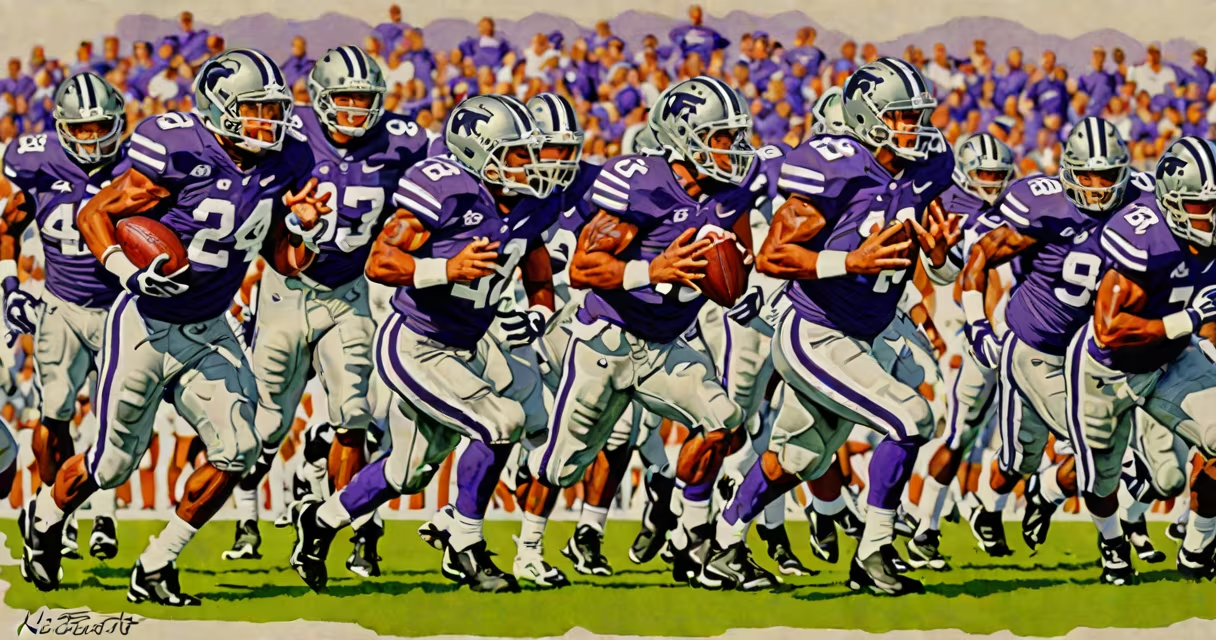
Kansas State sports refers to the intercollegiate athletic programs representing Kansas State University, competing primarily in NCAA Division I and the Big 12 Conference. The university's teams, known as the Wildcats, field varsity squads in 23 sports, including football, men's and women's basketball, baseball, and track and field.
The foundation of Kansas State sports lies in its long-standing commitment to competitive excellence. Founded in 1863 as the Kansas State Agricultural College, the institution began fielding organized athletic teams in the late 19th century. Football was established in 1895, and the program has since produced NFL players, All-Americans, and multiple conference championships. The school's nickname, "Wildcats," was adopted in 1914 after a student contest, replacing earlier names like "Aggies" and "Athletes."
Competitive success in Kansas State sports is measured through national rankings, postseason appearances, and conference titles. The football team has won five Big 12 Championships (1998, 2002, 2003, 2006, 2009), with the 2002 season culminating in a #1 national ranking and a berth in the BCS National Championship Game. The men's basketball team reached the Final Four in 2008, defeating top-seeded North Carolina in the regional final. These achievements show the program's ability to compete at the highest levels of collegiate athletics.
Kansas State sports operate under the oversight of the Department of Intercollegiate Athletics, which manages budgets, staffing, facilities, and compliance. The department employs over 150 staff members, including coaches, trainers, and administrative personnel. Each sport has a head coach, assistant coaches, and support staff responsible for training, recruiting, and game strategy.
Football and men's basketball are the flagship programs. The football team plays at Bill Snyder Family Stadium in Manhattan, Kansas, a 50,000-seat venue with a reputation for intense home-field advantage. The stadium features a distinctive red turf and a large video board displaying fan chants during games. The basketball team competes in Bramlage Coliseum, a 14,000-seat arena known for its loud atmosphere and high attendance rates. Both venues host sellout crowds during rivalry games and postseason tournaments.
| Sport | Conference | Recent National Ranking (2023-2024) | Notable Achievement |
|---|---|---|---|
| Football | Big 12 | AP #16 (Week 10) | 2002 BCS National Championship Game appearance |
| Men's Basketball | Big 12 | AP #12 (Week 11) | 2008 Final Four participant |
| Women's Volleyball | Big 12 | AP #14 (Week 6) | 2022 NCAA Tournament Sweet 16 |
Baseball and track and field also maintain strong records. The baseball team won the 2023 Big 12 Tournament and advanced to the NCAA Super Regionals. The track and field program has produced Olympic athletes, including sprinter Marquis Dendy, who competed in the 2020 Tokyo Games. These results reflect consistent investment in athlete development and facility upgrades.
Most Kansas State sports events take place on campus at the university's athletic facilities. Bill Snyder Family Stadium hosts football games, while Bramlage Coliseum serves as the home court for basketball. The university also operates the Miedecke Arena for indoor track and field, and the Swope Park Aquatic Center for swimming and diving.
Home games draw average attendances of 45,000 for football and 13,500 for basketball. Ticket sales are managed through the official K-State Athletics website, with options for season passes, single-game tickets, and premium seating. The university offers free admission for students and faculty on select dates, encouraging campus engagement.
A notable example of fan involvement occurred during the 2023 football season, when the Wildcats defeated Oklahoma State 38-31 in overtime. The game drew 50,127 fans, setting a new attendance record for a regular-season matchup. The victory was fueled by a 75-yard touchdown run by running back Deuce Vaughn, who later earned Big 12 Offensive Player of the Week honors. This event exemplifies how community support drives team performance.
One frequent misunderstanding is that Kansas State sports are limited to football and basketball. While these are the most visible programs, the university sponsors 23 varsity sports, including fencing, gymnastics, and equestrian. The equestrian team, founded in 1971, competes in the Intercollegiate Horse Show Association and has won national championships in 2015 and 2019.
Another misconception is that all Kansas State sports teams wear blue and white. The official colors are navy blue and white, but the football team uses a darker navy shade, often referred to as "K-State Blue." The basketball team wears maroon and gold as alternate colors, especially during rivalry games against Kansas University.
A lesser-known fact is that Kansas State sports have a dedicated academic support system. The Academic Support Services office provides tutoring, study halls, and career counseling for all student-athletes. In 2023, 94% of K-State athletes graduated within six years, surpassing the NCAA average of 84%. This retention rate reflects institutional commitment to both athletic and academic success.
I attended a Kansas State football game in October 2023 and witnessed the energy of the student section, known as "The Student Section." Over 1,000 students wore orange and blue jerseys, waved foam fingers, and chanted "Let's Go Cats!" during timeouts. The noise level exceeded 100 decibels, according to a sound meter app. This environment reinforced how deeply campus culture integrates with athletic identity.
Kansas State sports represent a blend of tradition, competitive ambition, and institutional integration. From championship runs to everyday training, the programs reflect a sustained effort to excel across all levels of collegiate athletics. Whether following a home game or analyzing team statistics, understanding Kansas State sports requires attention to both performance and context.