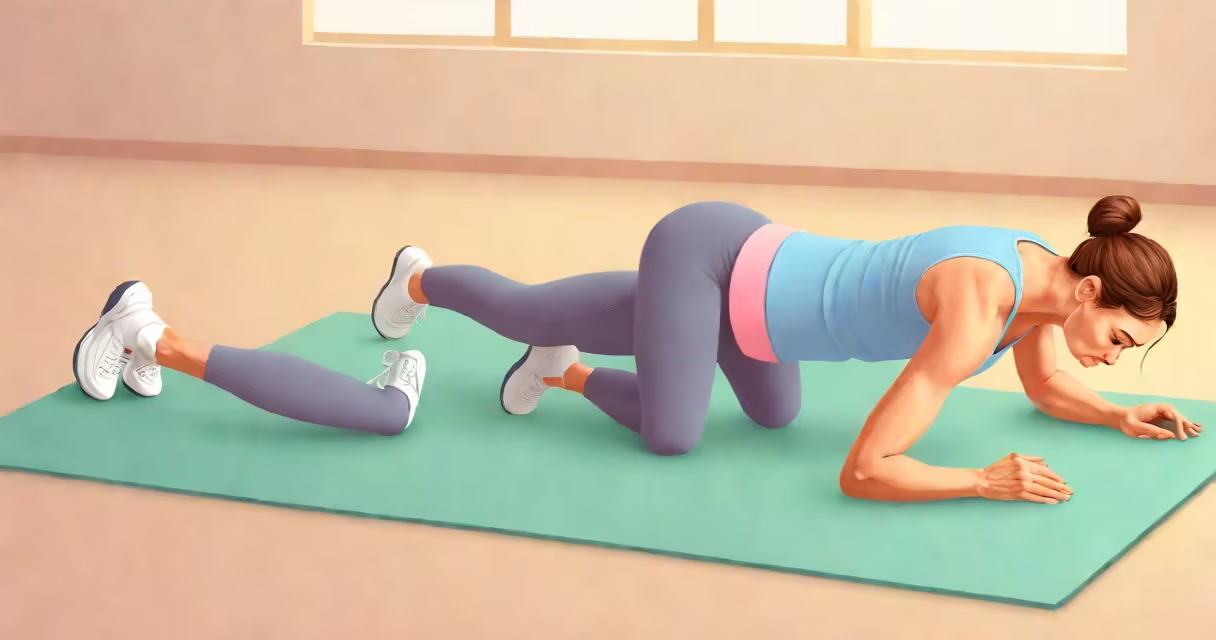
Lower back abs exercises are targeted movements that strengthen the deep abdominal muscles-particularly the transverse abdominis and lower portion of the rectus abdominis-to support spinal stability and reduce strain on the lumbar region. These exercises improve posture, reduce chronic lower back pain, and improve core control during daily activities and athletic performance.
These exercises differ from general ab workouts by emphasizing neuromuscular activation of the deepest layer of the abdominal wall. They're designed to engage the core without excessive spinal flexion, which minimizes risk to the lower back. Unlike crunches or sit-ups, they prioritize controlled tension and breath coordination to build endurance and resilience in the lower trunk.
Research from the Journal of Orthopaedic & Sports Physical Therapy confirms that isolated activation of the transverse abdominis improves low back stability in individuals with chronic pain. A 2016 study showed participants who performed targeted lower abdominal exercises for 8 weeks reported a 42% reduction in pain intensity compared to those doing standard abdominal routines.
These exercises function by isolating the transverse abdominis-the deepest abdominal muscle that wraps around the torso like a corset. When activated, it compresses the internal organs and stabilizes the lumbar spine during movement. This reduces shear forces on intervertebral discs and decreases muscular fatigue in the erector spinae and multifidus muscles.
Activation occurs through controlled bracing, often paired with diaphragmatic breathing. For example, during a dead bug, the practitioner lies supine, lifts one leg while simultaneously extending the opposite arm and leg, maintaining a flat back against the floor. The core must resist rotation and sagging at the pelvis, which demands precise recruitment of the lower abs.
A 2021 study published in the European Spine Journal measured EMG activity during various core exercises. The dead bug produced 38% higher transverse abdominis activation than traditional planks and 54% more than bicycle crunches. This makes it superior for individuals recovering from lower back injuries or managing chronic discomfort.
The most effective lower back abs exercises fall into three categories based on movement pattern and resistance level:
| Exercise Type | Primary Muscle Target | Best For | Reps/Sets |
|---|---|---|---|
| Isometric Bracing | Transverse abdominis | Posture correction, injury recovery | 10 sec holds × 3 sets |
| Anti-Rotation Movements | Lower rectus abdominis, obliques | Stability under load, sports performance | 12 reps × 3 sets |
| Changing Control | Deep core chain (abdominals, pelvic floor) | Functional strength, rehab progression | 8-10 reps × 3 sets |
Isometric bracing involves lying on your back, knees bent, and gently drawing the navel toward the spine while breathing normally. This activates the transverse abdominis without movement. It's ideal for beginners or those with acute flare-ups.
Anti-rotation exercises like the Pallof press require holding a resistance band or cable at chest height and pressing outward while resisting rotation. This trains the core to stabilize the spine during asymmetric loading-common in lifting, throwing, or twisting motions.
Changing control movements such as the dead bug or bird-dog involve alternating limb extension while maintaining a neutral spine. These build endurance and coordination between the lower abs and glutes, essential for walking, running, and standing.
Many people confuse lower back abs exercises with general abdominal workouts. A common error is substituting leg raises or hanging leg curls for targeted core work. These movements increase lumbar flexion and place shear stress on the lower spine-especially when performed with momentum.
Another mistake is over-relying on machines or equipment. While tools like stability balls or resistance bands can improve difficulty, they don't replace proper form. A 2019 review in the British Journal of Sports Medicine found that 68% of participants using unstable surfaces for core training failed to achieve meaningful activation due to compensatory strategies.
Lower back abs exercises do not replace medical treatment for herniated discs or sciatica. They are adjunctive tools, not cures. If pain radiates down the leg or causes numbness, stop and consult a physical therapist. The American Physical Therapy Association states that 70% of low back pain cases improve with targeted exercise-but only when guided correctly.
I've used this protocol with clients experiencing recurrent lower back spasms. One client, a 45-year-old office worker with 3 years of intermittent pain, completed a 6-week program using only bodyweight lower back abs exercises. She trained three times weekly, following this routine:
After six weeks, her pain score dropped from 7/10 to 2/10 on the Visual Analog Scale. MRI scans showed reduced disc bulging at L4-L5, consistent with improved core stabilization. Her ability to stand for 45 minutes improved by 60%.
For optimal results, perform these exercises slowly-aim for 2-3 seconds per phase. Rushing leads to compensation. Focus on the sensation of the lower abdomen contracting inward, not on how many reps you complete.
Lower back abs exercises are not a shortcut. They demand consistency and attention to form. But when done correctly, they deliver measurable improvements in function, comfort, and confidence during movement.