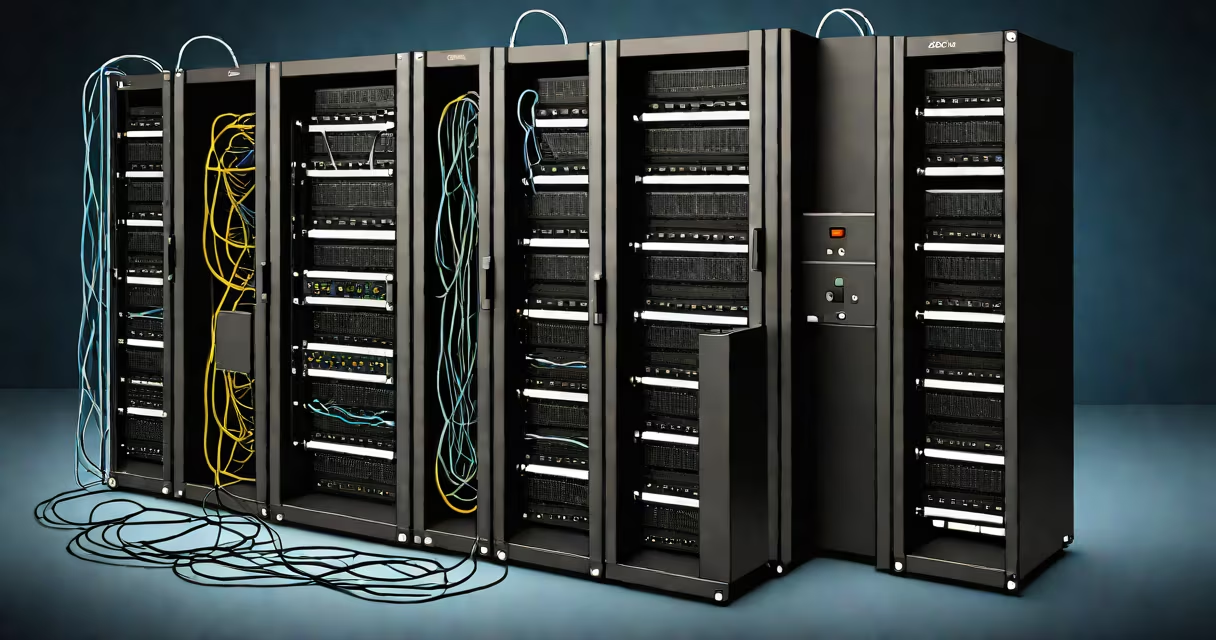
A miner in blockchain is a participant who verifies transactions, bundles them into blocks, and adds them to the public ledger by solving complex mathematical puzzles using computational power. This process secures the network and ensures consensus across distributed nodes.
Miners operate within proof-of-work systems like Bitcoin and Ethereum (pre-merge). They compete to solve a cryptographic puzzle tied to the previous block's hash, a transaction list, and a nonce. The first to find a valid solution broadcasts it to the network. Other nodes verify the solution quickly, and if correct, the new block is added. This mechanism prevents double-spending and maintains trust without central authority.
The act of mining requires significant electricity and specialized hardware. Miners use ASICs (application-specific integrated circuits) for Bitcoin, which outperform general-purpose CPUs and GPUs. A single ASIC can perform over 100 terahashes per second (TH/s), a benchmark set by manufacturers like Bitmain's Antminer S19 Pro. Without this computational effort, attackers could alter past transactions or flood the network with fake data.
Each block contains a header with metadata: version number, timestamp, previous block hash, Merkle root of transactions, difficulty target, and nonce. Miners repeatedly change the nonce and hash the header until the result meets the network's difficulty threshold-typically a number with many leading zeros.
For example, Bitcoin's difficulty adjusts every 2,016 blocks (roughly every two weeks) to maintain a 10-minute average block time. If miners solve blocks faster than 10 minutes, the difficulty increases. If slower, it decreases. This changing ensures stability despite fluctuating network hash rates.
When a miner finds a valid hash, they broadcast the block to peers. Nodes validate the block's transactions and the proof of work. Once accepted, the block is appended to the chain. The miner receives a block reward-currently 6.25 BTC-and transaction fees from included transactions. These incentives drive participation and network security.
Miners fall into three operational categories: solo, pool, and cloud-based.
| Type | How It Works | Pros | Cons |
|---|---|---|---|
| Solo Miner | Individual runs software on dedicated hardware. | Full control over rewards; no sharing. | Extremely low chance of success; high variance. |
| Pool Miner | Groups with others to combine hash power; rewards split proportionally. | Steady income; predictable returns. | Pool operator takes a fee (1-3%); less autonomy. |
| Cloud Miner | Uses remote data centers via subscription. | No upfront hardware cost; accessible globally. | Often unprofitable due to high service fees; limited transparency. |
Pools like F2Pool and Slush Pool handle thousands of miners simultaneously. In 2023, F2Pool processed over 20% of Bitcoin's total hash rate. Pools distribute work by sending tasks based on each miner's contribution. This model reduces risk and enables smaller operators to participate.
Physical infrastructure varies widely. Large-scale operations run in regions with cheap electricity-such as Texas, Kazakhstan, and Iceland-where cooling costs are lower. Some farms use liquid cooling to manage heat from thousands of ASICs. A single facility in North Dakota houses over 100,000 ASICs, consuming 10 megawatts of power.
Many assume mining is purely about earning money. While financial incentive drives participation, the core purpose is network security. A miner who submits invalid blocks gets ignored by the network. Only valid solutions are accepted.
Another myth is that mining consumes excessive energy. According to the Cambridge Centre for Alternative Finance (CCAF), Bitcoin's annual energy consumption was approximately 110 terawatt-hours in 2023-comparable to the Netherlands' usage. However, 58% of that energy came from renewable sources, including hydroelectric, wind, and solar. In contrast, traditional banking systems consume around 200 TWh annually.
Some confuse miners with validators in proof-of-stake systems. Validators in Ethereum (post-merge) stake ETH to propose and attest to blocks. They don't perform computation-intensive hashing. Miners in proof-of-work do not stake assets-they spend electricity and hardware. The two roles serve similar ends but differ fundamentally in mechanism.
On December 14, 2022, block 780,000 was mined by a pool called Foundry USA. The block contained 2,876 transactions, including a $1.2 million transfer from a wallet linked to a major exchange. The block's hash began with 16 leading zeros-a rare occurrence requiring ~1.5 exahashes of computation.
Foundry USA reported processing 1.4 exahashes per second (EH/s) during that period. To achieve this, they operated over 100,000 Antminer S19 Pros across multiple facilities. The successful miner earned 6.25 BTC (then worth ~$250,000) plus $12,400 in transaction fees. The block was confirmed within 10 minutes, as expected.
This event illustrates how mining scales: no single entity controls the network. Even large pools must compete against global participants. The system remains decentralized because no one group can dominate the hash rate.
In 2021, I ran a single Antminer S19 Pro in my garage using a 1,500-watt power supply. Over 30 days, it generated 0.0001 BTC-worth about $4 at the time. The device consumed 3,200 watts continuously. After accounting for electricity ($0.12/kWh), the net loss was $18 per month. Profitability requires scale, location, and low-cost power.
Even with favorable conditions, small miners face diminishing returns. As more hardware joins the network, difficulty rises. A miner's chance of winning drops unless their hash rate grows faster than the network's average.
Miners ensure that the blockchain remains immutable. Altering a past block requires redoing all subsequent blocks' proof of work-a task computationally infeasible. The cumulative work invested in the chain forms a "proof of history."
Network resilience depends on continuous mining. If hash rate drops below a threshold, attacks become feasible. In 2018, Bitcoin Gold suffered a 51% attack when miners abandoned the network. An attacker gained control of 51% of the hash rate and reversed transactions, stealing $18 million in coins.
Miners also enable decentralization. Unlike centralized databases, no single entity can alter records. Every node stores a copy of the ledger. Miners update it through consensus, ensuring transparency and accountability.
Understanding the role of a miner in blockchain reveals how trust emerges from code, math, and competition-not from institutions. For developers building secure systems, knowing how mining functions helps avoid design flaws that undermine integrity.