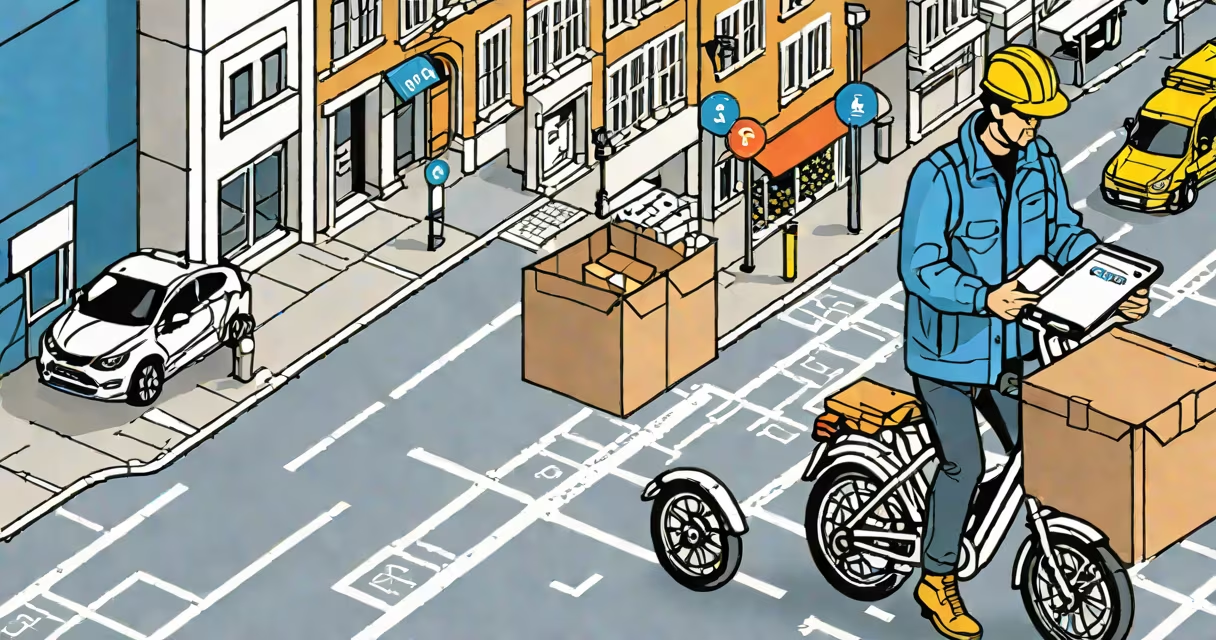
On demand delivery is a logistics model where products or services are delivered within hours-or sometimes minutes-of a customer's request, enabled by real-time inventory systems, mobile apps, and localized fulfillment centers. It prioritizes speed and convenience over traditional supply chain timelines.
This model operates through digital platforms that connect consumers with nearby warehouses, stores, or independent couriers. Orders are processed instantly, often with automated routing and changing pricing based on demand and distance. The entire process-from order placement to drop-off-typically takes under two hours, though some services claim delivery in 15 minutes.
Major retailers like Amazon, Walmart, and Instacart use on demand delivery to fulfill grocery, household essentials, and electronics orders. Food delivery platforms such as DoorDash and Uber Eats rely on it for meals. The model thrives in urban areas with dense populations and high smartphone penetration.
When a customer places an order via a mobile app or website, the system checks real-time availability at nearby fulfillment points-such as local stores, dark stores (dedicated warehouse spaces), or partner vendors. If inventory is available, the order is assigned to a courier or driver already in the area.
Routing algorithms calculate the fastest path using live traffic data. The courier receives the task through a dispatch app, picks up the item from the designated location, and delivers it directly to the customer's address. GPS tracking allows both parties to monitor progress in real time.
For example, a user in Chicago orders a bottle of olive oil and a loaf of sourdough bread through Instacart. The app finds a store within 1.2 miles that has both items in stock. A shopper is dispatched, collects the items in 8 minutes, and delivers them to the customer's door in 27 minutes-all while the customer watches the delivery progress on their phone.
On demand delivery systems fall into three primary models based on ownership and operational control:
| Type | How It Works | Example | Key Advantage |
|---|---|---|---|
| Third-party platform | Consumer uses a single app to access multiple local providers. Platform handles matching, payment, and tracking. | DoorDash, Uber Eats | Wide selection, low barrier to entry for users |
| Direct retailer model | Brand operates its own delivery network using staff or contracted drivers. | Walmart Express, Amazon Prime Now | Full control over service quality and branding |
| Hybrid network | Combines in-house fulfillment with third-party couriers during peak times. | Instacart (stores + shoppers) | Scalability and flexibility during high demand |
Each structure balances cost, speed, and coverage. Third-party platforms scale quickly but charge higher fees. Direct models offer better margins but require significant infrastructure investment.
On demand delivery dominates urban markets where population density supports efficient routing. In cities like New York, London, and Tokyo, delivery times average 45 minutes or less. These regions generate enough volume to justify the operational costs of maintaining local hubs and fleets.
It's used for perishable goods-like fresh produce, dairy, and prepared meals-where freshness matters. It also serves emergency needs: someone running out of medicine, needing a birthday gift at the last minute, or requiring a power adapter for a work meeting.
A 2023 report by McKinsey & Company found that 68% of U.S. consumers expect delivery within two hours for essential items. Retailers who fail to meet this standard lose market share. For example, when Target launched its same-day delivery service in 2022, same-day order volume increased by 41% in the first quarter.
Many assume on demand delivery is synonymous with "free" or "instant" delivery. That's incorrect. While some services advertise "15-minute delivery," they typically apply to specific zones, product categories, or paid subscriptions. Free delivery usually requires minimum spend thresholds or membership fees.
Another misconception is that on demand delivery eliminates the need for warehousing. In reality, it depends heavily on decentralized storage. Dark stores-small, automated warehouses located in neighborhoods-exist specifically to support rapid fulfillment. Without them, delivery speeds would drop.
A lesser-known fact: on demand delivery increases carbon emissions per unit compared to bulk shipping. A 2022 study published in *Nature Sustainability* showed that last-mile deliveries account for 28% of total transport emissions in urban areas, despite representing only 15% of total shipments. This makes sustainability a growing challenge.
In Seattle, a resident named Maria ordered a frozen pizza, milk, and a bag of spinach through the Whole Foods app. She placed the order at 5:12 PM. The app confirmed availability at the store located 1.4 miles away. Within 7 minutes, a shopper was assigned and arrived at the store at 5:20 PM.
The shopper picked up the items, scanned them, and left the store at 5:25 PM. The delivery driver, already en route from a nearby hub, picked up the package at 5:30 PM. Using real-time navigation, the driver avoided traffic and delivered the order at 5:58 PM-just under 46 minutes after the initial request.
Maria received a notification with a photo of the delivery and a signature confirmation. The total cost was $12.99, including a $4.99 delivery fee and a $8.00 order subtotal. The system logged the transaction, updated inventory, and scheduled the next restock.
I tested on demand delivery during a winter storm in Boston. My refrigerator failed, and I needed ice and bottled water. I opened the Instacart app at 7:45 PM. The app showed three nearby stores with the items in stock. I selected the closest one, placed the order, and paid $14.83-including a $6.99 delivery fee due to the weather surge pricing.
At 8:03 PM, a shopper appeared at the store. They collected the items and handed them to a driver at 8:10 PM. The driver arrived at my apartment at 8:37 PM. The delivery was accurate, and the items were cold. The experience was smooth-but the fee felt high. I later learned that surge pricing during emergencies can increase delivery costs by up to 200%.
On demand delivery is often confused with express shipping. Express shipping moves packages via air or ground freight between regional hubs and can take 1-3 days. On demand delivery operates locally, with same-day or sub-2-hour turnaround. The difference lies in proximity and infrastructure.
It's also distinct from subscription-based delivery, such as monthly meal kits or recurring grocery boxes. Those are planned, recurring orders. On demand delivery is spontaneous and reactive.
On demand delivery reshapes consumer expectations around speed and reliability. It's not just a convenience-it's a structural shift in how goods move through cities. As demand grows, so do challenges in scalability, environmental impact, and equitable access.