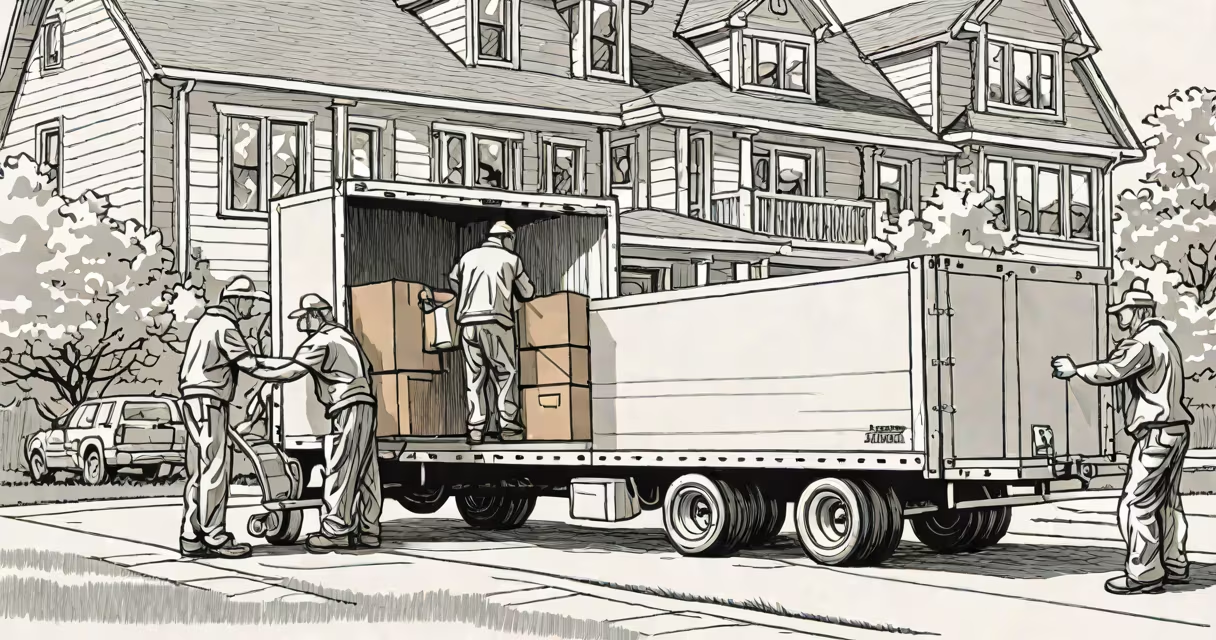
Out of state moving companies specialize in transporting household goods across state lines, handling everything from packing and loading to delivery and unloading at a destination in a different U.S. state. These firms operate under federal regulations, require specific licenses, and often offer insurance, storage, and inventory tracking.
These companies differ from local movers who serve within a single metropolitan area. Out of state movers manage longer distances-typically 500 miles or more-and coordinate with multiple service points, including origin pickup, transit routing, and final delivery. They must comply with the Federal Motor Carrier Safety Administration (FMCSA) rules, which mandate registration, insurance coverage, and adherence to safety standards.
For example, a family relocating from Chicago to San Diego would need a company licensed to operate between Illinois and California. Such a firm must have a USDOT number, liability insurance covering at least $1 million, and a bond to protect customers against loss or damage during transport.
When you hire an out of state moving company, the process begins with a detailed survey of your belongings. A representative visits your home to assess volume, weight, and special items such as pianos, antiques, or large appliances. This assessment generates a quote based on cubic feet of space, distance, and additional services.
After acceptance, the company schedules a pickup date. On that day, trained staff pack your items using custom crates, bubble wrap, and furniture covers. All items are logged into a digital manifest, which tracks each piece through every stage of the move. The goods are loaded onto a tractor-trailer or enclosed van and transported via a network of regional hubs.
Upon arrival, the driver unloads at your new address. A supervisor verifies the delivery against the original inventory list. Any discrepancies are reported immediately and resolved under the company's insurance policy. Most reputable firms provide a digital tracking portal so you can monitor progress in real time.
Not all long-distance movers are the same. They fall into three primary categories based on service model and operational structure:
| Service Type | What It Includes | Best For | Typical Cost Range |
|---|---|---|---|
| Full-service movers | Packing, loading, transport, unloading, setup | First-time movers, busy professionals, those relocating internationally | $2,500-$6,000 |
| Self-pack movers | Transport only; you pack your own items | Budget-conscious clients, those with minimal belongings | $1,200-$3,000 |
| Storage and transit | Long-term warehousing, climate-controlled units, scheduled delivery | Relocations with timing gaps, estate liquidations | $150-$300/month per unit |
Full-service movers are the most common choice for families. They include labor, materials, and insurance in one flat rate. Self-pack services reduce costs but require significant personal effort. Storage and transit options allow flexibility for delayed moves or temporary housing.
A key distinction many overlook: not all companies offer the same level of protection. The FMCSA requires carriers to provide a bill of lading that outlines liability limits. Without declared value, your goods are covered only up to $0.60 per pound. Declaring a higher value increases cost but ensures better compensation if damaged.
Out of state moving companies support relocations driven by job transfers, military deployments, education, retirement, or lifestyle changes. According to the U.S. Census Bureau, nearly 12 million Americans moved between states in 2022, with 68% citing employment as the primary reason.
For example, a software engineer relocating from Austin to Seattle might use a national mover like Allied Van Lines or United Van Lines. These companies have a nationwide network of authorized agents, ensuring consistent service quality regardless of location. Their systems integrate with state motor vehicle departments to verify licensing and track complaints.
Another common use case is college students moving from home to campus. A student from Florida moving to Oregon may choose a regional mover with a local presence in both states. These firms often offer discounted rates for students and seniors, especially when combined with online booking tools.
One non-obvious fact: many out of state movers are not direct operators. Instead, they act as brokers, subcontracting actual transport to smaller licensed carriers. This model allows for rapid scaling but increases risk if the sub-contractor fails to meet standards. Always confirm whether the company you're dealing with is a direct carrier or a broker.
Many people assume all long-distance movers are equally reliable. That's false. The Better Business Bureau (BBB) reports that over 1,200 moving-related complaints were filed in 2023, with 41% involving misquoted prices, lost items, or poor customer service.
One frequent error is choosing a low-cost provider without verifying credentials. A company claiming "lowest price" may lack proper insurance or use unlicensed drivers. Always check the FMCSA's SAFER Web database for a carrier's safety rating, insurance status, and complaint history.
I once observed a client lose a vintage record collection during a move from Denver to Miami. The company had no climate control, and the items were left in a hot trailer for 48 hours. The claim was denied because the client hadn't declared the value above $500. This highlights the importance of reviewing the bill of lading carefully before signing.
Another misconception: that all moving companies charge by weight. While some do, most use cubic footage and service tier pricing. A 2-bedroom apartment may cost $3,200 to move from New York to Atlanta, while a similar move from Los Angeles to Boston could exceed $5,000 due to fuel surcharges and tolls.
Start by checking the company's FMCSA registration number and insurance coverage. Reputable firms display this information prominently on their website. Ask for a written estimate that includes all fees-no hidden charges for stairs, elevators, or extra stops.
Use third-party review platforms like Trustpilot, Google Reviews, and the BBB to compare feedback. Look for consistent themes: punctuality, staff professionalism, and clear communication. Avoid companies with numerous unresolved complaints about damage or delays.
Finally, verify that the company offers a full inventory list and digital tracking. Some providers send daily updates via email or app. Others provide access to a secure portal where you can view photos of packed boxes and delivery confirmation.
Out of state moving companies are essential for anyone relocating across state lines. With proper research, you can avoid costly surprises and ensure your belongings arrive safely and on time.