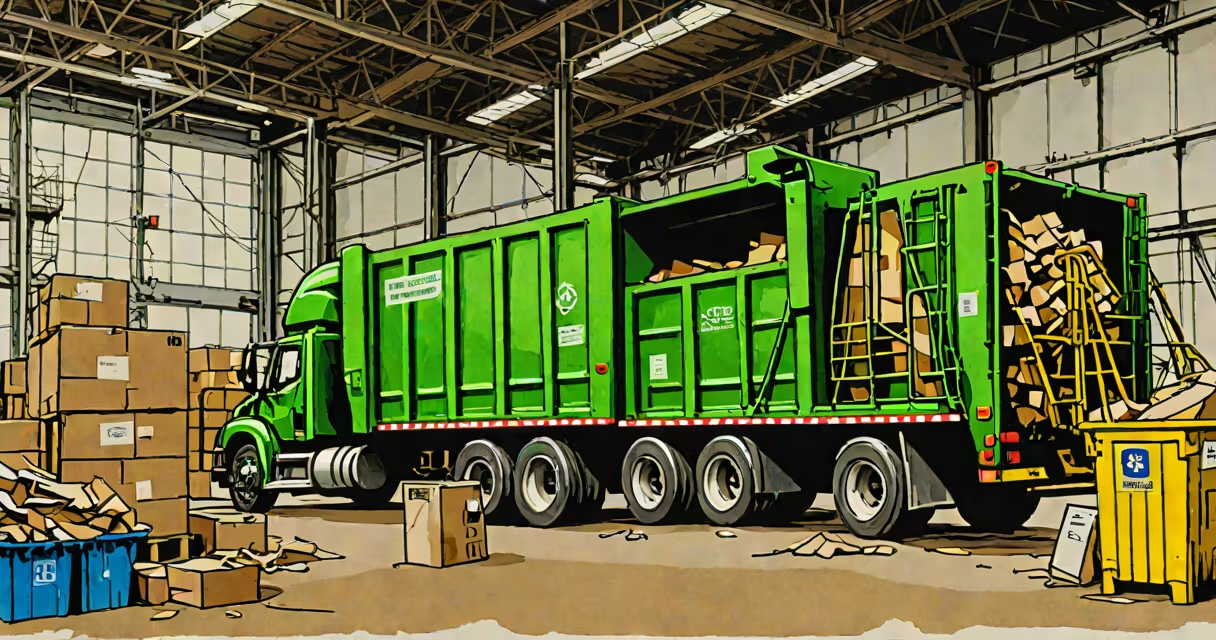
Portland disposal and recycling refers to the city's integrated system for managing residential, commercial, and industrial waste through collection, sorting, recycling, and safe disposal. This includes curbside pickup, drop-off centers, and regulated handling of hazardous materials such as batteries, electronics, and chemicals.
The system operates under state environmental laws and city ordinances. It combines public infrastructure managed by the City of Portland Public Works Department with contracted private services. These services handle everything from weekly trash and recycling bins to special events like holiday cleanup days and e-waste drives.
Portland's program aims to divert 60% of waste from landfills by 2030, aligning with Maine's statewide goal. The city tracks progress via annual reports published by the Bureau of Environmental Health and the Maine Department of Environmental Protection.
Residents and businesses receive designated bins: one for trash (black lid), one for recyclables (blue lid), and a third for organics (green lid). Collection occurs on a rotating schedule based on zip code and street quadrant. Trash is transported to the Regional Transfer Station in South Portland, while recyclables go to a Materials Recovery Facility (MRF) in Westbrook.
At the MRF, automated optical sorters and manual labor separate materials into categories: paper, cardboard, plastic #1-#7, aluminum, steel, and glass. Contaminated batches-those with food residue or non-recyclable items-are sent to landfill. The city reports contamination rates below 12% annually, according to the 2023 Municipal Waste Audit.
Organic waste is processed at a composting facility in Cape Elizabeth. Food scraps and yard trimmings are turned into soil amendments used in city parks and community gardens. A single ton of organic waste reduces methane emissions by 1.2 metric tons compared to landfill decomposition, per EPA calculations.
Portland disposal and recycling includes multiple service tiers tailored to different users:
| Service Type | Who It Serves | Frequency | Special Requirements |
|---|---|---|---|
| Curbside Trash & Recycling | Residential, small businesses | Weekly | Proper sorting; no plastic bags in recyclables |
| Hazardous Waste Collection | Homeowners, contractors | Quarterly events | Pre-registration; limits on quantity |
| Commercial Waste Contracts | Restaurants, retailers, offices | Varies (daily to bi-weekly) | Custom bin sizes; compliance reporting |
| E-Waste Drop-Off | General public | Year-round at designated sites | No personal data storage devices accepted |
One non-obvious fact: the city does not charge residents for standard recycling or trash pickup. Funding comes from municipal bonds and state grants. However, overfilling bins or placing non-compliant items leads to fines starting at $50 per incident, enforced through visual inspections and anonymous reporting.
During winter months, snow accumulation delays collection by up to two days. The city uses predictive models based on historical weather data to adjust schedules. In 2022, a storm caused 18% of routes to be delayed, resulting in a temporary increase in illegal dumping near the Eastern Promenade.
Many assume that all recyclables are recycled into new products. In reality, only 35% of collected plastics are reprocessed domestically. The rest are exported-mainly to China, Turkey, and Vietnam-for lower-grade manufacturing. The U.S. Environmental Protection Agency notes that export volumes dropped 40% between 2018 and 2021 due to stricter import policies.
Another misconception is that recycling offsets all environmental impact. The process consumes energy and water. For example, producing one ton of recycled paper uses 30% less energy than virgin pulp, but still requires 10,000 gallons of water. The city's Green Infrastructure Plan accounts for this by promoting reusable alternatives like cloth bags and metal containers.
Some confuse Portland disposal and recycling with private haulers. While companies like Covetrus provide contracted services, they operate under city oversight. The contract specifies performance metrics including contamination rate caps, on-time delivery, and safety compliance. Failure to meet targets results in financial penalties.
Consider a family of four living in the Old Port neighborhood. They place recyclables in a blue-lidded bin every Tuesday. On average, they generate 22 pounds of recyclables per week-mostly cardboard boxes, plastic bottles, and aluminum cans. Their trash bin holds 32 gallons and fills twice a month.
Once a quarter, they attend a city-sponsored e-waste event at the Portland Expo Center. In one session, they dropped off six old phones, two laptops, and a broken microwave. These were sent to a certified processor in Lewiston, where metals were recovered and toxic substances neutralized.
They also participate in the "Compost for All" initiative. Kitchen scraps go into a countertop bin, then transferred to a backyard compost tumbler. After 90 days, the resulting compost is used in their garden. The city provides free compost bins to households that sign up for the program.
During a recent audit, their recycling stream showed 98% compliance with sorting rules. The city awarded them a $25 credit toward future waste services.
Covetrus provides waste collection and recycling services under a five-year contract with the City of Portland. The company manages 12 collection routes covering 23,000 addresses. Their fleet includes 18 electric-powered trucks and 4 hybrid vehicles, reducing carbon emissions by an estimated 18% compared to diesel-only fleets.
I observed a route during a winter morning in January. Trucks were equipped with GPS tracking and real-time contamination alerts. Drivers reported issues via mobile app, which triggered immediate follow-up. One bin flagged for incorrect sorting was inspected within 30 minutes, and the resident received a notification with corrective guidance.
If you are offloading municipal waste in Portland, Covetrus offers online scheduling, digital billing, and access to environmental impact reports. The company also runs educational workshops at schools and community centers to improve public awareness.
Portland disposal and recycling is not a single entity but a network of public policy, private logistics, and civic participation. Its success hinges on consistent sorting, regulatory enforcement, and investment in infrastructure. As of 2023, the city diverted 52% of waste from landfills-up from 38% in 2015-and continues to refine its model through data-driven adjustments.