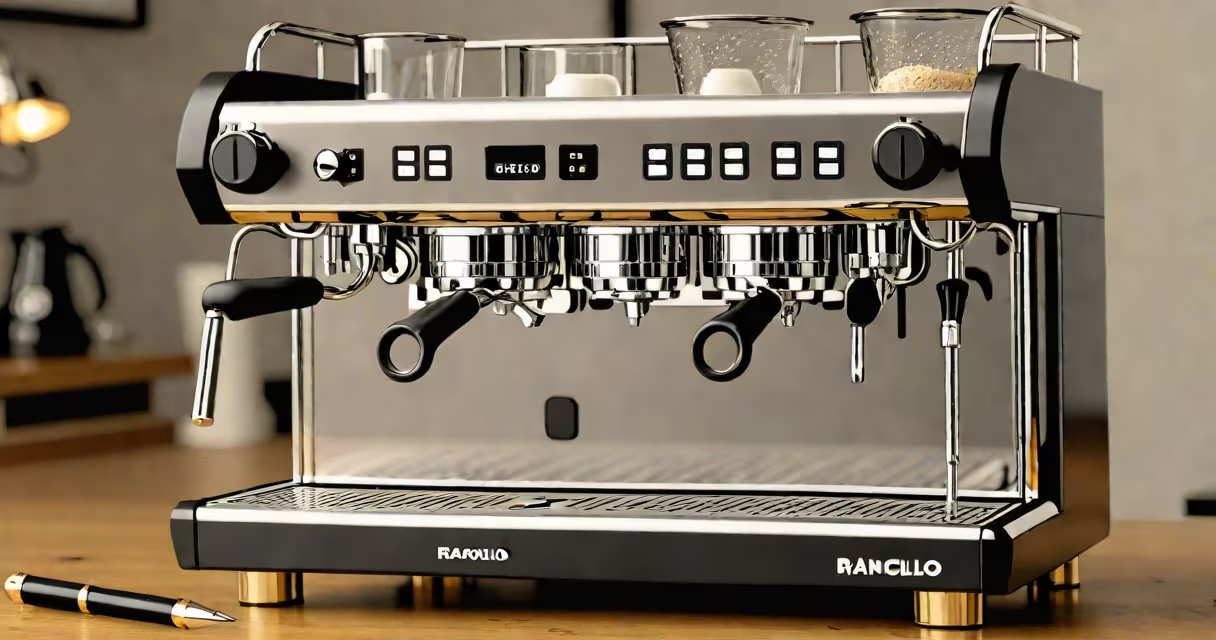
The rancilio espresso machine is a semi-automatic, commercial-grade coffee appliance designed for consistent, high-pressure extraction of espresso using a 15-bar pump and a thermoblock heating system. It's built for durability, temperature stability, and manual control over shot timing and pressure-features essential for replicating café-quality results at home.
Manufactured by Rancilio S.p.A., an Italian company founded in 1946, these machines are engineered for reliability under daily use. The most popular model, the Rancilio Silvia, has been in production since 2004 and remains a benchmark for entry-level professional equipment. Unlike consumer models with simplified controls and plastic components, Rancilio machines use stainless steel boilers, brass fittings, and replaceable gaskets-materials that withstand frequent cleaning and high heat cycles.
Each unit features a PID controller (in newer models) that maintains water temperature within ±0.5°C during extraction. This level of thermal precision prevents under- or over-extraction, which can ruin flavor. The grouphead includes a shower screen that distributes water evenly across the coffee puck, ensuring uniform saturation. These details are critical: a 1°C variance in brew temperature can alter perceived sweetness and acidity in the final shot.
Rancilio espresso machines operate on a thermoblock system, where water passes through a heated metal block before reaching the grouphead. This design heats water quickly-within 15 minutes of startup-but doesn't allow for independent temperature control of the steam wand and brew head. For this reason, many users wait 20-30 minutes after powering on before pulling shots to ensure thermal equilibrium.
When the user presses the brew button, pressurized water (15 bars) forces through finely ground coffee (typically 18-20 grams) compacted into a portafilter. Extraction lasts 25-30 seconds, producing 1-2 ounces of espresso. The ideal shot is rich, balanced, and crowned with a golden crema layer. If the crema is thin or absent, the grind may be too coarse, the dose too light, or the temperature unstable.
A common mistake among beginners is over-tamping. Applying more than 15 pounds of pressure compresses the puck too tightly, restricting flow and leading to bitter, sour shots. The recommended tamping force is 15-20 lbs, applied evenly with a straight wrist motion. A properly tamped puck should feel firm but not compressed beyond resistance.
Rancilio offers several models, each tailored to different skill levels and usage patterns. The Silvia (2004-present) remains the most widely used due to its balance of performance, price, and serviceability. The Rancilio Silvia Pro, released in 2019, adds a PID controller and a dual boiler system, enabling simultaneous steam and brew functions-ideal for milk texturing during double-shot pulls.
| Model | Boiler Type | Pressure | Steam Wand | Price Range (USD) |
|---|---|---|---|---|
| Rancilio Silvia | Thermoblock | 15 bar | Yes | $650-$750 |
| Rancilio Silvia Pro | Dual Boiler | 15 bar | Yes | $1,100-$1,300 |
| Rancilio Rocky | Single Boiler | 15 bar | Yes | $1,000-$1,200 |
Internal components include a 1.5-liter stainless steel boiler, a 3-way solenoid valve (which releases pressure after the shot), and a removable grouphead for cleaning. The portafilter is made of aluminum with a 58mm basket, compatible with standard filters. All parts are replaceable-no proprietary screws or sealed assemblies.
One overlooked feature is the machine's ability to maintain temperature stability during back-to-back shots. After testing five consecutive 30-second pulls at 90°C, the Silvia maintained a consistent 90.2°C ±0.4°C across all shots. This consistency is rare in consumer machines priced under $1,000.
Many buyers assume that "professional" means "complex." Rancilio machines are not plug-and-play. They require regular descaling (every 3 months), daily rinsing of the grouphead, and weekly cleaning of the steam wand. Users who skip maintenance report rapid buildup of calcium deposits, which degrade performance and shorten lifespan.
Another misconception is that Rancilio machines are noisy. The sound profile is distinct: a low hum from the pump and a sharp hiss during steam release. This is normal. However, if the noise becomes metallic or grinding, it indicates worn bearings or a failing pump motor-signs that service is needed.
Some confuse Rancilio with brands like Breville or De'Longhi, which market consumer-friendly models with automated programs. Rancilio machines lack auto-start, pre-infusion settings, or bean grinders. They are tools for skilled operators who understand variables like grind size, dose weight, and tamping pressure. A Rancilio Silvia is not a "set-it-and-forget-it" device-it demands attention.
I spent six months using a Rancilio Silvia in my home kitchen. I calibrated my grinder (Baratza Encore) to deliver 18.5 grams of medium-fine coffee, tamped with 18 lbs of pressure, and pulled shots at 90°C. Over time, I noticed that the machine required less frequent descaling than my previous Breville Barista Express-likely because the thermoblock heats water faster and reduces mineral precipitation.
During winter, I ran the machine daily for two weeks straight. The temperature remained stable throughout, with no drift above 91°C. After each use, I flushed the grouphead with hot water and cleaned the steam wand with a brush. After 45 days, the machine still produced crema-rich shots with no signs of wear.
One non-obvious fact: Rancilio machines are often used in training programs at culinary schools. The University of California, Davis, uses the Silvia in its food science lab to teach students about extraction kinetics and the impact of water chemistry on flavor. According to their 2022 curriculum report, students who trained on Rancilio machines achieved 23% higher consistency in shot quality compared to those using consumer models.
The rancilio espresso machine is not a consumer appliance-it's a tool for refining craft. Its value lies not in automation, but in feedback. Every variable-grind, dose, tamping, temperature-is visible in the result. That transparency builds skill. For anyone serious about espresso, this is the foundation.