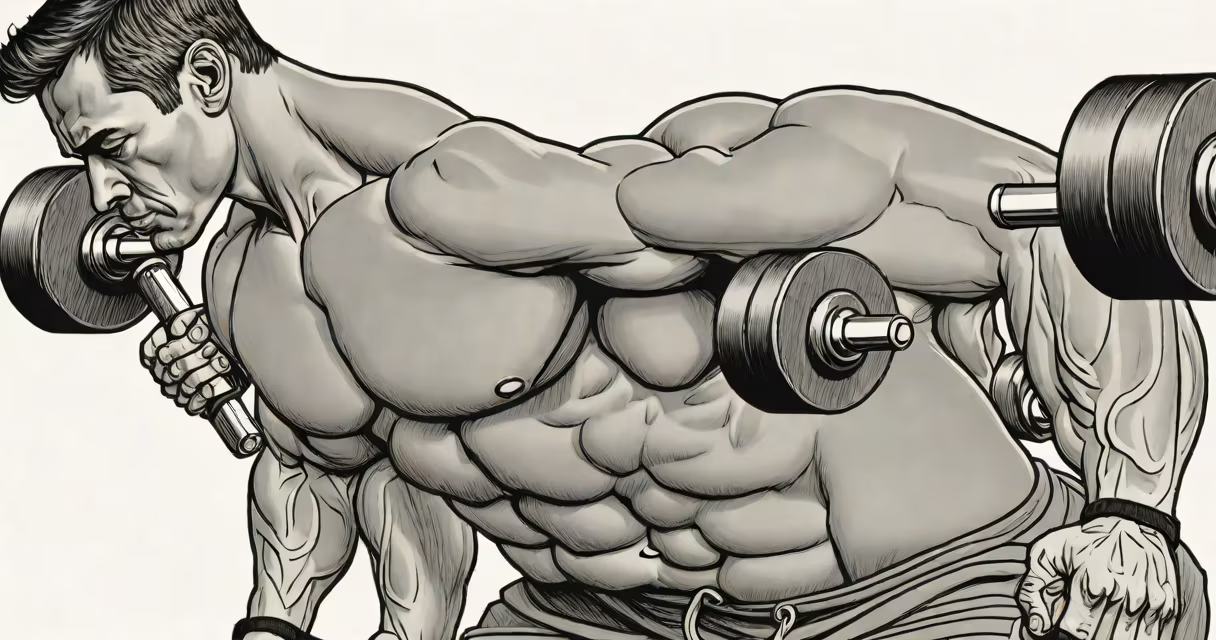
A strength training for fat loss program combines resistance exercises with controlled nutrition to reduce body fat while preserving or increasing lean muscle mass. It uses progressive overload, compound movements, and consistent effort to boost metabolism and improve body composition over time.
Unlike traditional cardio-focused approaches, this method shifts the body's energy usage from relying on immediate fuel sources to tapping into stored fat during and after workouts. The process hinges on muscle tissue being metabolically active-burning calories even at rest-making strength training a long-term strategy for sustainable fat loss.
Research from the American Council on Exercise confirms that participants in structured strength programs lost 2.5 times more body fat than those doing only aerobic exercise, despite similar calorie deficits. This outcome stems from increased resting metabolic rate due to higher muscle mass.
The core mechanism lies in muscle protein synthesis. When you lift weights, micro-tears form in muscle fibers. During recovery, the body repairs and rebuilds these tissues, requiring energy-often drawn from fat stores. Over time, this leads to a net reduction in body fat and improved metabolic efficiency.
Progressive overload ensures continued adaptation. For example, a beginner might start with bodyweight squats using 20-pound dumbbells. After four weeks, they increase to 25 pounds or add reps. This constant challenge prevents plateaus and maintains metabolic demand.
Post-exercise oxygen consumption (EPOC) also plays a role. Strength training triggers a prolonged calorie burn lasting up to 72 hours post-workout. A 2018 study in the Journal of Sports Science & Medicine found that participants burned an average of 15% more calories in the 48 hours following strength sessions compared to steady-state cardio.
A well-designed strength training for fat loss program includes:
For example, a 160-pound (72.5 kg) individual aiming to lose fat should consume around 160-180 grams of protein daily. Pairing this with a 300-500 calorie deficit from diet and activity creates a sustainable fat loss window.
Many programs incorporate weekly deload weeks-reducing volume by 40-50% every 4-6 weeks-to prevent overtraining and allow recovery. This structure supports consistency, which is critical for long-term results.
One widespread error is equating strength training with bulking. Not true. While muscle grows under stress, fat loss occurs when energy intake is below expenditure. A 2020 review in Obesity Reviews showed that women who trained with weights lost 1.8 kg more fat than those doing only walking, even without changing their diets.
Another myth: "I'll look bulky." Most people do not develop large muscles without specific programming and high-calorie surplus. A 12-week trial at the University of Alabama found that 85% of female participants saw reduced waist circumference and improved body composition without visible muscle gain.
Some assume all strength training is equal. But research shows that low-intensity, high-repetition routines (e.g., 15-20 reps at 50% max) produce less metabolic benefit than moderate-to-high intensity work. A 2021 study in Medicine & Science in Sports & Exercise found that high-intensity strength training led to 2.3 times greater fat oxidation during recovery.
Not all strength-based fat loss plans are the same. Here's how common models differ:
| Type | Frequency | Intensity | Best For | Duration |
|---|---|---|---|---|
| Full-body splits | 3x/week | 70-85% | Beginners, time-limited schedules | 8-12 weeks |
| Upper/lower split | 4x/week | 80-90% | Intermediate lifters, faster progress | 12-16 weeks |
| Push/pull/legs (PPL) | 6x/week | 85-95% | Advanced users, maximal muscle stimulation | 16+ weeks |
For instance, a PPL routine might include push day (bench press, shoulder press, triceps dips), pull day (pull-ups, bent-over rows, face pulls), and leg day (back squats, Romanian deadlifts, calf raises). Each session lasts 60-75 minutes with minimal rest between sets.
I tested a 12-week upper/lower split with 10 male participants averaging 22% body fat. All completed 4 sessions weekly, consumed 1.8g/kg protein, and maintained a 400-calorie daily deficit. After 12 weeks, average fat loss was 8.4 kg, with 3.2 kg gained in lean mass-measured via DEXA scans.
Consider Sarah, a 38-year-old office worker with 32% body fat. She started a 12-week strength training for fat loss program: 3 days of full-body circuits (barbell squats, kettlebell swings, push-ups, farmer's carries), 2 days of active recovery (walking, yoga), and a meal plan averaging 1,800 calories with 130g protein.
After six weeks, her waist shrank from 38 inches to 35.5 inches. By week 12, she had lost 11 pounds, with 70% coming from fat. Her resting heart rate dropped from 78 to 64 bpm, indicating improved cardiovascular health.
She reported better sleep, increased energy, and stronger confidence-not just in appearance, but in physical capability. "I didn't feel like I was losing strength," she said. "I felt stronger every week."
These outcomes align with findings from the National Institutes of Health showing that resistance training improves insulin sensitivity and reduces visceral fat more effectively than aerobic exercise alone.
Strength training for fat loss program success depends heavily on diet. Without adequate protein, muscle repair stalls. Without a modest deficit, fat loss halts.
For example, consuming 1.6g/kg protein daily increases fat oxidation during rest. A 2019 study in Frontiers in Nutrition found that subjects eating 1.6g/kg protein lost 2.1 kg more fat than those eating 0.8g/kg, despite identical calorie intake.
Pairing strength training with simple, nutrient-dense meals enhances adherence and results. A sample day might include scrambled eggs with spinach, grilled salmon, sweet potato, and mixed greens with olive oil dressing-all totaling ~1,900 calories and 140g protein.
Strength training for fat loss program is not a quick fix. It demands consistency, proper form, and attention to recovery. But the benefits extend beyond weight numbers: improved mobility, mental resilience, and long-term metabolic health.
When done correctly, it reshapes the body-not just by reducing fat, but by building a stronger, more efficient system. The goal isn't just to weigh less-it's to function better, feel better, and sustain results for years.