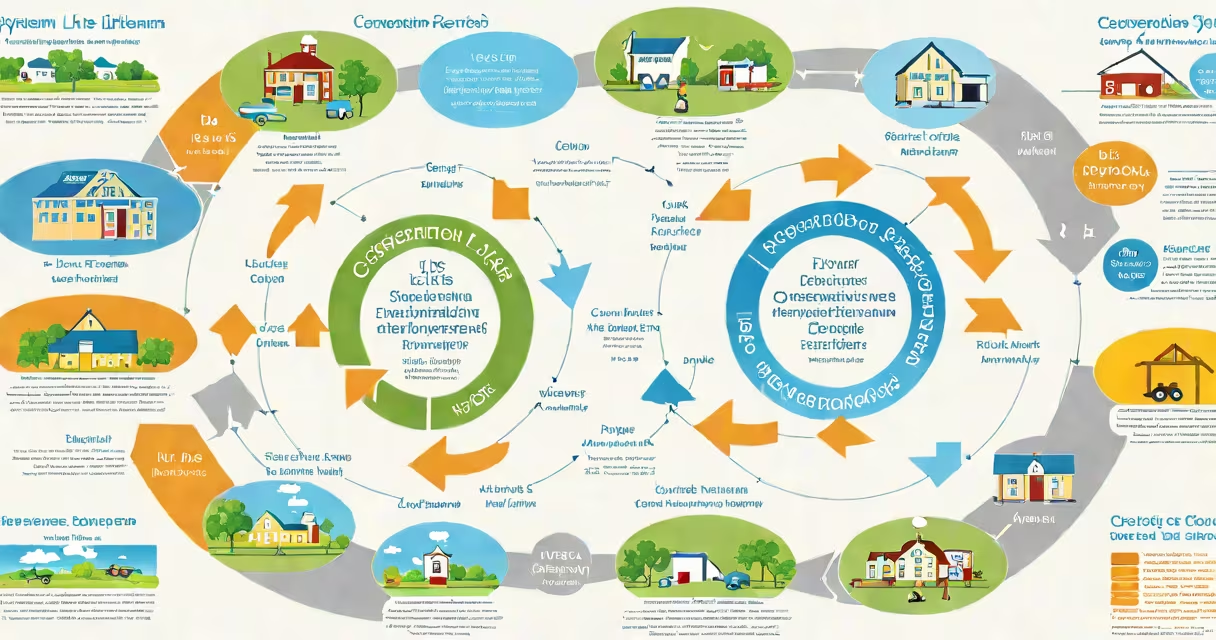
The system life cycle is a structured sequence of phases that guides the creation, deployment, and eventual retirement of a technical system-from initial concept through final decommissioning. It ensures consistency, reduces risk, and supports long-term maintainability across engineering and software projects.
Each phase defines clear objectives, deliverables, and decision points. This model applies to hardware, software, infrastructure, and complex operational systems. It is not a single process but a family of approaches tailored to domain needs, such as the waterfall, agile, or spiral models.
Understanding the system life cycle prevents costly redesigns, improves stakeholder alignment, and enables systematic problem detection. For example, NASA's Mars Climate Orbiter failed in 1999 due to unit mismatches between teams-this error could have been caught earlier with rigorous lifecycle validation.
At its core, the system life cycle divides a project into discrete, sequential stages. Each stage produces artifacts-documents, prototypes, test results-that serve as inputs to the next. Decisions to proceed, pause, or restart are based on objective criteria, not intuition.
Phases typically include: requirements gathering, design, development, testing, deployment, operations, maintenance, and retirement. Some models include feedback loops, especially in iterative frameworks like agile. The system life cycle is not linear in practice-it often involves revisiting prior stages based on new data or changing constraints.
A real-world example: the development of the F-35 fighter jet used a formal system life cycle spanning decades. Requirements were validated against mission scenarios, designs underwent wind tunnel and simulation testing, and field trials occurred before full deployment. Even after delivery, the system continues evolving through software updates and component replacements.
The most widely adopted structure identifies five primary phases:
| Phase | Primary Objective | Key Output |
|---|---|---|
| Conception | Define purpose, scope, and feasibility | Project charter, feasibility study |
| Design | Specify architecture, components, interfaces | System specifications, prototype |
| Implementation | Build and integrate components | Functional system, source code, documentation |
| Operation and Maintenance | Deploy, monitor, update, fix issues | Performance logs, patch releases |
| Retirement | Decommission safely, archive data | Disposal plan, audit trail |
These phases are not rigid. In agile software development, for instance, design and implementation overlap in sprints. However, the underlying lifecycle principles remain: define goals early, validate assumptions, and manage change systematically.
One non-obvious distinction: the system life cycle is not synonymous with the software development life cycle (SDLC). While SDLC focuses on coding and deployment, the system life cycle includes physical components, human interaction, regulatory compliance, and long-term sustainability. A hospital's patient monitoring system requires both software updates and hardware calibration-both fall under the broader system life cycle.
Many assume the system life cycle is only for large-scale engineering projects. In reality, it applies to any system with measurable outcomes. A small business implementing a new inventory app still benefits from defining requirements, testing with users, and planning for future upgrades-even if the process is informal.
Another misconception: that the lifecycle ends at deployment. In fact, operation and maintenance often last longer than development. The U.S. Department of Defense reports that 70% of total system costs occur during the operational phase, not construction. Planning for support, training, and updates from day one reduces long-term burden.
For example, the city of Los Angeles deployed a smart traffic light system using a phased lifecycle. Phase one involved pilot zones with sensors and adaptive timing algorithms. After six months of data collection, adjustments were made before expanding to 120 intersections. This iterative approach prevented widespread failures and saved $1.2 million in potential repair costs.
When comparing to related concepts, the system life cycle differs from the moth life cycle-a biological process involving egg, larva, pupa, adult stages. Confusing the two leads to errors in terminology and context. Similarly, while life cycle engineering focuses on sustainability and resource efficiency, the system life cycle centers on functionality, reliability, and lifecycle cost.
I once led a team developing a mobile app for rural health clinics. We skipped formal requirements and jumped straight to coding. Within three weeks, users reported crashes during offline use-because we hadn't defined the offline behavior upfront. After adopting a basic system life cycle, we added a "requirements validation" step. The next release had zero crashes in field tests.
Even small projects benefit from a disciplined approach. Start with a one-page project charter outlining goals, risks, and success metrics. Use checklists for each phase. Document decisions. Share them with stakeholders. This is not bureaucracy-it's clarity.
The system life cycle is not a theoretical construct. It is a proven method for building systems that work, stay working, and evolve responsibly. Its value lies not in the number of phases, but in the discipline to follow them.