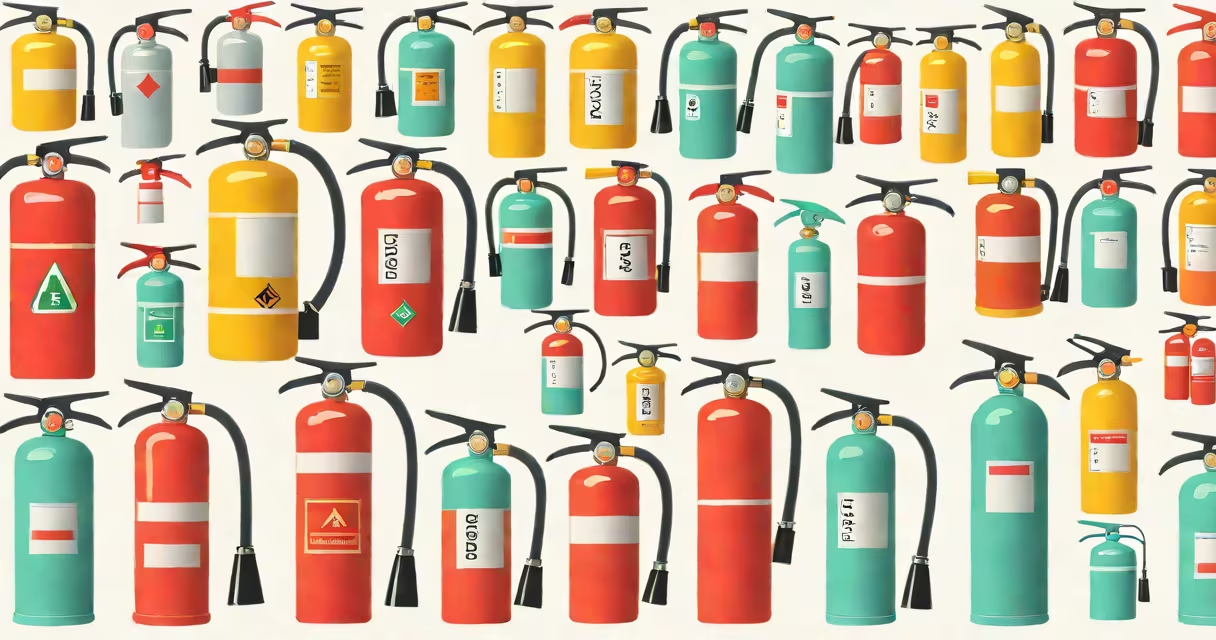
Types of extinguishers are fire suppression devices categorized by the class of fire they safely extinguish, based on the fuel type involved. There are five standard classes: A, B, C, D, and K, each designed for specific fire hazards.
The National Fire Protection Association (NFPA) defines these classes in NFPA 10, the Standard for Portable Fire Extinguishers. This standard governs how extinguishers are rated, labeled, and deployed in buildings. Using the wrong type can worsen a fire or create toxic fumes.
For example, using a water-based extinguisher on an electrical fire causes electrocution risk. Class C fires involve energized electrical equipment, and only non-conductive agents like CO₂ or dry chemical are safe. The correct classification prevents injury and property damage.
Each type of extinguisher uses a specific agent to interrupt the fire triangle-heat, fuel, and oxygen. Water cools burning materials, foam smothers flammable liquids, and dry chemical disrupts the chemical reaction in flames.
Class A extinguishers use water or foam to cool and penetrate solid fuels like wood, paper, or fabric. They're effective because water absorbs heat rapidly-about 4,184 joules per kilogram per degree Celsius. This cooling action stops the combustion process.
Class B extinguishers use foam or dry chemical agents to form a barrier between fuel and oxygen. The foam seals vapors from flammable liquids like gasoline or oil, preventing reignition. Dry chemical agents like monoammonium phosphate displace oxygen and stop chain reactions.
Fire extinguishers are grouped into five classes based on the material burning. Each class requires a different agent to be effective and safe.
| Class | Fuel Type | Extinguishing Agent | Common Examples |
|---|---|---|---|
| A | Ordinary combustibles: wood, paper, cloth | Water, foam | Standard red fire extinguisher in offices |
| B | Flammable liquids: gasoline, oil, grease | CO₂, foam, dry chemical | Garage or workshop extinguisher |
| C | Electrical equipment under power | CO₂, dry chemical (non-conductive) | Server room or industrial control panel |
| D | Combustible metals: magnesium, titanium, sodium | Sand, specialized dry powder | Machine shops or laboratories |
| K | Class K fires involve cooking oils and fats | Wet chemical agent | Kitchen hood suppression system |
Class K extinguishers are unique. They use potassium acetate or potassium carbonate solutions that react with hot cooking oil to form a soap-like layer. This layer cools the surface and prevents re-ignition. According to the NFPA, kitchen fires account for nearly 20% of commercial building fires annually.
Class D extinguishers require special training. The agent must be applied slowly to avoid dispersing metal particles into the air. A single mistake can turn a controlled fire into a dust explosion. These extinguishers are typically found in manufacturing plants handling aluminum or magnesium alloys.
Buildings must have extinguishers installed according to local fire codes. The International Building Code (IBC) mandates placement within 75 feet of travel distance from potential fire sources. In kitchens, a Class K extinguisher must be mounted within 10 feet of the cooking surface.
Workplaces with flammable liquids-like auto repair shops or paint facilities-must have Class B extinguishers. A 2022 study by the U.S. Fire Administration found that 34% of workplace fires occurred in areas with improper extinguisher access.
Home users often misclassify risks. A kitchen fire involving vegetable oil is Class K, not Class B. Using a dry chemical extinguisher on a frying pan fire creates a dangerous aerosol cloud. The National Fire Protection Association reports that improper extinguisher use leads to 12% of residential fire-related injuries.
Many people assume "ABC" extinguishers work for all fires. While they handle Classes A, B, and C, they fail on Class D and K fires. An ABC extinguisher on a magnesium fire can cause an explosive reaction due to the agent's interaction with the metal.
Another misconception is that all extinguishers are interchangeable. A CO₂ extinguisher is safe for electrical fires but ineffective on wood or paper. It lacks cooling capacity and can't smother a Class A fire effectively.
One non-obvious fact: dry chemical agents leave a residue that damages electronics. After using an ABC extinguisher in a server room, technicians must clean all components. The residue can cause short circuits. The Environmental Protection Agency notes that cleanup costs average $1,200 per incident.
In 2021, a restaurant in Chicago experienced a grease fire during dinner service. The chef grabbed a Class K extinguisher mounted near the range. He pulled the pin, aimed at the base of the flames, and swept side to side. The wet chemical agent formed a film that cooled the oil and prevented flare-ups.
Without the proper extinguisher, the fire would have spread to nearby cabinets. The restaurant avoided a $75,000 loss and a closure. The incident was documented by the Illinois Fire Prevention Bureau as a model response.
After the event, staff received training on fire extinguisher use. The owner emphasized that only Class K extinguishers are approved for cooking oil fires. He also installed dual-labeling: both "K" and "Cooking Oil Fires" on the unit.
When selecting types of extinguishers, match the agent to the hazard. Use a Class A for office file cabinets, Class B for garage tool storage, and Class K for commercial kitchens. Always verify the label and ensure the extinguisher is serviced annually.
Knowing the correct type of extinguisher prevents escalation and saves lives. Always train personnel and maintain clear signage. The right device in the right place makes all the difference.