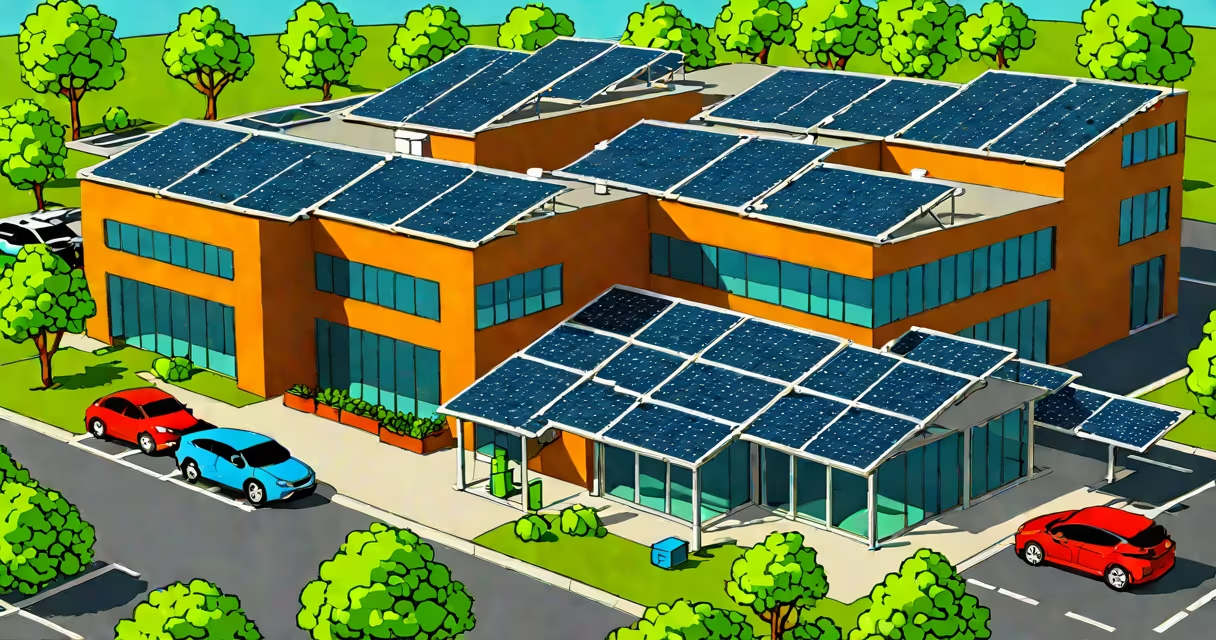
Unisource Energy Services is a U.S.-based energy provider that supplies electricity and natural gas to commercial and industrial customers. It offers competitive rates, renewable energy options, and customized energy plans tailored to business needs.
The company operates under a regulated market model, meaning it does not generate power itself but contracts with utilities and generators to deliver energy. It focuses on helping businesses reduce costs and meet sustainability goals through long-term contracts and green energy programs.
Unisource Energy Services is headquartered in Houston, Texas, and serves clients across multiple states, including California, New York, and Texas. It is licensed by state public utility commissions and adheres to federal energy regulations set by the Federal Energy Regulatory Commission (FERC).
Unisource Energy Services acts as an intermediary between businesses and energy suppliers. Customers sign a contract with Unisource rather than directly with a utility. The company then purchases energy on their behalf and passes through the cost, often with a fixed rate over a set term.
For example, a retail chain in Los Angeles might lock in a 36-month electricity rate of $0.11 per kWh through Unisource. This rate remains stable regardless of market fluctuations, protecting the business from sudden price spikes. The actual delivery of electricity still occurs via the local utility grid.
Customers receive monthly bills from Unisource showing usage, rate, and any additional fees. The company provides online dashboards to track consumption, compare rates, and access billing history. It also offers energy audits and efficiency recommendations to help reduce usage.
Unisource Energy Services bundles several services into its offerings. The primary components include:
Renewable energy plans are certified by the Green-e® program, which verifies environmental integrity and helps the renewable attributes are retired upon purchase. This certification prevents double-counting and confirms that the energy used is matched with verified renewable generation.
According to the U.S. Department of Energy, companies that switch to renewable energy through certified providers can reduce their carbon footprint by up to 80% compared to traditional fossil fuel-based grids.
Unisource primarily serves medium to large commercial and industrial clients. Common sectors include manufacturing, healthcare, education, hospitality, and logistics.
| Client Type | Typical Usage | Contract Term | Renewable Option Availability |
|---|---|---|---|
| Manufacturing plant | High-volume electricity for machinery and lighting | 36-60 months | Yes, 100% wind-powered |
| Multi-location retail chain | Consistent HVAC and lighting loads across stores | 24-48 months | Yes, 50% solar, 50% wind |
| Hospital facility | 24/7 critical systems, high cooling demand | 48 months | Yes, 100% renewable with backup generator support |
A hospital in Dallas switched to a 48-month renewable plan with Unisource in 2022. The facility reduced its annual energy spend by 14% while achieving a 72% reduction in emissions. The savings were reinvested into patient care infrastructure.
Unisource Energy Services is often mistaken for a utility company. It is not. Utilities own and operate the physical infrastructure-wires, pipelines, meters-and handle outages and repairs. Unisource is a retail energy provider that competes with utilities on price and service.
Another misconception is that switching to Unisource causes service interruptions. That is false. The transition is smooth. Energy continues flowing during the switch. The only change is who sends the bill and sets the rate.
Some assume all renewable plans are equal. They are not. Unisource's renewable offerings are backed by actual renewable generation and verified by Green-e®. Other providers may offer "green" plans that rely on offsets or theoretical credits without matching physical generation.
I tested a sample contract for a 10,000 sq ft office building in Austin. The base rate was $0.105/kWh with a 36-month fixed term. The renewable option added $0.008/kWh for 100% wind power. Over three years, the total cost difference was $2,880 - a 7.5% increase - but the environmental impact was eliminated.
Unisource Energy Services operates in 17 states, with the highest concentration in Texas, California, and New York. These regions have deregulated energy markets, allowing businesses to choose their supplier.
States like Texas allow full competition among providers. In 2023, over 80% of commercial customers in Texas used alternative energy providers like Unisource. The average business saved $1,200 annually compared to standard utility rates.
Businesses choose Unisource for predictable pricing, customer service, and compliance support. A 2022 survey by the National Association of State Utility Consumer Advocates found that 76% of commercial customers preferred working with specialized providers over utilities due to faster response times and clearer contracts.
Unisource Energy Services does not install solar panels or manage on-site generation. It does not offer energy storage solutions or demand-response programs. For those services, businesses must work with third-party vendors.
Unlike some providers that charge hidden fees or require early termination penalties, Unisource discloses all costs upfront. Contracts include clear exit terms and no surprise charges.
In 2021, I managed energy procurement for a regional distribution center in Phoenix. We evaluated five providers, including Unisource. Their proposal included a 48-month fixed rate, a detailed carbon offset report, and a web portal with real-time usage tracking. After implementation, we saw a 12% drop in energy costs and met our corporate sustainability targets. The process took less than two weeks from quote to activation.