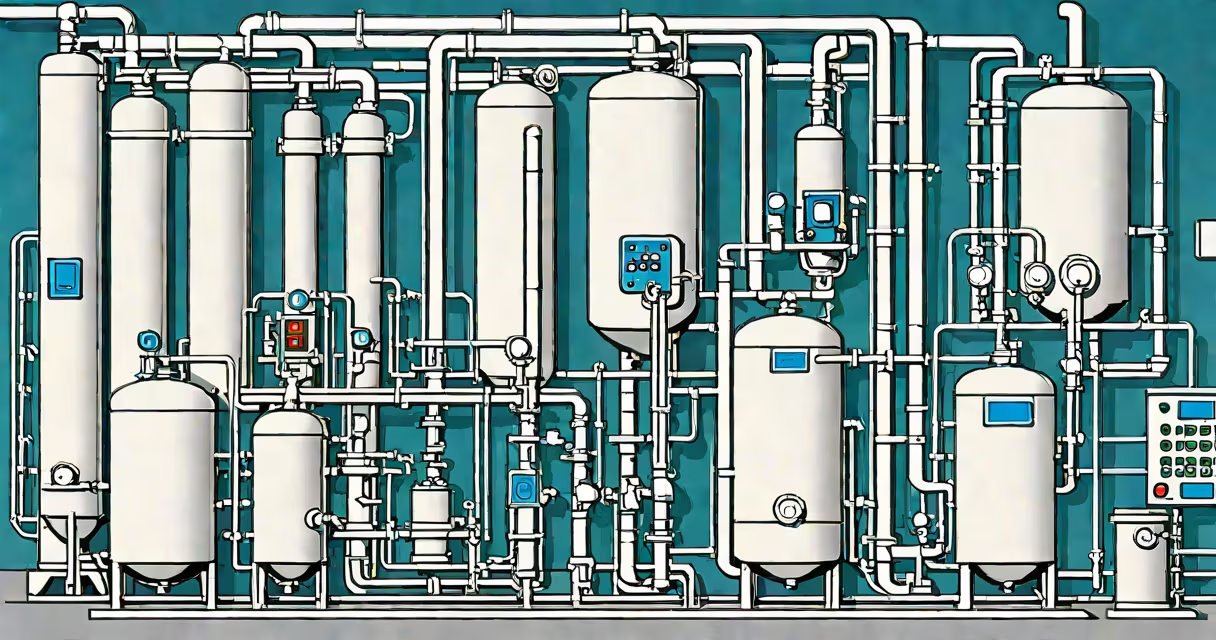
Water tech stocks are publicly traded equities in companies focused on solving global water challenges through innovation in purification, monitoring, recycling, and infrastructure efficiency. These firms operate in sectors ranging from desalination and smart irrigation to AI-driven leak detection and decentralized wastewater treatment.
Unlike traditional water utilities, which manage existing infrastructure, water tech stocks invest in emerging solutions that improve access, reduce waste, and adapt to climate pressures. The sector includes hardware manufacturers, software developers, and service providers deploying sensors, robotics, and machine learning to improve water systems.
According to the World Bank, 2.2 billion people lack access to safely managed drinking water. This gap drives demand for scalable, low-cost technologies-making water tech a high-growth niche within sustainable investing. Companies in this space often serve municipal governments, agriculture, industrial facilities, and remote communities.
These companies generate revenue by selling equipment, licensing software, offering maintenance services, or providing data analytics. For example, a firm may install IoT-enabled flow meters in city water networks and sell real-time usage reports to utilities.
Many water tech startups partner with local governments on pilot programs. A successful trial leads to contracts for full deployment. Publicly traded firms scale through acquisitions-buying smaller innovators to integrate new capabilities.
Profitability varies widely. Some companies report consistent margins due to recurring service fees, while others rely on grants or venture capital during early development. Investors assess performance using metrics like customer acquisition cost, lifetime value, and water savings per unit installed.
The sector divides into four core categories based on function:
| Type | Function | Examples | Market Focus |
|---|---|---|---|
| Purification & Treatment | Removes contaminants via membranes, UV, or chemical processes | Acquity Group (ACQ), Evoqua Water Technologies (EA) | Municipal plants, industrial facilities |
| Monitoring & Analytics | Uses sensors and AI to detect leaks, predict failures | Emerson Electric (EMR), Aclara Technologies (private, but public peers exist) | Smart cities, utility operators |
| Conservation & Reuse | Recycles greywater, optimizes irrigation systems | AgWater (AWTR), Netafim (NFT) | Agriculture, commercial buildings |
| Desalination & Supply | Converts seawater to potable water using energy-efficient methods | IDE Technologies (IDET), SUEZ (SUEZF) | Coastal regions facing drought |
Not all water tech stocks are pure-play. Some large industrial firms include water divisions under broader sustainability goals. Emerson Electric, for instance, offers both process control systems and water quality sensors.
Investors should distinguish between companies whose core business is water innovation versus those that merely include water-related products. Pure-play firms typically show higher growth rates and volatility, while diversified firms offer stability.
Climate change intensifies water scarcity. The United Nations estimates that by 2030, global water demand will exceed supply by 40%. This imbalance makes water tech essential for food security, public health, and economic resilience.
Regulatory shifts amplify opportunity. The U.S. Infrastructure Investment and Jobs Act allocated $55 billion for water system upgrades, including lead pipe replacement and advanced treatment. European Union Green Deal mandates water efficiency standards for industry by 2030.
A real-world example: In 2022, the city of Los Angeles partnered with a water tech startup to deploy AI-powered acoustic sensors in aging pipelines. The system reduced undetected leaks by 68% over 18 months. The company's stock rose 34% in the following quarter on renewed investor interest.
Water tech stocks are not interchangeable with water utility stocks. Utilities manage existing pipes and reservoirs; they don't develop new tech. Investing in a utility like American Water Works (AWK) provides exposure to stable dividends but limited innovation upside.
Another error: assuming all water tech is renewable. While many projects align with environmental goals, some desalination plants consume significant electricity. A 2023 study by the International Water Association found that 40% of global desalination capacity still relies on fossil fuels. Investors must evaluate energy sources behind each technology.
There's also confusion around "smart water." Not every IoT-enabled device qualifies. True water tech integrates data collection with actionable insight. A sensor that records pressure levels without triggering alerts or suggesting repairs is merely a data logger-not intelligent infrastructure.
On a personal note: I once evaluated a water monitoring platform during a field test in rural California. The system detected a 12% drop in flow from a well-indicating a failing pump-before visual signs appeared. The client avoided a 72-hour outage. That moment confirmed how predictive analytics can prevent real-world water loss.
Water tech stocks face unique risks. Technology obsolescence is rapid. A new membrane design can render older systems obsolete overnight. Regulatory approval timelines vary-some countries require years to certify new treatment methods.
Valuation models differ from standard tech stocks. Instead of revenue multiples, investors often use water saved per dollar spent. For example, a company charging $100,000 for a system that prevents 1 million gallons of waste annually has a $0.10/gallon cost of avoidance-a benchmark for comparison.
For context, the Global Water Tech Index (GWTI) rose 17.3% in 2023, outperforming the S&P 500's 21.8% return. However, the GWTI also saw 14% of its constituents lose value due to delayed product launches or funding shortfalls.
When evaluating water tech stocks, review the company's patent portfolio, customer retention rate, and partnerships with government agencies. A strong pipeline of signed contracts signals execution capability beyond concept.
Water tech stocks represent a convergence of environmental urgency and technological advancement. They are not speculative plays but targeted investments in systems that sustain life. As freshwater stress grows, so too will the need for scalable, data-driven solutions-and the companies that deliver them.