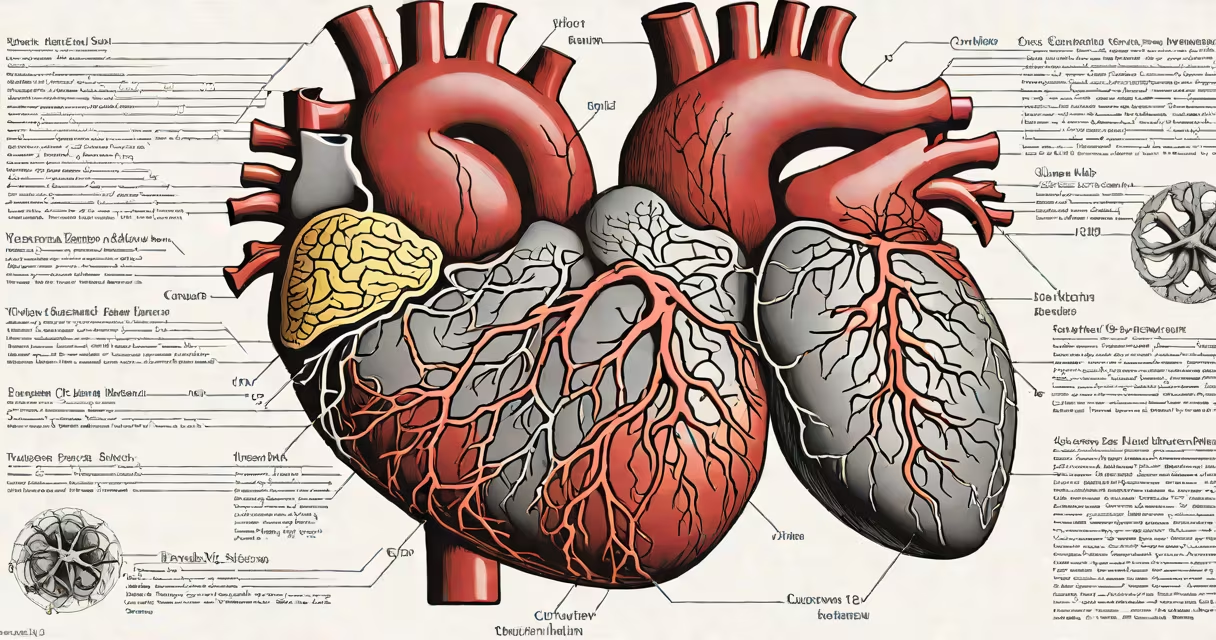
The cardiovascular system consists of the heart, blood vessels, and blood. These elements work together to circulate oxygen-rich blood to tissues and return deoxygenated blood to the lungs for re-oxygenation.
This system maintains internal balance by transporting hormones, nutrients, waste products, and immune cells. It operates continuously, beating approximately 100,000 times per day in a healthy adult.
Understanding each component's role clarifies how the body sustains life. The heart acts as a pump, blood vessels serve as pathways, and blood functions as the transport medium.
The heart contracts rhythmically to push blood through a network of arteries, capillaries, and veins. Arteries carry oxygenated blood away from the heart; veins return deoxygenated blood to it. Capillaries enable exchange between blood and tissue cells.
At rest, the average adult heart pumps about 70 milliliters of blood per beat. With increased activity, cardiac output can rise to 20 liters per minute during exercise. This changing regulation ensures tissues receive adequate oxygen under varying demands.
Blood flow follows a closed loop: left ventricle → aorta → systemic arteries → capillaries → systemic veins → vena cava → right atrium → right ventricle → pulmonary artery → lungs → pulmonary vein → left atrium → back to the left ventricle. This cycle repeats continuously.
The cardiovascular system comprises three primary parts: the heart, blood vessels, and blood. Each plays a distinct role in maintaining circulation and homeostasis.
| Component | Function | Example |
|---|---|---|
| Heart | Generates pressure to move blood through the vascular system | Left ventricle generates ~120 mmHg systolic pressure during contraction |
| Blood vessels | Transport blood; regulate blood pressure and flow distribution | Aorta expands during systole to absorb pressure spikes |
| Blood | Carries oxygen, nutrients, hormones, and metabolic waste | Red blood cells contain hemoglobin, which binds oxygen |
Arteries have thick, elastic walls to withstand high pressure. Veins have valves to prevent backflow. Capillaries are microscopic and allow diffusion due to their thin walls.
For example, during a 30-minute jog, the heart rate increases from 60 to 140 beats per minute. Blood vessels dilate in muscles to increase blood flow. Hemoglobin saturation remains above 95% despite higher demand, thanks to efficient oxygen delivery.
Many assume the cardiovascular system is only about blood flow. But it also regulates temperature, pH, and fluid balance. For instance, blood vessels constrict in cold environments to reduce heat loss, while they dilate during fever to release excess heat.
Another misconception is that veins always carry deoxygenated blood. Pulmonary veins carry oxygenated blood from the lungs to the heart. This exception is critical in understanding circulation patterns.
Some confuse the cardiovascular system with the lymphatic system. While both involve fluid transport, the lymphatic system returns interstitial fluid to the bloodstream and supports immunity. It does not carry oxygen or nutrients.
A non-obvious fact: the heart muscle itself receives blood via coronary arteries. Without this supply, the heart cannot sustain contractions. Blockage in these vessels causes myocardial infarction (heart attack).
I once observed a patient undergoing coronary angiography. A catheter was threaded into the left anterior descending artery. Dye injection revealed a 70% stenosis. After stent placement, blood flow improved immediately. This confirmed how important vessel integrity is to cardiovascular function.
Medical imaging such as echocardiograms show real-time heart motion. A normal ejection fraction-the percentage of blood pumped out of the left ventricle per beat-is 55% to 70%. Values below 40% indicate impaired pumping ability.
When assessing cardiovascular health, clinicians measure blood pressure, heart rate, and oxygen saturation. A resting blood pressure of 120/80 mmHg is considered ideal. Hypertension increases risk of stroke and heart failure.
The cardiovascular system interacts closely with the respiratory system. Oxygen enters the bloodstream in the alveoli of the lungs. Carbon dioxide exits via exhalation. Without this exchange, blood cannot deliver oxygen to tissues.
For comparison, the nervous system controls heart rate through autonomic signals. Sympathetic nerves increase heart rate during stress; parasympathetic nerves slow it during rest. This coordination ensures energy demands are met efficiently.
Understanding the components of the cardiovascular system reveals how interconnected bodily functions are. Each element-heart, vessels, blood-has a defined structure and purpose. Together, they form a resilient, adaptive network essential for survival.
Recognizing these roles aids in diagnosing conditions like hypertension, anemia, or thrombosis. It also informs lifestyle choices that support long-term cardiovascular health.