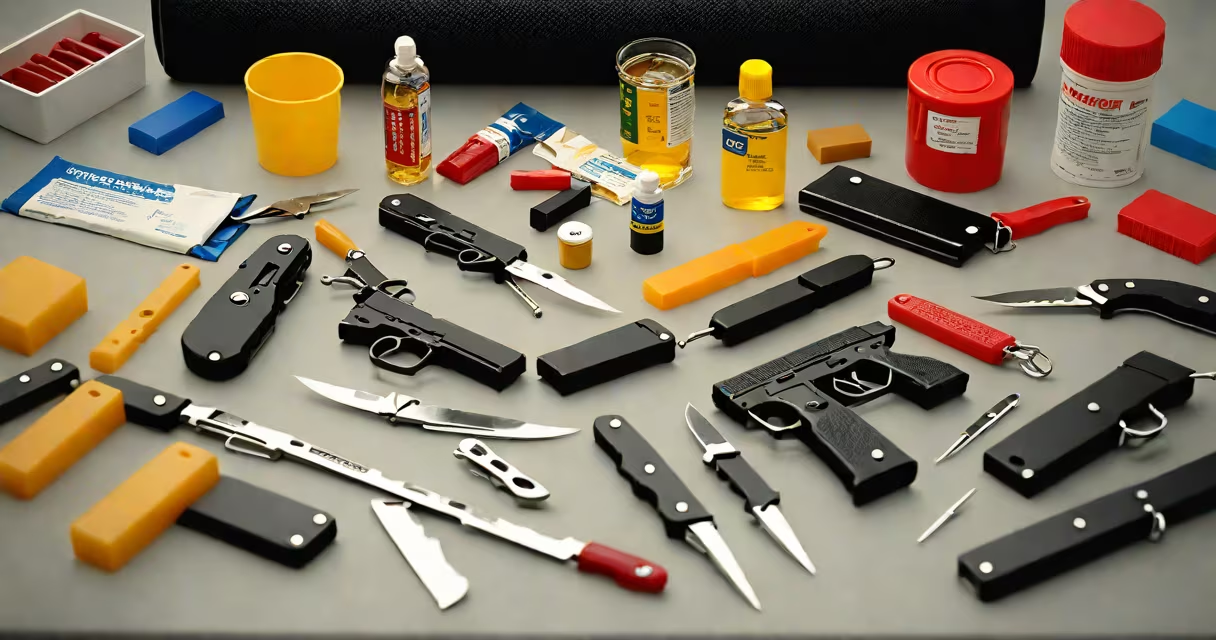
Items that cannot be brought on a plane include weapons, flammable substances, large quantities of liquids, and certain electronic devices not approved for carry-on. These restrictions are enforced by the Transportation Security Administration (TSA) and international aviation authorities to prevent threats during flight.
The TSA prohibits firearms, ammunition, explosives, and sharp objects such as knives, scissors with blades longer than 4 inches, and tools like hatchets. These items are banned from both carry-on and checked luggage unless specifically authorized under strict conditions. For example, a pocket knife with a blade under 2.5 inches may be carried in a passenger's pocket, but it must not be accessible during boarding.
Flammable liquids and gases are also restricted. This includes gasoline, lighter fluid, aerosol sprays in excess of 3.4 ounces (100 ml), and fuel-powered camping stoves. Even small amounts of alcohol over 70% ABV are banned. A single 12-ounce can of spray deodorant is permitted, but multiple cans exceed the limit and require checked baggage.
Security protocols exist because airborne environments amplify risks. A fire in a confined space like an aircraft cabin spreads rapidly and is difficult to extinguish. Similarly, explosive materials or sharp objects can be used to compromise flight safety. The FAA and ICAO set global standards based on decades of incident analysis.
For example, in 2010, a failed bomb attempt on a transatlantic flight led to stricter screening of lithium batteries and electronic devices. Since then, laptops and tablets larger than 16 inches have been required to be removed from bags during screening. Devices with lithium-ion batteries exceeding 100 watt-hours are banned from carry-ons unless approved for special transport.
A 2022 TSA report showed that over 40% of prohibited items detected at U.S. airport checkpoints were liquids or gels exceeding the 3.4-ounce limit. Most were personal care products like shampoo, lotion, or toothpaste. These are not allowed in carry-on bags unless they fit in a clear quart-sized bag and are declared at screening.
Many travelers assume that all food items are allowed. However, liquids such as soups, sauces, and syrups are subject to the same 3.4-ounce rule. A 12-ounce bottle of baby formula is permitted but must be declared and inspected separately. Travelers with infants can bring more than one container of formula, breast milk, or juice, but each must be less than 3.4 ounces and placed in a clear bag.
Another common error is believing that all electronics are allowed. Devices with batteries over 100 watt-hours, such as high-capacity power banks or professional camera batteries, are banned from carry-ons. A 150-watt-hour battery exceeds the limit and must be checked. The TSA states that even if a device appears safe, it may still be confiscated if it fails inspection.
Some travelers think that items like pepper spray or stun guns are acceptable. They are not. Pepper spray is classified as a chemical irritant and is illegal to carry on domestic flights. Stun guns are similarly banned under federal law. Even if a state permits their ownership, federal aviation rules override state laws at airports.
Below is a breakdown of categories and examples of what cannot be brought on a plane:
| Type | Examples | TSA Rule |
|---|---|---|
| Weapons | Knives, brass knuckles, nunchucks | Banned in carry-on and checked bags |
| Liquids/Gels | Shampoo, lotion, toothpaste over 3.4 oz | Must fit in a 1-quart clear bag; one per passenger |
| Electronics | Power banks over 100 Wh, large drones | Must be declared; some require special approval |
| Flammables | Gasoline, lighter fluid, aerosols over 3.4 oz | Prohibited in all luggage |
| Permits/Controlled Substances | Medical marijuana, cannabis oil | Banned under federal law regardless of state legality |
One non-obvious fact: even items labeled "non-flammable" may be restricted. For example, some hand sanitizers contain 70% alcohol and are treated as flammable liquids. The TSA requires that any product with more than 70% alcohol be stored in checked baggage.
In 2023, a traveler attempting to board a Delta flight from Atlanta had a 12-ounce bottle of perfume confiscated. The bottle was in a clear bag but exceeded the 3.4-ounce limit. The passenger claimed it was a gift and asked for an exception. The TSA officer refused, citing policy. The item was later returned via a claim form after the flight.
This incident illustrates that exceptions are rare. The TSA enforces rules uniformly across all U.S. airports. Even if a passenger has a compelling reason, such as a medical condition requiring a specific medication, the item must still comply with size and packaging rules.
I once traveled with a small electric scooter that folded into a backpack. It had a 60-watt-hour battery. I assumed it was allowed. At security, the screener flagged it for review. After checking the TSA website, I confirmed that devices with batteries between 100 and 160 watt-hours require prior approval. My scooter was denied, and I had to ship it separately. This taught me to verify battery specs before travel.
Many items that seem restricted can be transported safely if prepared correctly. Solid foods like sandwiches, fruits, and snacks are allowed in unlimited quantity. Medications in original packaging are permitted, even if they exceed standard liquid limits, provided they are declared.
For example, a patient traveling with insulin in vials must declare them. The TSA allows up to 3.4 ounces per vial, but multiple vials are permitted if they are medically necessary. The passenger must show a doctor's note or prescription if questioned.
What cannot be brought on a plane is determined by safety, risk assessment, and international agreement. The goal is not to inconvenience travelers but to maintain airworthiness and protect passengers. Review the current rules before departure to avoid delays or confiscation.