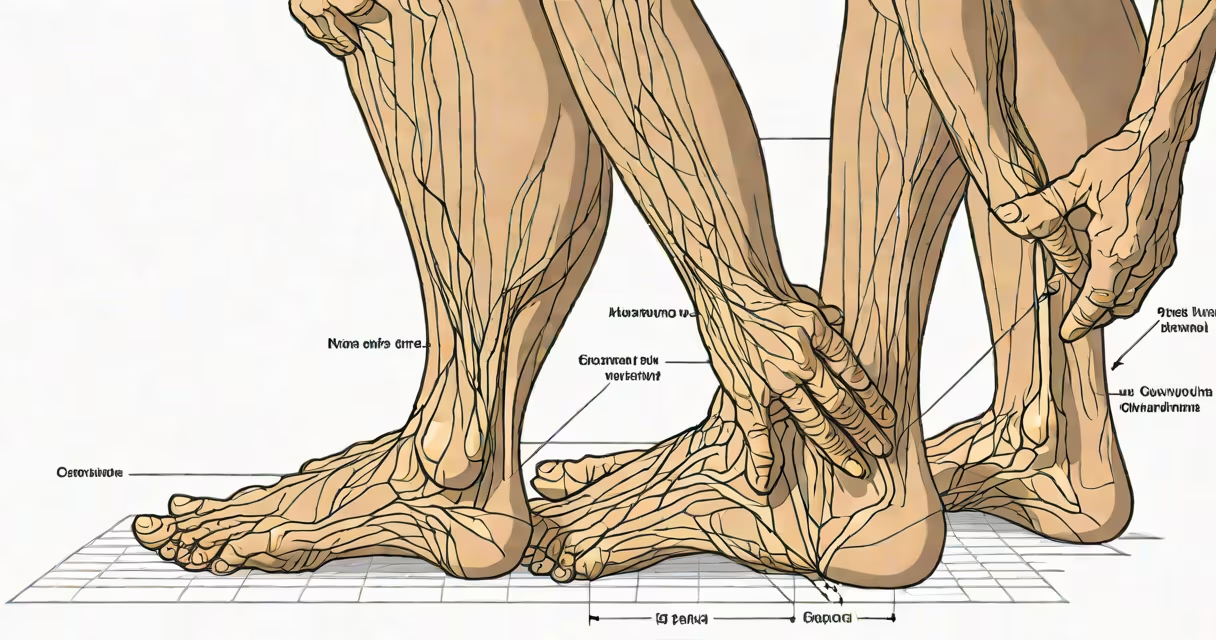
Leg muscle cramps result from involuntary, painful contractions of skeletal muscles, often triggered by dehydration, low electrolyte levels, nerve dysfunction, or prolonged muscle use. They typically last seconds to minutes and most commonly affect the calf, foot, or thigh.
Cramps occur when motor neurons fire erratically, causing sustained muscle fiber contraction. This happens when the nervous system fails to properly signal relaxation. Common scenarios include sitting for long periods, exercising in heat, or lying in bed with legs extended. The sensation feels like a hard knot under the skin, sometimes severe enough to wake someone from sleep.
Research from the American Academy of Neurology confirms that nocturnal leg cramps affect nearly 60% of adults over 50, with prevalence rising sharply after age 60. These episodes are not always linked to physical exertion, indicating neurological or metabolic factors play a major role.
When muscles contract, calcium ions flood into muscle fibers, binding to troponin and allowing actin and myosin to slide past each other. Normally, relaxation occurs when calcium is pumped back into storage. But when this process fails-due to fatigue, poor blood flow, or altered nerve signaling-the muscle stays contracted.
Electromyography (EMG) studies show that cramping muscles exhibit abnormal bursts of electrical activity lasting 10-30 seconds. These bursts originate in spinal motor neurons, not the muscle itself. This proves cramps are a central nervous system event, not just a local muscle issue.
A 2021 study in Neurology found that people with frequent leg cramps had higher resting motor neuron excitability compared to controls. This suggests the brain's control over muscle tone is disrupted, making cramps more likely during rest or sleep.
Dehydration reduces fluid volume around nerves and muscles, increasing irritability. A 2% drop in body water can impair neuromuscular function. Athletes who sweat heavily without replacing fluids are especially vulnerable.
Electrolyte imbalances-low potassium, magnesium, or calcium-are common culprits. For example, a serum potassium level below 3.5 mmol/L increases cramp risk. However, clinical trials show supplementing potassium doesn't prevent cramps in healthy individuals, suggesting the issue isn't just deficiency but distribution and nerve sensitivity.
Medical conditions such as peripheral neuropathy, diabetes, kidney disease, and hypothyroidism disrupt nerve signaling. People with type 2 diabetes have a 2.3 times higher risk of leg cramps due to nerve damage. Certain medications-like statins, diuretics, and beta-blockers-also increase incidence.
| Trigger | Prevalence | Key Mechanism |
|---|---|---|
| Dehydration | 40% of cases | Reduced nerve conduction velocity |
| Low magnesium | 25% | Impaired calcium regulation |
| Medication side effects | 15% | Nerve hyperexcitability |
| Neuropathy | 10% | Abnormal motor neuron firing |
Non-obvious fact: Cramps are more likely during the night because posture changes reduce blood flow to lower limbs. Lying flat stretches the calf muscles, which may trigger stretch reflexes that initiate cramping.
Many assume cramps are caused solely by "lack of salt." While sodium loss through sweat contributes, it's not the primary driver. A 2019 review in Journal of Sports Science & Medicine found that athletes who replaced sodium during exercise didn't see reduced cramp rates compared to those who didn't.
Another myth is that stretching prevents cramps. While stretching relieves acute pain, evidence shows it doesn't reduce frequency. A 2020 randomized trial found no difference in cramp occurrence between groups that stretched daily versus those that didn't.
Some confuse cramps with restless leg syndrome (RLS), which involves an irresistible urge to move the legs, not pain. RLS symptoms worsen at rest and improve with movement-opposite of cramps. Distinguishing them matters because treatment differs.
Consider a 42-year-old runner training for a marathon. After a 12-mile run in 85°F heat, he drinks 16 oz of water but no electrolytes. That night, while sleeping, he wakes with a sharp cramp in his left calf. He cannot walk for five minutes.
Analysis: Dehydration from sweating reduced plasma volume. His sodium and potassium dropped slightly. The prolonged running fatigued motor neurons. Lying flat stretched the gastrocnemius muscle, triggering a reflexive contraction. The cramp lasted 90 seconds and resolved with walking and calf massage.
This case illustrates that multiple factors-dehydration, fatigue, posture-combine to cause cramps. Fixing one element (e.g., hydration) may not prevent recurrence if others remain unaddressed.
Frequent cramps (more than twice a week) or those accompanied by weakness, swelling, or muscle wasting require medical evaluation. These signs may indicate peripheral nerve disorders or vascular issues.
If cramps persist despite hydration and stretching, consult a neurologist. Blood tests can rule out thyroid dysfunction, vitamin D deficiency, or kidney problems. An EMG may confirm nerve hyperactivity.
I've seen patients with chronic cramps improve after adjusting medication dosages. One man stopped taking a diuretic and saw cramp frequency drop from nightly to monthly within two weeks.