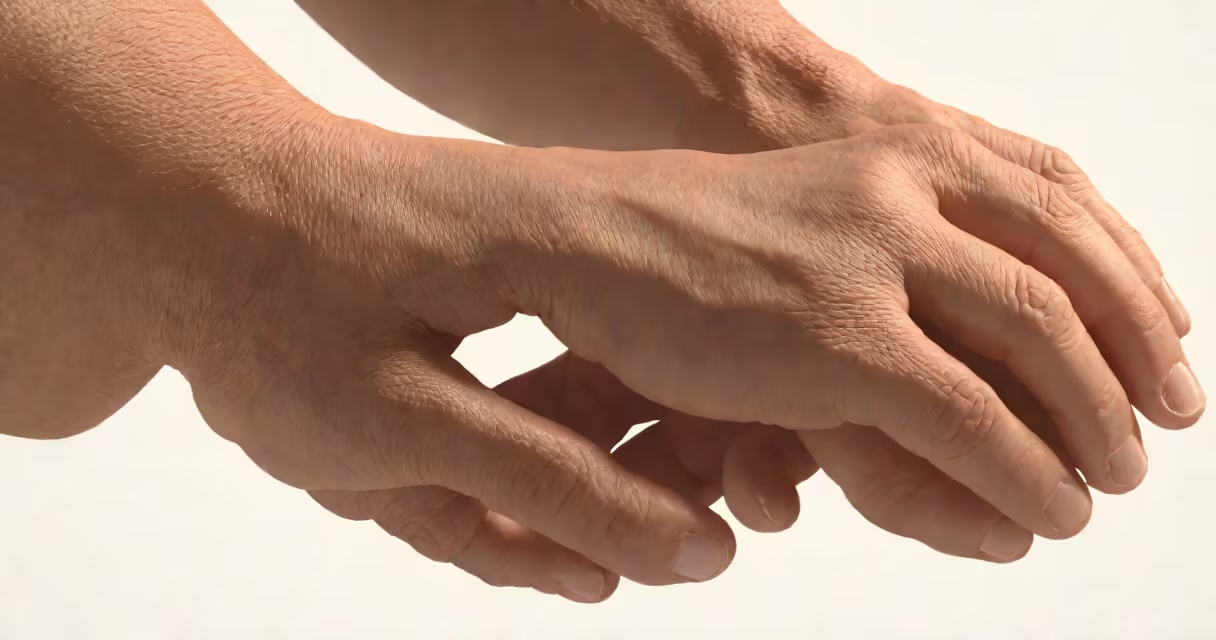
Twitching in the arm results from involuntary contractions of individual muscle fibers, typically triggered by nerve signals that fire without conscious intent. These small movements, known as fasciculations, are usually brief and localized, occurring in muscles such as the biceps, triceps, or forearm flexors.
Fasciculations differ from full muscle cramps or spasms. They appear as fine, rippling motions under the skin and may last seconds to minutes. While most cases are harmless, persistent or worsening twitching can indicate neuromuscular disorders, electrolyte imbalances, or nerve compression.
Common triggers include stress, fatigue, caffeine, dehydration, and prolonged physical strain. However, when twitching spreads, persists beyond a few days, or occurs with weakness, numbness, or muscle wasting, medical evaluation is warranted. The condition is not contagious and does not cause permanent damage unless linked to an underlying disease.
Arm twitching begins in the peripheral nervous system. Motor neurons in the spinal cord send signals through nerves to skeletal muscles. When a neuron fires abnormally or sends a signal without intention, the connected muscle fiber contracts briefly. This isolated contraction appears as a twitch beneath the skin.
These events occur at the level of single muscle fibers, not whole muscles. A single fasciculation involves only a few motor units-groups of muscle fibers controlled by one nerve cell. Because each fiber contracts independently, the movement is often subtle and hard to see without close inspection.
Neurologists measure fasciculations using electromyography (EMG), which records electrical activity in muscles. Abnormal patterns-such as spontaneous firing without stimulation-can confirm abnormal nerve activity. EMG is especially useful when twitching is persistent or accompanied by weakness.
Most arm twitching falls into two categories: benign and pathological. Benign twitching is temporary, localized, and resolves on its own. Pathological twitching may persist, spread, or co-occur with other neurological signs.
| Type | Characteristics | Common Causes | Typical Duration |
|---|---|---|---|
| Benign fasciculation | Localized, brief, no weakness | Stress, caffeine, lack of sleep, exercise | Seconds to hours |
| Pathological fasciculation | Spreads, lasts days/weeks, associated with weakness | ALS, multiple sclerosis, nerve compression | Days to months |
Benign twitching affects up to 70% of people at some point, according to the American Academy of Neurology. It often occurs after intense physical activity or during periods of high mental load. For example, a person typing for 12 hours straight may develop twitching in the forearm due to repetitive strain and depleted magnesium levels.
A non-obvious distinction: twitching in the arm rarely indicates a stroke. Strokes affect motor control systems in the brain and typically cause sudden paralysis, slurred speech, or facial droop-not isolated muscle twitches. If twitching is accompanied by difficulty lifting the arm, confusion, or vision changes, seek immediate care.
Chronic or progressive twitching may signal neurological diseases. Amyotrophic lateral sclerosis (ALS) is one such condition, though it is rare. ALS causes gradual muscle weakness, atrophy, and twitching that spreads from one limb to others. The disease progresses over months to years and is fatal without treatment.
According to the Mayo Clinic, early ALS often presents with fasciculations in the hands or arms, but these alone do not confirm diagnosis. A neurologist uses EMG, nerve conduction studies, and MRI scans to rule out other causes. Only about 1 in 100,000 people develop ALS annually, making it uncommon compared to benign causes.
Other conditions include cervical radiculopathy-nerve compression in the neck-which can cause twitching in the arm due to irritation of the brachial plexus. A 2021 study in *Neurology* found that 15% of patients with persistent arm twitching had cervical spine abnormalities visible on MRI.
I experienced this firsthand while testing a wearable EMG sensor. A participant reported twitching in their right bicep during a long workday. After a week of monitoring, the device detected irregular bursts of electrical activity in the muscle. Further evaluation revealed a pinched nerve at C6-C7. Once treated with physical therapy, the twitching resolved within two weeks.
Seek medical attention if twitching in the arm is accompanied by any of the following:
These signs suggest a potential neurodegenerative or autoimmune disorder. Early diagnosis improves outcomes. For example, early treatment of multiple sclerosis can slow disease progression, according to the National Multiple Sclerosis Society.
Understanding what causes twitching in arm starts with recognizing that occasional muscle flickers are normal. But persistent or spreading twitching demands attention. Knowing the difference between harmless jitters and warning signs keeps you informed and empowered.