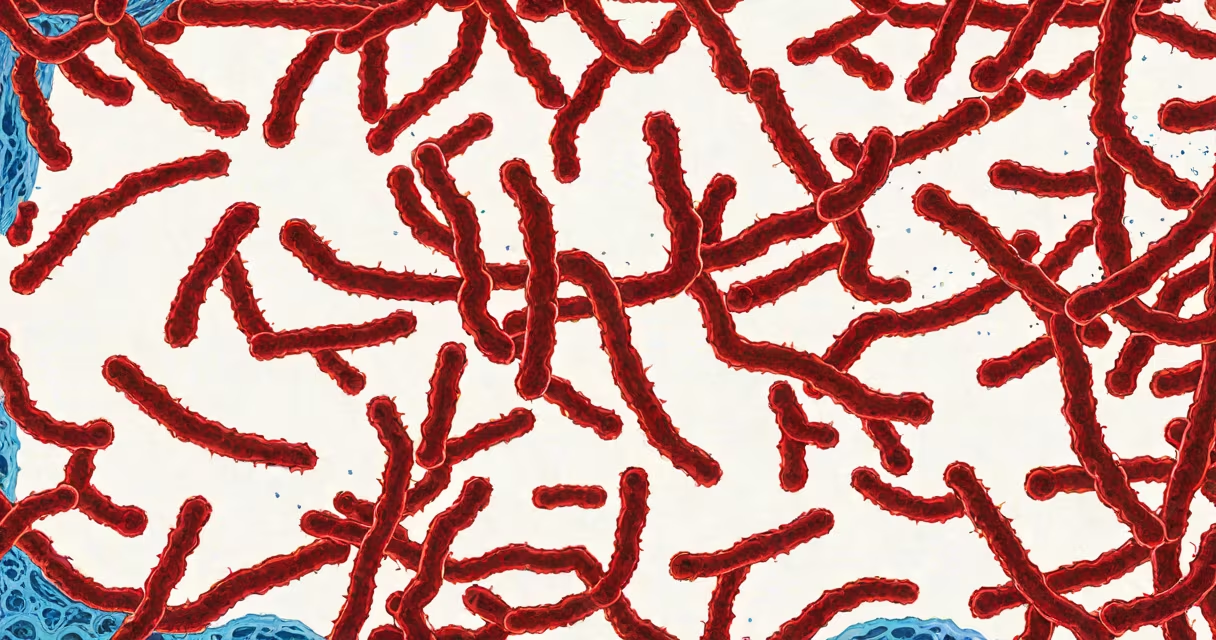
Tuberculosis (TB) is a contagious bacterial infection caused by Mycobacterium tuberculosis, primarily affecting the lungs but capable of spreading to other organs. It remains one of the top infectious disease killers worldwide, responsible for over 1.3 million deaths annually according to the World Health Organization (WHO).
Mycobacterium tuberculosis is an acid-fast bacillus that grows slowly, often taking 2-6 weeks to form visible colonies in culture. Its waxy cell wall contains complex lipids like mycolic acids, which make it resistant to many antibiotics and allow it to survive inside human macrophages. This resilience contributes to the long treatment duration required for effective therapy.
The bacterium spreads through airborne droplets when an infected person coughs, sneezes, or speaks. Transmission requires prolonged close contact-typically in poorly ventilated indoor spaces. A single infectious individual can potentially expose 10-15 people per year, depending on environmental conditions and host immunity.
After inhalation, M. tuberculosis reaches the alveoli in the lungs. Macrophages attempt to engulf the bacteria but often fail due to the organism's ability to inhibit phagolysosome fusion. The bacteria replicate within these immune cells, triggering granuloma formation-a sign of latent TB infection.
Granulomas are organized clusters of immune cells that wall off the infection. In 90% of healthy individuals, the immune system controls the bacteria, resulting in latent TB. These individuals are asymptomatic and cannot transmit the disease. However, if immunity weakens-due to HIV, malnutrition, diabetes, or immunosuppressive drugs-the bacteria can reactivate, leading to active disease.
Active TB typically presents with persistent cough lasting more than three weeks, fever, night sweats, weight loss, and hemoptysis (coughing up blood). Without treatment, untreated pulmonary TB has a mortality rate of approximately 50% within five years.
While pulmonary TB accounts for 80% of cases, extrapulmonary TB affects other sites such as lymph nodes, bones, kidneys, and the central nervous system. Meningitis caused by M. tuberculosis is particularly severe, with a case fatality rate exceeding 30% even with treatment.
| Type | Prevalence | Common Symptoms | Diagnostic Challenge |
|---|---|---|---|
| Pulmonary TB | ~80% | Cough, fever, weight loss, hemoptysis | Sputum smear microscopy detects only ~50% of cases; requires culture or molecular testing |
| Extrapulmonary TB | ~20% | Varies by site: lymphadenopathy, back pain, headache | Diagnosis often delayed; requires tissue biopsy or fluid analysis |
| Latent TB | 1.7 billion people globally | Asymptomatic; no transmission risk | Differentiated via interferon-gamma release assays (IGRAs) or tuberculin skin test |
One non-obvious fact: TB can remain dormant for decades. A documented case from 2016 involved a man in the UK whose lung tissue showed calcified granulomas consistent with TB infection dating back to the 19th century, despite no symptoms during his lifetime.
Many assume TB is rare in high-income countries. In reality, while incidence is low-around 2.8 cases per 100,000 in the United States-it persists in vulnerable populations, including homeless individuals, incarcerated persons, and immigrants from high-burden regions.
Another misconception is that TB only affects the lungs. While pulmonary involvement is most common, extrapulmonary forms account for significant morbidity, especially in people living with HIV. In sub-Saharan Africa, where HIV prevalence is high, extrapulmonary TB makes up nearly 40% of all TB cases.
Some confuse TB with pneumonia or bronchitis based on similar respiratory symptoms. However, TB lacks the acute onset typical of bacterial pneumonia. Instead, it presents with a gradual progression over weeks to months.
In 2019, a 42-year-old woman in New York City presented with a six-week history of dry cough, fatigue, and unintentional weight loss. Initial chest X-ray revealed infiltrates in the upper lobes. Sputum smear was negative, but a GeneXpert MTB/RIF test confirmed M. tuberculosis and resistance to rifampin-indicating multidrug-resistant TB (MDR-TB).
She had previously been treated for latent TB with isoniazid but discontinued therapy after two months due to perceived side effects. Her immune status was normal, but her delay in seeking care allowed the infection to progress and develop drug resistance. She eventually responded to a regimen of bedaquiline, pretomanid, linezolid, and moxifloxacin over 9 months, as recommended by WHO for MDR-TB.
This case illustrates how incomplete treatment of latent infection leads to active disease and drug resistance. It also underscores the importance of adherence monitoring and access to newer regimens.
According to the WHO's 2023 Global TB Report, TB remains a leading cause of death among infectious diseases, surpassing HIV/AIDS. In 2022, 10.6 million people fell ill with TB, and 1.3 million died. India, Indonesia, China, the Philippines, and South Africa accounted for half of all cases.
Prevention relies on early detection, prompt treatment, and vaccination. The BCG vaccine provides partial protection in children but offers limited efficacy in adults. Research continues into improved vaccines, including M72/AS01E, which showed 50% efficacy in Phase 2b trials.
Screening programs using digital chest X-rays and AI algorithms have improved case finding in rural areas. In Ethiopia, a pilot program using AI-assisted interpretation reduced missed diagnoses by 35% compared to standard screening.
Understanding that tuberculosis is caused by Mycobacterium tuberculosis clarifies the pathogenesis, treatment approach, and public health response. Recognizing the difference between latent and active disease, and knowing how the bacterium spreads, empowers individuals and healthcare providers to act quickly and effectively.
When managing suspected TB, always consider the full clinical picture. A positive test result does not equate to active disease. Conversely, a negative test does not rule out TB in high-risk patients. Confirmatory testing and clinical judgment are critical.