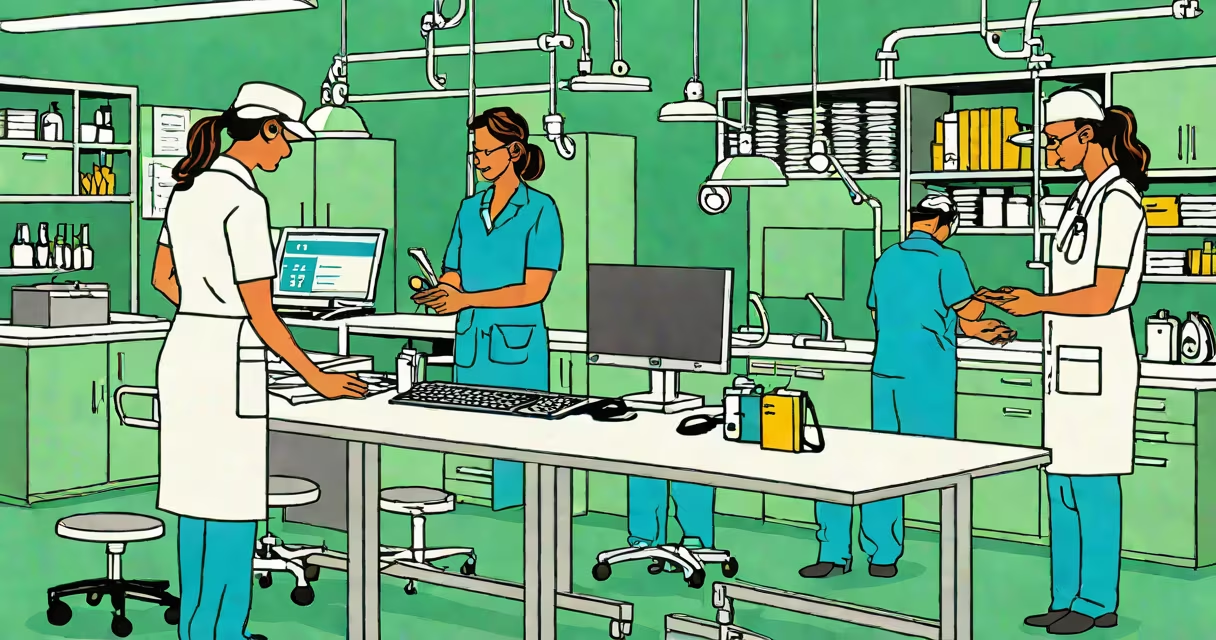
Occupational health nurses (OHNs) are registered nurses who specialize in preventing workplace injuries and illnesses, promoting employee wellness, and ensuring compliance with health and safety regulations. They assess job site risks, manage medical issues arising from work environments, and implement programs that support long-term worker health.
OHNs operate in diverse settings including factories, offices, construction sites, healthcare facilities, and government agencies. Their primary goal is to maintain a safe, healthy workforce by identifying hazards before they cause harm. They conduct pre-employment physicals, respond to on-the-job injuries, and coordinate return-to-work plans. They also develop education materials and lead training sessions on topics such as ergonomics, infection control, and mental health awareness.
The role requires a nursing license and often additional certification. The Board of Certified Safety Professionals (BCSP) recognizes the Certified Occupational Health Nurse (COHN) credential, which validates expertise in occupational health practices. According to the National Institute for Occupational Safety and Health (NIOSH), workplaces with dedicated OHNs report 30% fewer lost-time injuries annually compared to those without such staff.
OHNs perform many duties centered on proactive health management. They conduct routine health screenings during employee orientation and periodically thereafter. These screenings include blood pressure checks, vision and hearing tests, and assessments of musculoskeletal strain-especially in jobs involving repetitive motion or heavy lifting.
When an injury occurs, OHNs are often the first responder. They document incidents, provide initial treatment, and determine whether further medical care is needed. For example, in a warehouse setting, a worker slips while moving pallets. The OHN evaluates the injury, administers first aid, completes a workers' compensation report, and coordinates with a physician for follow-up care.
OHNs also manage chronic conditions common in certain industries. A nurse working in a steel mill may monitor employees exposed to high noise levels for early signs of hearing loss. They track audiometric test results over time and recommend hearing protection or job reassignment if thresholds are exceeded. This preventive approach reduces long-term disability claims and supports workforce retention.
Occupational health nurses focus on four major domains: injury prevention, illness management, wellness promotion, and regulatory compliance. Each domain addresses specific risks tied to job functions.
| Focus Area | Common Activities | Example Application |
|---|---|---|
| Injury Prevention | Job hazard analysis, ergonomic evaluations, safety training | Assessing a factory assembly line for repetitive strain risks and recommending tool redesign |
| Illness Management | Monitoring exposure to chemicals, tracking infectious disease outbreaks | Identifying a cluster of respiratory symptoms among lab technicians and initiating air quality testing |
| Wellness Promotion | Organizing flu clinics, leading stress management workshops | Running a 12-week smoking cessation program for hospital staff with 68% participation rate |
| Regulatory Compliance | Preparing OSHA documentation, maintaining health records | Ensuring all employee medical files meet HIPAA standards and are updated biannually |
A non-obvious distinction: OHNs are not emergency medical responders. While they may administer basic first aid, their role differs from paramedics or ER nurses. They focus on sustained health outcomes rather than acute crisis intervention. Their work is rooted in continuity-not immediate response.
Employers across sectors hire occupational health nurses. Manufacturing plants and mining operations rely heavily on OHNs due to high-risk environments. In contrast, corporate offices may employ them primarily for wellness initiatives and mental health support.
For example, a tech company with 500 employees uses an OHN to run quarterly mental health check-ins. The nurse conducts anonymous surveys, identifies rising anxiety levels, and partners with HR to introduce flexible scheduling and mindfulness sessions. After six months, absenteeism drops by 18%, according to internal data.
Another example: a hospital's occupational health department uses OHNs to manage staff vaccinations. During flu season, they administer over 400 doses in two weeks, track adverse reactions, and update immunization records. This prevents outbreaks and protects vulnerable patients.
Many assume OHNs only handle workers' compensation claims. That's a narrow view. While they do file reports and assist with insurance paperwork, their role extends far beyond administrative tasks. They analyze patterns in injury data, identify systemic risks, and recommend policy changes.
Some confuse OHNs with general practice nurses. The difference lies in specialization. General nurses treat individuals based on symptoms. OHNs evaluate entire work environments. They don't just treat a worker with carpal tunnel-they study the workstation design, tool weight, and task frequency to prevent recurrence.
A personal observation: during a site visit to a printing facility, I watched an OHN adjust a worker's desk height and keyboard position after noticing poor posture. The change reduced discomfort within days. The worker didn't need medication or surgery-just a small environmental fix guided by clinical judgment. That moment highlighted how preventive care can be both low-cost and effective.
Workplaces with consistent OHN presence see measurable improvements. NIOSH reports that companies using occupational health services experience 25% lower turnover rates and 40% fewer days lost to illness. These outcomes stem from early detection, timely interventions, and continuous monitoring.
One large retail chain implemented an OHN-led fatigue management program after noticing increased errors during night shifts. The nurse introduced scheduled rest breaks, adjusted lighting, and trained supervisors to recognize signs of exhaustion. Within a year, error rates dropped by 33%, and employee satisfaction scores rose by 21 points.
Occupational health nurses are not optional extras. They are integral to sustainable, productive workplaces. Their work blends clinical expertise with environmental awareness, making them essential in modern occupational safety frameworks.