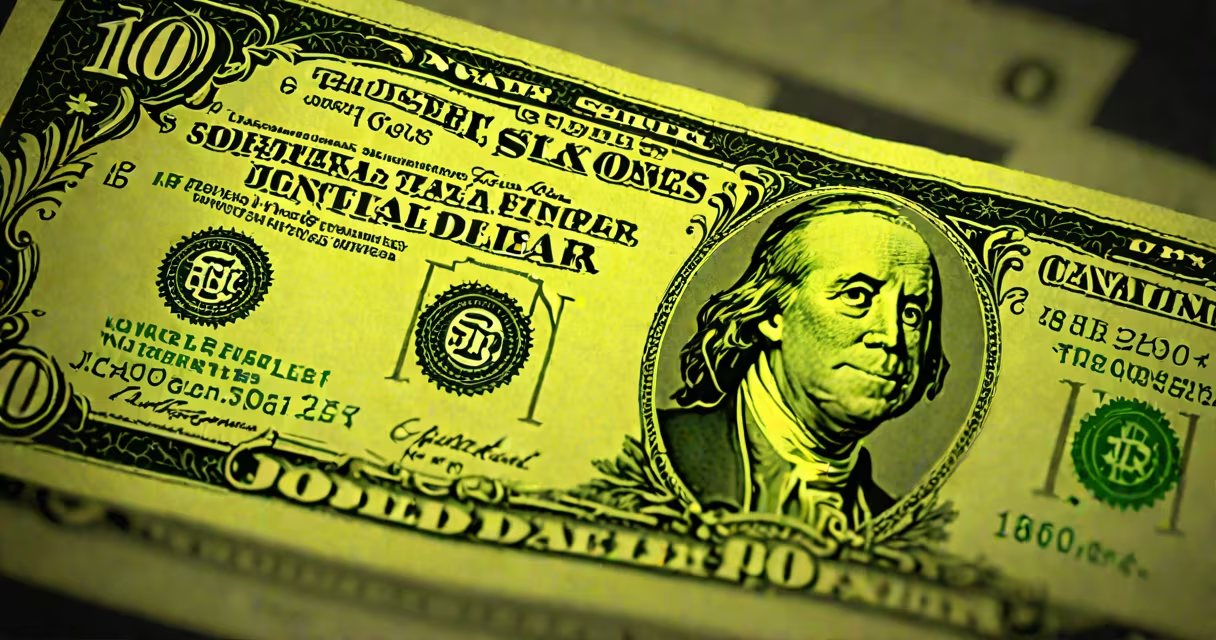
The letters on U.S. dollar bills represent the Federal Reserve Bank that issued the note and serve as part of the unique serial number system. Each note has a distinct combination of letters and numbers used to track its origin and movement through the economy.
Every U.S. banknote features a serial number printed in two locations: the upper-left corner and along the right edge. The serial number consists of a combination of letters and digits. The first letter corresponds to the Federal Reserve district that issued the note. The remaining letters and numbers form a unique identifier assigned during printing.
These codes are not random. They are generated by the Bureau of Engraving and Printing (BEP) under guidelines set by the Federal Reserve System. The system ensures no two notes have the same serial number, enabling tracking of counterfeit detection, circulation patterns, and supply chain logistics.
The first letter in the serial number identifies the Federal Reserve Bank responsible for distributing the note. There are twelve Federal Reserve Banks across the United States, each serving a specific geographic region. These banks are located in Boston, New York, Philadelphia, Cleveland, Richmond, Atlanta, Chicago, St. Louis, Minneapolis, Kansas City, Dallas, and San Francisco.
Each bank is assigned a unique letter from A to L. For example, a note with the serial number beginning with "A" was issued by the Federal Reserve Bank of Boston. A "D" indicates the Federal Reserve Bank of Cleveland. This coding system allows the Federal Reserve to monitor regional distribution and manage cash flow efficiently.
When a banknote is printed, the BEP assigns serial numbers in batches. The first letter is determined by the bank that will distribute the batch. The rest of the serial number is sequential within that batch. This creates a traceable path from printer to circulation.
A standard U.S. dollar bill serial number follows this format: one letter, eight digits, and one letter. For example: A12345678B. The first letter denotes the issuing Federal Reserve Bank. The eight digits are the unique identifier. The final letter is a check digit used to verify authenticity.
The check digit is calculated using a mathematical algorithm based on the first nine characters. If the calculation doesn't match the last letter, the note may be flagged as potentially counterfeit. This validation step is part of the anti-counterfeiting measures embedded in U.S. currency design.
| Letter | Federal Reserve District | Headquarters City |
|---|---|---|
| A | Boston | Boston, MA |
| B | New York | New York, NY |
| C | Philadelphia | Philadelphia, PA |
| D | Cleveland | Cleveland, OH |
| E | Richmond | Richmond, VA |
| F | Atlanta | Atlanta, GA |
| G | Chicago | Chicago, IL |
| H | St. Louis | St. Louis, MO |
| I | Minneapolis | Minneapolis, MN |
| J | Kansas City | Kansas City, MO |
| K | Dallas | Dallas, TX |
| L | San Francisco | San Francisco, CA |
Many people assume the letters on dollar bills indicate the denomination or the year of issue. That is incorrect. The denomination is shown by the face value (e.g., "$100"), and the year is printed near the lower-right corner of the front side. The letters are strictly tied to the issuing Federal Reserve Bank.
Another misconception is that certain letter combinations make a bill more valuable. While rare serial numbers-such as those with repeating digits (e.g., 11111111) or palindromes (e.g., 1234321)-can attract collectors, the letters themselves do not increase intrinsic value. A $1 bill with serial number A11111111Z is not worth more than a $100 bill with the same pattern unless it is part of a collectible series.
Some believe the letters are randomly assigned. In reality, the assignment is systematic. The BEP uses a controlled sequence to prevent duplicates and ensure traceability. The system is audited regularly by the Government Accountability Office (GAO), which confirms the integrity of serial number generation processes.
Suppose you find a $20 bill with the serial number A12345678B. The first letter "A" tells you it was issued by the Federal Reserve Bank of Boston. The digits 12345678 are the unique ID. The final letter "B" is the check digit, verified against the algorithm.
If this note is later turned in to a bank, the institution can cross-reference the serial number with internal records. If the note is reported as stolen or suspected of being counterfeit, the Federal Reserve can trace its last known location and distribution channel. This system helps prevent fraud and supports monetary policy enforcement.
I once handled a batch of $50 bills during a museum exhibit on U.S. currency history. One note had the serial number F55555555F. The "F" confirmed it came from the Atlanta Fed. The repeated fives caught attention. When we checked the BEP database, we found it was part of a special print run for a 2018 commemorative series. The pattern wasn't random-it was intentional.
The letters on dollar bills do not indicate the printing plant. That information is encoded separately in the serial number's numeric portion and is not publicly disclosed. The BEP operates four printing facilities-Washington D.C., Fort Worth, Texas, and two in Washington state-but the location is not visible on the note itself.
Also, the letters don't reflect the note's condition or age. A bill with a "K" (Dallas Fed) could be brand new or worn from years of circulation. The letter only shows origin, not usage history.
Understanding the letters on dollar bills reveals how U.S. currency maintains security and accountability. Each note carries a coded identity that supports national financial infrastructure.