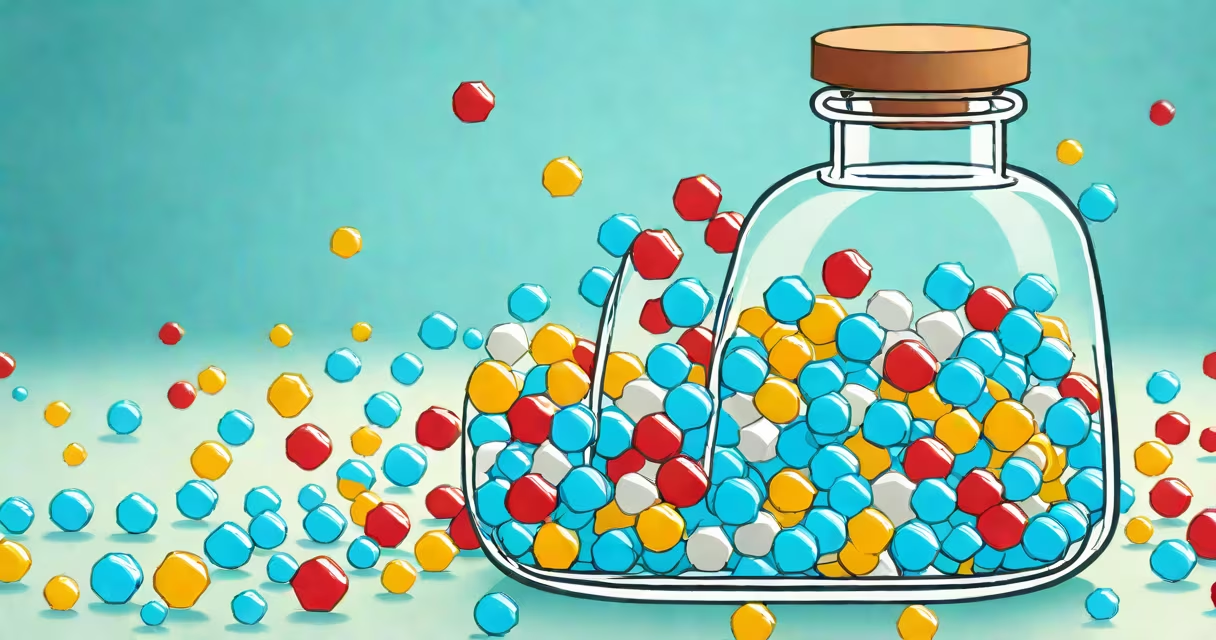
Boric acid appears as a fine, odorless white powder or colorless, transparent crystals. It forms needle-shaped crystals when crystallized and dissolves easily in water. This physical form is consistent across pharmaceutical, industrial, and household-grade samples.
Boric acid's appearance varies slightly depending on purity and processing. High-purity lab-grade boric acid typically forms small, clear, hexagonal crystals. Lower-grade versions may appear as a dull white powder with visible impurities. The substance has no distinct smell and feels dry and slightly gritty to the touch.
When dissolved in water, boric acid produces a clear solution with no visible residue. It does not clump or change color upon exposure to air at room temperature. Its inert nature means it doesn't degrade visually under normal storage conditions.
Boric acid exists in two primary forms: crystalline and powdered. Crystalline boric acid grows in thin, needle-like structures resembling tiny shards of glass. These crystals are brittle and break easily into smaller fragments. Powdered boric acid resembles talcum powder or fine flour, with particles too small to see individually without magnification.
The crystal structure is due to its molecular arrangement-each molecule consists of boron, oxygen, and hydrogen atoms linked in a trigonal planar geometry. This structure results in a stable lattice that forms sharp edges and flat faces under ideal growth conditions.
| Form | Color | Texture | Common Use |
|---|---|---|---|
| Crystalline | Colorless to white | Sharp, brittle needles | Laboratory reagent |
| Powdered | White | Soft, fine, non-clumping | Antiseptic, insecticide |
One non-obvious fact: boric acid can appear slightly yellowish if exposed to prolonged sunlight or heat. This discoloration results from slow oxidation and is irreversible. Pure boric acid stored in dark, cool conditions remains white indefinitely.
Boric acid is used in antiseptics, insecticides, and fire retardants. In household products, it appears in cleaning solutions and pest control sprays. Its low toxicity to mammals makes it safer than many alternatives, though it is still toxic if ingested in large amounts.
For example, boric acid is a key ingredient in some fly traps. The white powder is mixed with sugar and placed in containers. Flies land on the bait, ingest the substance, and die within hours. The powder's appearance blends into kitchen surfaces, making it discreet.
It's also used in medical settings as a mild antiseptic. A 2% boric acid solution applied to minor cuts or burns has anti-inflammatory properties. The solution is clear and colorless, matching the appearance of distilled water.
Boric acid is often mistaken for boric oxide or sodium borate. Boric oxide is a yellowish solid that melts at high temperatures and is used in ceramics. Sodium borate (borax) appears as larger, irregular white crystals and is more soluble in water than boric acid.
A key distinction: boric acid does not effervesce when mixed with vinegar. Some people confuse it with baking soda, which fizzes when combined with acids. Boric acid remains stable in acidic environments and shows no gas release.
I once observed a mislabeled container in a pharmacy labeled "boric acid" but containing a mixture of citric acid and starch. The substance looked white and powdery but failed to dissolve completely in water. Testing confirmed it was not boric acid-its lack of solubility and pH neutrality were red flags.
To identify boric acid visually, look for a fine white powder or clear, needle-like crystals. Avoid materials that clump, turn yellow, or have a strong odor. Always verify the label and check the CAS number (10043-35-3) on the packaging.
If you're unsure, perform a simple test: mix a small amount with warm water. True boric acid dissolves completely, leaving a clear solution. Any cloudiness or undissolved residue indicates contamination or incorrect identification.
Boric acid's appearance is consistent across applications: a clean white powder or transparent crystals. Recognizing these traits prevents misuse and supports safe handling in homes, labs, and clinics.