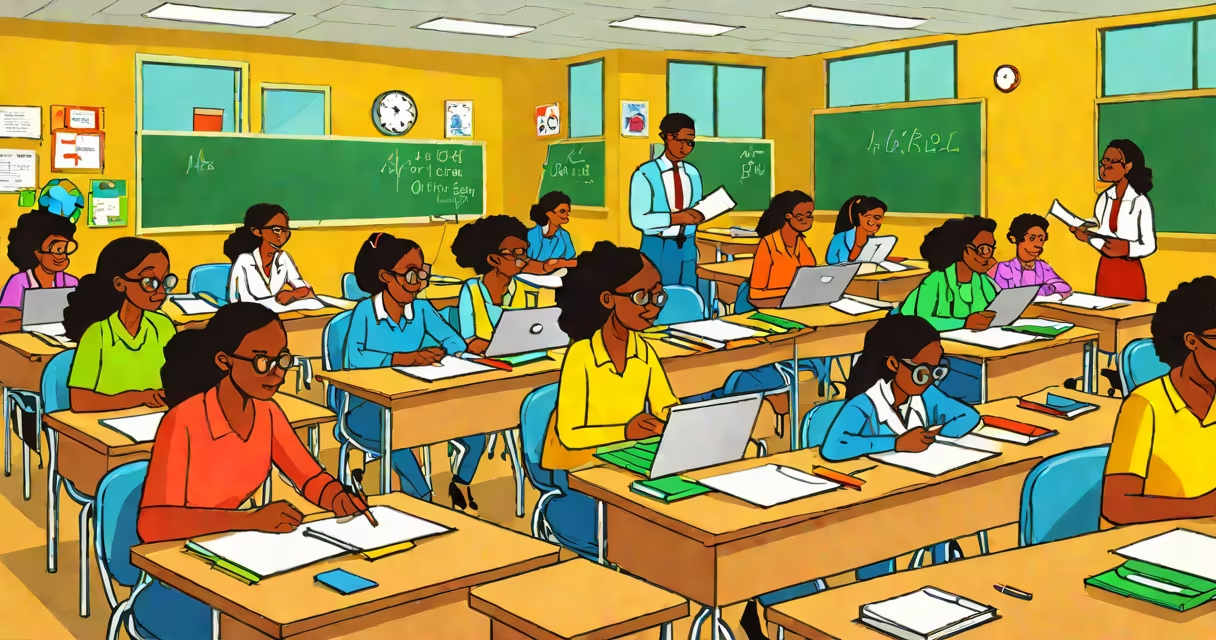
Competency based education (CBE) is a model where students advance upon demonstrating mastery of specific skills and knowledge, rather than completing a set amount of time in class. Progress is measured through assessments aligned to defined learning outcomes, not grades or calendar days.
CBE shifts focus from time spent in a classroom to actual understanding. A student doesn't move to the next unit because 10 weeks have passed-they move forward only after proving they can apply what they've learned. This system prioritizes skill acquisition over scheduling.
For example, a high school math student may complete algebra modules at their own pace. If they demonstrate proficiency in solving linear equations through multiple assessments, they advance. If not, they receive targeted support and reassess until they meet the standard. This ensures no gaps in foundational knowledge.
At its core, CBE operates on three principles: clear learning objectives, evidence-based assessment, and personalized pacing. Each course or module defines what a student must know and do to be deemed competent. These competencies are measurable and observable.
Assessments are not just tests-they include projects, presentations, portfolios, and performance tasks. For instance, a biology student might build a model of a cell and explain its functions using scientific terminology. The teacher evaluates whether the student meets the standard, not how long it took.
Students who master material quickly can accelerate. Those who struggle receive additional instruction, tutoring, or alternative activities tailored to their needs. This reduces the risk of students falling behind due to rigid timelines.
While all CBE systems share the mastery principle, implementation varies. The most common models include:
| Model Type | Structure | Use Case |
|---|---|---|
| Blended Learning | Online modules with in-person support | High schools and community colleges |
| Project-Based CBE | Long-term projects tied to standards | Elementary and middle schools |
| Flexible Pacing | Self-directed progression within a semester | Adult learners and online programs |
Some schools use a hybrid approach. For example, Summit Public Schools in California uses a platform where students track progress through personalized learning plans. Each milestone includes a rubric-aligned task, such as writing a research paper on climate change with proper citations and analysis.
A non-obvious distinction: CBE is not the same as "pass/fail" grading. In CBE, students don't pass or fail a course-they either meet or haven't met the standard. They continue until they do. This eliminates the idea of "getting by" with a passing grade.
Many assume CBE means less rigor or lower standards. On the contrary, research shows CBE often raises expectations. According to the National Center for Education Statistics (NCES), schools using CBE report higher rates of student proficiency in math and reading compared to traditional models.
Another confusion: CBE is not synonymous with online learning. While many CBE programs use digital tools, the model exists in brick-and-mortar schools too. For example, New Hampshire's statewide CBE initiative includes face-to-face instruction with performance-based assessments.
Some confuse CBE with differentiated instruction. Differentiation adjusts content or delivery for different learners, but students still follow the same timeline. CBE removes the timeline entirely-progress depends solely on demonstrated competence.
Consider a 10th-grade algebra course under a CBE structure. Instead of a semester-long class with weekly quizzes and a final exam, the course is broken into six units:
Each unit ends with a performance task. To advance, a student must score at least 80% on a multi-part assessment. If they score 75%, they review feedback, revise their work, and retake the assessment. There is no automatic promotion.
One student, Maria, completes the first unit in five days. She demonstrates mastery by solving complex equations and explaining her reasoning. She moves to the next unit. Another student, James, struggles with graphing. He spends extra time with a tutor, practices with interactive software, and retests. After two weeks, he passes. Both students advanced based on ability-not time.
This model prevents students from moving forward with weak foundations. Research from the RAND Corporation confirms that CBE improves long-term retention and college readiness, especially among low-income and historically underserved students.
Traditional education assumes all students learn at the same pace. CBE rejects that assumption. It acknowledges that people learn differently and at different speeds. The goal is not uniformity-it's equity through personalization.
When a student masters a skill, they gain confidence. When they're held back due to time, they lose motivation. CBE addresses both issues. A 2022 study by the Center for Innovation in Education found that 76% of CBE participants reported feeling more engaged in their learning compared to 45% in traditional settings.
For educators, CBE requires redesigning curriculum around outcomes, not textbooks. Teachers act as coaches, not lecturers. For students, it means taking ownership of their learning path. For families, it offers transparency-parents see exactly what their child knows and can do.
If you're exploring define competency based concepts, consider how this model aligns with modern workforce demands. Employers increasingly value demonstrable skills over degrees. CBE prepares students for that reality.
Don't mistake CBE for a trend. It's a structural shift in how we define learning. Unlike cloud-based systems that store data remotely, CBE reshapes the very foundation of education. It's not about technology-it's about outcomes.
Understanding what does competency based education mean is essential for parents, teachers, and policymakers. It's not a replacement for traditional schooling-it's a reimagining of it.