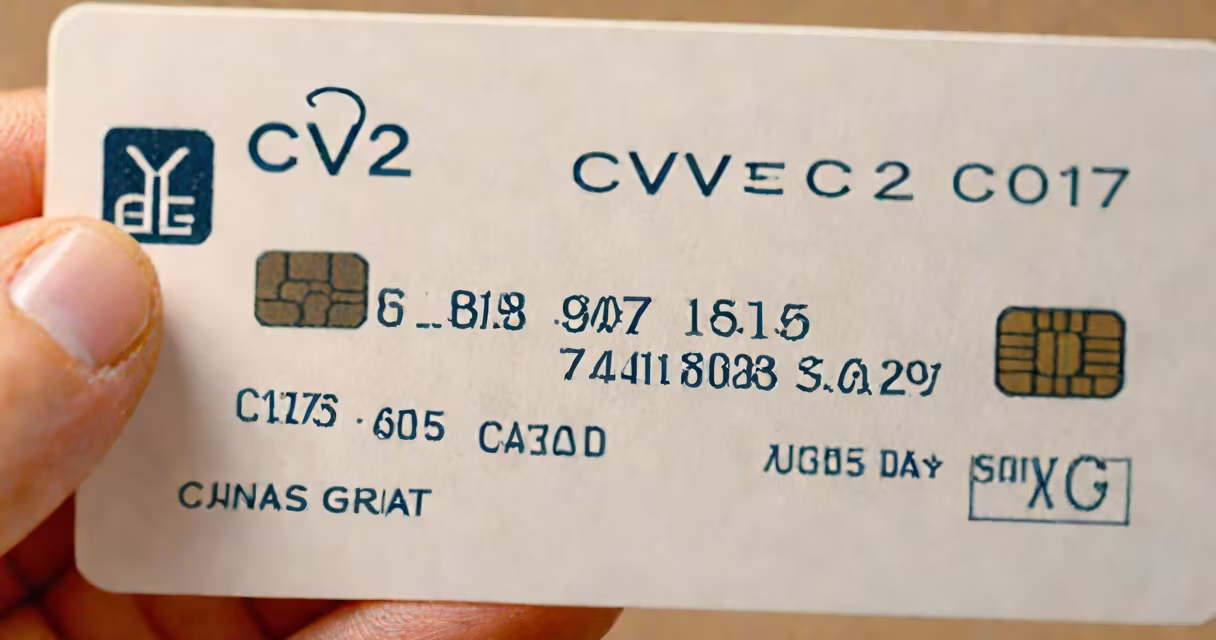
CVV2 is a three- or four-digit security code printed on the back of a debit card, used to verify the cardholder's physical possession of the card during online or phone transactions. It's part of a layered fraud prevention system designed to reduce unauthorized use.
The code is generated using a proprietary algorithm based on the card's primary account number, expiration date, and a secret key held by the issuing bank. This ensures each card's CVV2 is unique and cannot be easily predicted or replicated.
CVV2 is not stored in the magnetic stripe or chip data. It's not transmitted during swiped or tapped payments-only during card-not-present transactions like e-commerce purchases or phone orders. This limits exposure to skimming or data breaches involving card details.
When you enter your debit card details on a website, the merchant's payment processor sends the card number, expiry date, and CVV2 to the issuing bank for authorization. The bank checks whether the CVV2 matches its internal record. A mismatch results in transaction rejection.
This process prevents criminals from using stolen card numbers alone. Even if someone has your card number and expiry date, they can't complete a purchase without the correct CVV2. This reduces the risk of fraudulent online transactions.
For example, if a hacker gains access to a database containing 10,000 card numbers and expiration dates, they still need the CVV2 to make a purchase. Without it, those credentials are useless for online transactions.
On most debit cards issued by U.S. banks, the CVV2 appears as a three-digit number on the back, in the signature panel, usually to the right of the card's last four digits. Some international cards, particularly those using the Mastercard standard, may have a four-digit code.
Visa cards use a three-digit CVV2. Mastercard uses a three-digit CVC (Card Validation Code), but the function is identical. American Express cards use a four-digit CID (Card Identification Number) on the front, above the card number.
| Card Network | Code Name | Number of Digits | Location |
|---|---|---|---|
| Visa | CVV2 | 3 | Back, right of signature strip |
| Mastercard | CVC2 | 3 | Back, right of signature strip |
| American Express | CID | 4 | Front, above card number |
Many people assume CVV2 is a form of encryption or a changing code that changes. It is neither. The code remains static unless the card is reissued. This means if someone physically sees your card, they can copy the CVV2 and use it for online purchases.
That's why sharing your CVV2-even with trusted friends or family-is dangerous. A single misuse can lead to unauthorized charges. According to the Federal Trade Commission (FTC), CVV2 theft was involved in 32% of reported card-not-present fraud cases in 2022.
Another misconception is that CVV2 protects against all forms of fraud. It doesn't. It only verifies that the person entering the code has seen the physical card. It does nothing to prevent phishing attacks, where users are tricked into giving away their card details on fake websites.
For example, a scammer might send an email pretending to be your bank, asking you to "verify" your card by entering the number and CVV2 on a fake login page. Once entered, the attacker can use the data immediately-CVV2 included-for online purchases.
I once used a debit card to book a hotel reservation online. The site asked for the card number, expiry date, and CVV2. I hesitated-my card had been in my wallet for days-but I entered the code. The transaction went through instantly. Later, I realized that without the CVV2, the site would have rejected the request, even if the card number and expiry were correct.
This is how CVV2 functions: as a gatekeeper. It's not foolproof, but it adds a critical layer of protection. Major payment networks like Visa and Mastercard require merchants to validate CVV2 during online checkout processes. Failure to do so increases the risk of chargebacks and penalties.
According to Visa's 2023 Payment Security Guidelines, merchants who skip CVV2 validation see a 4.3x higher rate of fraudulent transactions compared to those who enforce it. The data shows that even basic verification steps reduce fraud losses.
Never give your CVV2 to anyone-not even customer service representatives claiming to be from your bank. Legitimate institutions will never ask for the CVV2 over the phone or via email. If they do, it's a red flag.
Always check the URL of the website you're using. Look for HTTPS and a padlock icon in the address bar. These indicate the connection is encrypted. Avoid entering card details on public Wi-Fi networks.
If you suspect your CVV2 has been exposed, contact your bank immediately. Most banks allow you to freeze or cancel your card online and issue a replacement with a new CVV2. The process typically takes 24-48 hours.
Understanding the role of codes like CVV2 helps you protect your financial data. While the term itself is technical, its purpose is simple: to confirm you're the one using the card, not someone who stole it.