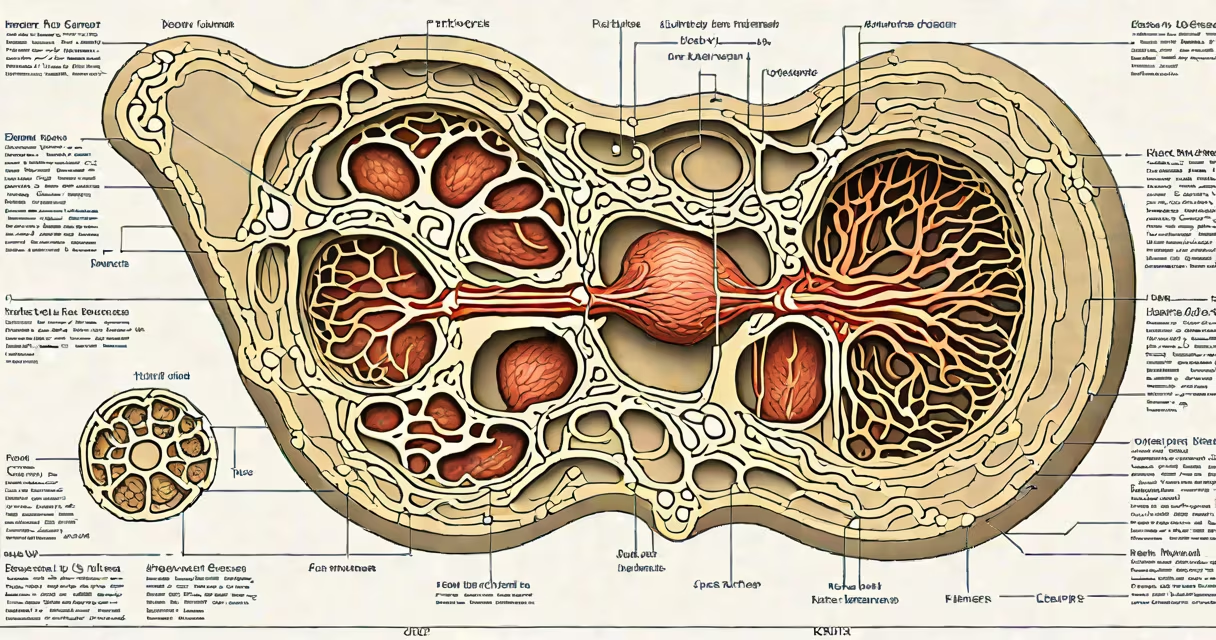
A gonad is a primary reproductive organ that generates gametes-sperm in males and eggs in females-and secretes sex hormones such as testosterone and estrogen. These functions regulate fertility, secondary sexual characteristics, and reproductive behavior.
Gonads develop from the same embryonic tissue in both sexes. By week six of gestation, undifferentiated gonadal ridges form along the posterior abdominal wall. Genetic signals determine whether these tissues mature into testes or ovaries. The presence of the SRY gene on the Y chromosome triggers testis formation; absence leads to ovarian development.
Testes and ovaries are structurally distinct. Testes contain seminiferous tubules where sperm are produced through spermatogenesis. Ovaries house follicles that nurture oocytes until ovulation. Both organs also have endocrine roles: testes secrete testosterone, which drives male puberty and maintains muscle mass and libido; ovaries release estrogen and progesterone, regulating the menstrual cycle and preparing the uterus for pregnancy.
Gonads operate through a feedback loop involving the hypothalamus, pituitary gland, and the gonads themselves-the hypothalamic-pituitary-gonadal (HPG) axis. The hypothalamus releases gonadotropin-releasing hormone (GnRH), which stimulates the anterior pituitary to secrete follicle-stimulating hormone (FSH) and luteinizing hormone (LH).
In males, FSH acts on Sertoli cells in the seminiferous tubules to support sperm maturation. LH targets Leydig cells to produce testosterone. In females, FSH promotes follicular growth and estrogen synthesis. LH triggers ovulation and transforms the ruptured follicle into the corpus luteum, which secretes progesterone.
Disruptions in this axis cause clinical conditions. For example, Kallmann syndrome results from deficient GnRH secretion, leading to delayed or absent puberty. Polycystic ovary syndrome (PCOS) involves elevated LH and insulin resistance, causing irregular cycles and anovulation. These disorders show the precision required in hormonal regulation.
There are two primary types of gonads: testes and ovaries. They differ in anatomy, cellular organization, and developmental timeline.
| Feature | Testes | Ovaries |
|---|---|---|
| Primary gamete | Sperm | Egg (oocyte) |
| Production site | Seminiferous tubules | Follicles (primordial to Graafian) |
| Hormones secreted | Testosterone (Leydig cells) | Estrogen, progesterone (granulosa & theca cells) |
| Onset of gametogenesis | Puberty (~age 12-14) | Before birth (follicle recruitment begins at 20 weeks gestation) |
| Release pattern | Continuous production | Cyclic (monthly ovulation) |
Both organs descend from the abdominal cavity during fetal development. Testes typically migrate into the scrotum by the seventh month of gestation. Ovaries remain in the pelvis. This descent is critical-testicular temperature must stay 2-3°C below core body temperature for optimal sperm production. Cryptorchidism, where one or both testes fail to descend, increases infertility risk and raises the chance of testicular cancer.
Non-mammalian species may have different gonad types. Some fish and amphibians exhibit sequential hermaphroditism-individuals change sex during life. In these animals, gonads can switch between testicular and ovarian tissue under hormonal influence. This plasticity is rare in humans and not seen in adult mammals.
People often confuse gonads with external genitalia. The penis and scrotum are not gonads. The scrotum houses the testes, but it is a protective sac, not a reproductive organ itself. Similarly, the vagina and clitoris are parts of the female reproductive tract but do not produce gametes or hormones.
Another misconception is that gonads are only involved in reproduction. While gamete production is central, gonads also influence metabolism, bone density, mood, and cardiovascular health. Low testosterone in men correlates with reduced lean mass, increased visceral fat, and higher depression rates. Estrogen deficiency in women increases osteoporosis risk and elevates LDL cholesterol levels.
A lesser-known fact: the human ovary contains over 6 million primordial follicles at birth. By puberty, this number drops to around 300,000 due to atresia-a natural process of follicle degeneration. Only about 400 of these follicles will ever mature and release an egg during a woman's reproductive lifespan. This highlights the finite nature of ovarian reserve.
A 32-year-old woman presents with irregular menstrual cycles and difficulty conceiving. Blood tests show elevated FSH and low AMH (anti-Müllerian hormone), indicating diminished ovarian reserve. An ultrasound reveals few antral follicles-fewer than five per ovary. These findings suggest early ovarian insufficiency, a condition affecting ~1% of women under 40.
AMH is produced by granulosa cells in small follicles. Its level correlates strongly with the number of remaining follicles. A value below 1.1 ng/mL indicates low ovarian reserve. In this case, the patient's AMH was 0.3 ng/mL. Her gonads are producing fewer viable oocytes, reducing fertility chances.
Her treatment plan includes ovulation induction with clomiphene citrate and intrauterine insemination (IUI). If unsuccessful, in vitro fertilization (IVF) with donor eggs may be recommended. This illustrates how gonad function directly impacts clinical decisions.
During my time working in a reproductive endocrinology clinic, I saw a 28-year-old man with Klinefelter syndrome (47,XXY karyotype). His testes were small, and blood tests showed low testosterone and high FSH. He had gynecomastia and azoospermia. His gonads failed to produce functional sperm due to abnormal germ cell development. This case reinforced that gonad function depends on both genetic and hormonal factors.
A gonad is a important organ responsible for gamete production and sex hormone secretion. In humans, the testes and ovaries perform these roles with distinct mechanisms and timelines. Understanding gonad biology clarifies fertility, hormonal health, and developmental disorders. Recognizing their dual reproductive and endocrine functions prevents misdiagnosis and guides effective treatment.