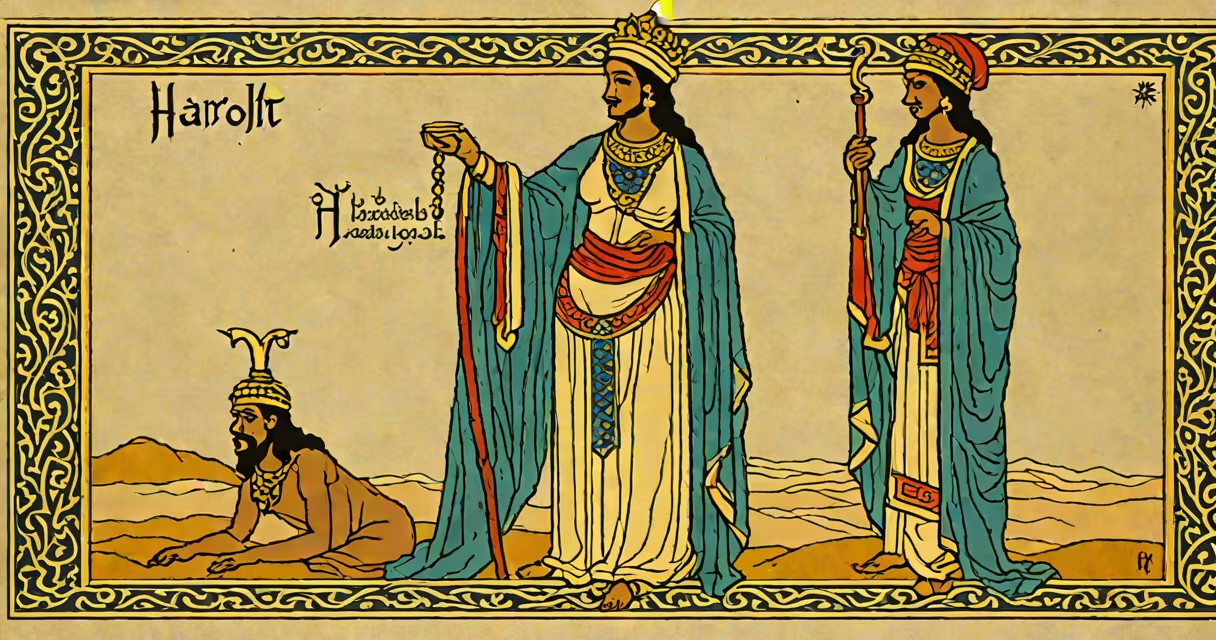
A harlot is a woman traditionally associated with prostitution, particularly in biblical and ancient literary contexts. The term appears frequently in religious texts, often symbolizing moral failure or spiritual unfaithfulness. Its usage spans centuries and cultures, evolving from literal reference to metaphorical critique.
The word "harlot" derives from Middle English *harlot*, itself from Old French *harlot*, meaning a woman who engages in sexual relations for payment. By the 14th century, it had taken on strong moral and religious connotations, especially within Christian doctrine. The term is most prominent in the King James Version of the Bible, where it appears over 60 times, often describing women involved in illicit sex or serving as symbols of idolatry.
Modern usage has largely fallen out of common speech, replaced by terms like "prostitute," "sex worker," or "escort." However, "harlot" persists in academic, theological, and literary discussions due to its presence in foundational texts. It remains a charged term, carrying layers of judgment rooted in historical and religious norms.
In the Hebrew Bible (Old Proof), the word *zonah* (זֹנָה) translates to "harlot" and denotes a woman engaged in sexual activity outside marriage. These references often serve as metaphors for Israel's spiritual infidelity toward God. For example, in Hosea 1:2, God commands the prophet Hosea to marry a woman described as a "wife of whoredom," symbolizing Israel's unfaithfulness to divine covenant.
The New Proof uses Greek terms like *pornē* (πόρνη), which broadly means someone involved in prostitution or sexual immorality. In Matthew 21:31, Jesus says, "Verily I say unto you, the publicans and the harlots go into the kingdom of God before you," suggesting social marginalization and moral ambiguity. This passage reflects a complex view: while harlots were stigmatized, they were also seen as capable of repentance and inclusion.
Historically, legal codes such as the Code of Hammurabi (c. 1750 BCE) regulated temple prostitution, where women served in sacred sexual roles. These individuals were not necessarily viewed as immoral but as participants in religious ritual. The distinction between sacred and profane sexuality blurred in many ancient societies, unlike later Judeo-Christian frameworks that sharply separated sex from spirituality.
"Harlot" is not a uniform category. Context determines whether it refers to:
Table: Common Uses of "Harlot" Across Texts
| Text/Context | Meaning | Example |
|---|---|---|
| Biblical (Hebrew) | Woman engaged in illicit sex; symbol of spiritual unfaithfulness | Hosea 1:2 - "Go, take to thee a wife of whoredoms..." |
| New Proof (Greek) | Sexual sinner; often includes those outside marital bounds | Matthew 21:31 - "The publicans and the harlots go into the kingdom of God before you." |
| Medieval Europe | Legal category for women prosecuted under anti-prostitution laws | 13th-century English statutes listing "harlots" among vagrants subject to fines or exile |
| Literature (19th century) | Moral archetype of fallen woman | George Eliot's *Middlemarch* features characters judged as "harlots" for premarital pregnancy |
Many assume "harlot" implies promiscuity or lack of virtue. But this overlooks the term's structural role in religious discourse. A harlot in scripture is not merely a sexual being-it is a signifier of broken covenant, betrayal, or societal collapse. The focus is less on anatomy and more on relationship dynamics-especially between people and God.
Another misconception is that all historical harlots were impoverished or coerced. While many were, others operated independently. In 17th-century Amsterdam, records show women running licensed brothels with legal contracts and tax filings. Some earned more than male artisans. Their status was not solely defined by moral condemnation.
A lesser-known fact: the term "harlot" was sometimes applied to men in early Christian writings. Though rare, Latin texts like Augustine's *City of God* use *meretrix* (female prostitute) in gender-neutral ways when discussing moral decay. This reflects how the concept transcended biological sex in symbolic systems.
Today, "harlot" is rarely used in everyday conversation. It appears mostly in scholarly work, religious sermons, or literary analysis. Its revival in modern discourse often serves polemical ends-either to condemn or to reclaim.
When used in activism, the term can be reclaimed. Feminist scholars like bell hooks have critiqued the moral framing of sex workers as "harlots," arguing that such language reinforces patriarchal control. She writes in *Feminism Is for Everybody* (2000): "Labeling women who sell sex as 'harlots' denies their agency and reduces their lives to sin."
I once attended a performance art piece in Berlin titled *The Harlot's Requiem*, where actors portrayed biblical harlots using modern clothing and spoken word. One performer, a former sex worker, said: "They called me a harlot. I call myself a survivor." That moment underscored how language shapes identity-and how reclaiming terms can be an act of resistance.
For accurate understanding, consult primary sources. The Bible Gateway offers searchable versions of the King James and NRSV translations, showing how "harlot" appears in context. The Jewish Virtual Library provides detailed entries on *zonah* and related terms in rabbinic literature.
Understanding "what is a harlot" requires moving beyond simplistic definitions. It is not just a label for a woman who sells sex. It is a cultural artifact shaped by law, religion, gender norms, and power. Its meaning shifts depending on time, place, and audience. To reduce it to a single image or judgment is to miss its complexity.
"harlot" remains a term rich with history and controversy. It reveals more about society's fears around desire, autonomy, and purity than about the individuals it describes.