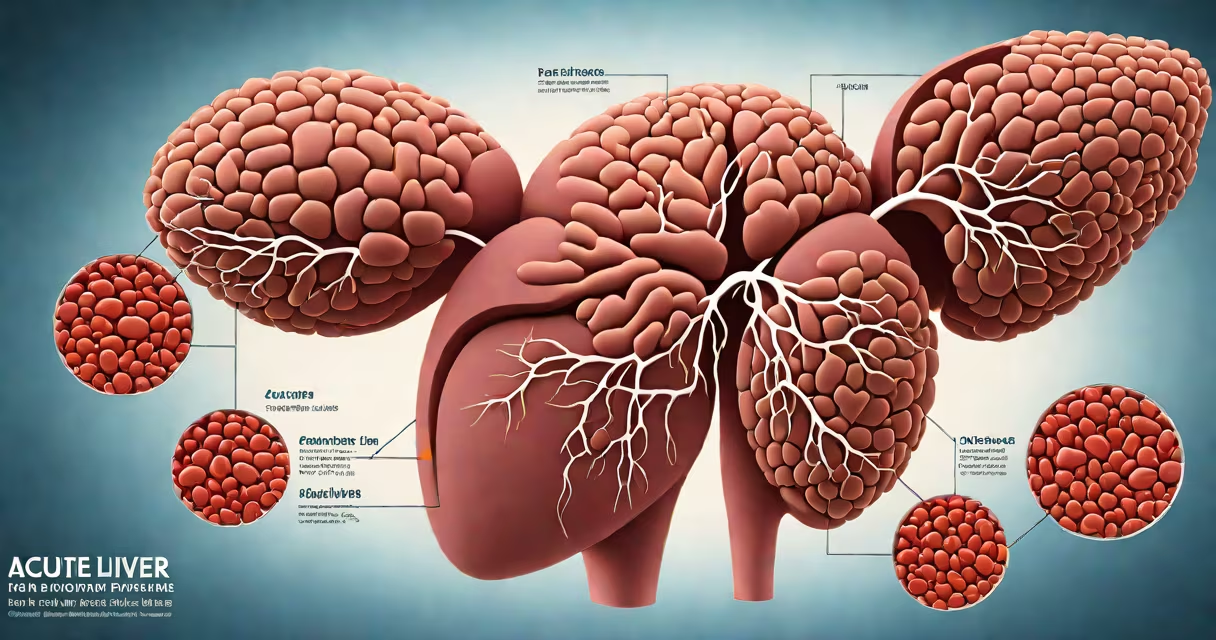
Acute liver failure is a life-threatening condition characterized by rapid deterioration of liver function in a person with no prior history of chronic liver disease, typically developing within eight weeks of symptom onset. It presents with coagulopathy (INR ≥1.5) and hepatic encephalopathy, often progressing to multiorgan failure.
Unlike chronic liver failure, which develops over months or years due to cirrhosis, acute liver failure occurs suddenly. The liver loses its ability to detoxify blood, synthesize proteins, and regulate metabolism. This leads to systemic complications including cerebral edema, renal failure, and sepsis. Early recognition is critical because outcomes depend heavily on timely intervention.
According to the American Association for the Study of Liver Diseases (AASLD), acute liver failure affects approximately 2,000 people annually in the United States, with a mortality rate of 30-50% without liver transplantation. The condition demands immediate hospitalization, usually in an intensive care unit, due to high risk of rapid clinical decline.
The liver performs over 500 essential functions, including metabolizing drugs, producing clotting factors, and clearing bilirubin. In acute liver failure, these processes collapse rapidly. Hepatocyte necrosis-cell death-leads to impaired synthesis of albumin and prothrombin, resulting in low serum albumin and elevated international normalized ratio (INR).
Neurological symptoms arise from cerebral edema caused by ammonia accumulation and altered blood-brain barrier permeability. This manifests as confusion, lethargy, and eventually coma. A patient may progress from mild disorientation to grade IV hepatic encephalopathy within hours. Intracranial pressure monitoring is often required in severe cases.
Renal dysfunction follows in about 40% of patients, known as hepatorenal syndrome. This results from splanchnic vasodilation and reduced effective circulating volume, leading to oliguria and rising creatinine. The combination of liver and kidney failure increases mortality risk.
Drug toxicity accounts for nearly half of all acute liver failure cases in the U.S., with acetaminophen overdose being the most frequent cause. The National Poison Control Center reports that over 100,000 acetaminophen exposures occur annually, and 5-10% result in acute liver injury requiring hospitalization.
Other major causes include viral hepatitis (especially hepatitis B and A), autoimmune hepatitis, Wilson's disease (copper overload), and ischemic injury from shock or cardiac arrest. Less common triggers include mushroom poisoning (Amanita phalloides), pregnancy-related conditions like HELLP syndrome, and rare metabolic disorders such as Reye's syndrome.
| Type | Incidence (%) | Common Cause | Key Feature |
|---|---|---|---|
| Acetaminophen overdose | 40-50% | Overdose (>4g/day) | Centrilobular necrosis on biopsy |
| Viral hepatitis | 15-20% | Hepatitis B, A, or E | Positive serology; often preceded by jaundice |
| Autoimmune hepatitis | 10-15% | Antinuclear antibodies, anti-smooth muscle antibodies | Young adults; responds to steroids |
| Metabolic/Genetic | 5-10% | Wilson's disease, tyrosinemia | Diagnosed via genetic testing or copper levels |
A non-obvious distinction: fulminant liver failure is a subset of acute liver failure defined by the presence of encephalopathy within eight weeks of symptom onset. Not all acute liver failure cases meet this threshold. The term "fulminant" implies rapid progression and higher urgency for transplant evaluation.
I once managed a 28-year-old woman who presented with confusion and vomiting after taking a double dose of acetaminophen during a panic attack. Her INR was 2.8, AST exceeded 1,000 IU/L, and she developed grade III encephalopathy within 24 hours. She required intubation and was listed for liver transplant within 36 hours. She survived after receiving a cadaveric graft.
Early signs include nausea, fatigue, and jaundice. As the condition worsens, patients develop confusion, asterixis (flapping tremor), and decreased level of consciousness. Physical exam may reveal a distended abdomen due to ascites or portal hypertension, though this is less common early on.
Diagnostic criteria require both coagulopathy (INR ≥1.5) and encephalopathy in a patient without pre-existing cirrhosis. Laboratory tests show markedly elevated transaminases (AST >1,000 U/L), hyperbilirubinemia, and low albumin. Imaging like ultrasound or CT may show normal liver size initially, but later findings include increased echogenicity or nodularity.
Distended abdomen liver failure is a sign of advanced disease, not a distinct diagnosis. It results from fluid accumulation (ascites) due to portal hypertension and hypoalbuminemia. Patients with this presentation have higher rates of spontaneous bacterial peritonitis and require paracentesis and antibiotics.
Initial management focuses on stabilizing the patient. N-acetylcysteine (NAC) is administered for acetaminophen-induced cases, reducing mortality by up to 30% when given within eight hours of ingestion. For non-acetaminophen causes, corticosteroids may be used in autoimmune hepatitis, while antivirals are indicated in hepatitis B.
Supportive care includes managing cerebral edema with mannitol or hypertonic saline, correcting electrolyte imbalances, and preventing infection. Continuous renal replacement therapy may be needed for hepatorenal syndrome. Nutritional support is provided via central lines due to poor oral intake.
Transplantation remains the definitive treatment for irreversible cases. The Model for End-Stage Liver Disease (MELD) score predicts survival and guides allocation. A MELD score above 30 indicates high urgency. Survival after transplant exceeds 80% at one year.
Long-term outcomes vary. Survivors may face cognitive deficits, depression, or recurrent episodes if the underlying cause is not addressed. Follow-up care includes regular liver function tests, viral screening, and counseling on medication safety.
Acute liver failure is a medical emergency requiring rapid diagnosis and multidisciplinary management. Understanding its mechanisms, causes, and treatment pathways improves outcomes. Early referral to a transplant center is important for survival.