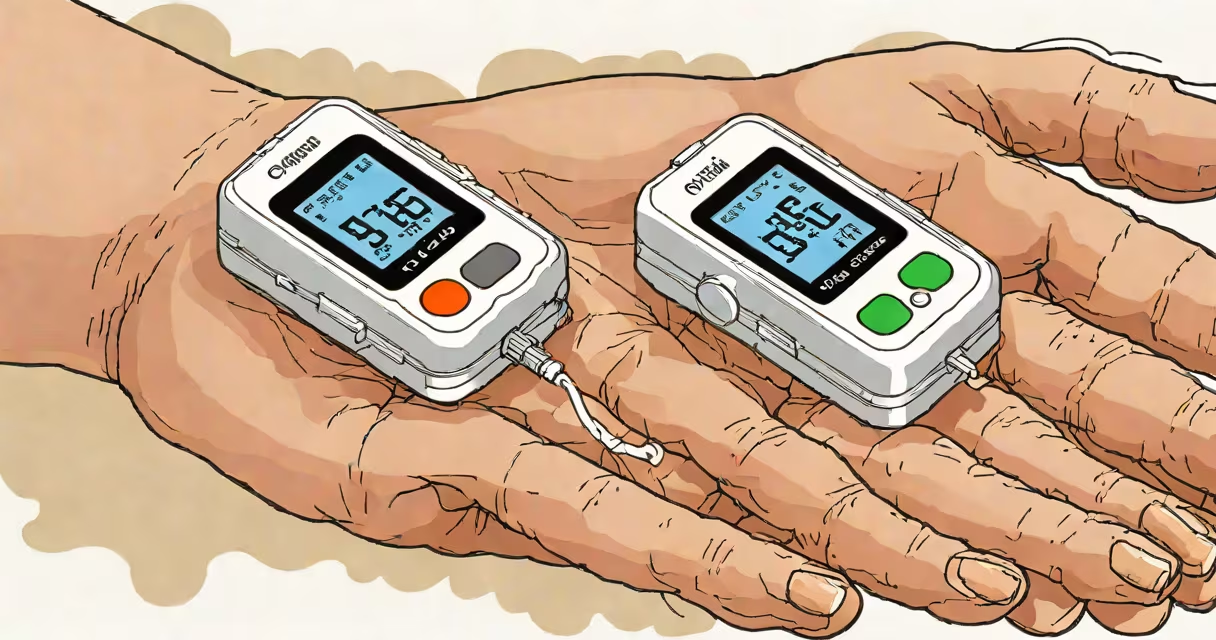
A good oxygen level, measured as peripheral capillary oxygen saturation (SpO2), is generally between 95% and 100% in healthy adults breathing room air. Levels below 90% indicate hypoxemia and require medical evaluation.
SpO2 is measured non-invasively using a pulse oximeter, a small device clipped to the fingertip or earlobe. It uses light absorption to estimate how much oxygen is bound to hemoglobin in red blood cells. This reading reflects the efficiency of gas exchange in the lungs and circulation.
The American Lung Association states that SpO2 values below 90% signal low blood oxygen and may lead to symptoms like confusion, rapid breathing, or cyanosis (bluish skin). Values under 88% require immediate medical attention, especially in people with chronic lung conditions.
Pulse oximetry is the most common method for measuring oxygen saturation. It works by emitting red and infrared light through the skin. Hemoglobin absorbs these wavelengths differently depending on whether it's carrying oxygen. The device calculates the ratio and displays the percentage.
For precise clinical assessment, arterial blood gas (ABG) testing is used. A blood sample is drawn from an artery, usually the radial artery in the wrist. ABG measures actual oxygen pressure (PaO2), carbon dioxide levels, and pH. PaO2 values below 80 mmHg indicate hypoxemia.
At sea level, a normal PaO2 is 80-100 mmHg. For SpO2, the correlation is roughly: 90% SpO2 ≈ 70 mmHg PaO2, 95% SpO2 ≈ 90 mmHg PaO2. This relationship shifts slightly with altitude and underlying disease.
Healthy individuals breathing ambient air typically maintain SpO2 between 95% and 100%. Values consistently below 92% are considered abnormal and warrant investigation.
For older adults, a slight drop is expected. The National Institutes of Health notes that SpO2 may decrease by 1-2% per decade after age 40. A value of 92% in a 70-year-old may still be acceptable if stable and asymptomatic.
People with chronic obstructive pulmonary disease (COPD), heart failure, or sleep apnea often have lower baseline levels. In these cases, a target SpO2 of 88%-92% is common during home oxygen therapy. Going above 96% in COPD patients can suppress respiratory drive and worsen carbon dioxide retention.
| SpO2 Range | Clinical Interpretation | Recommended Action |
|---|---|---|
| 95%-100% | Normal for healthy individuals | No action needed |
| 90%-94% | Mild hypoxemia | Monitor; evaluate cause |
| 88%-89% | Significant hypoxemia | Seek medical care |
| < 88% | Severe hypoxemia | Emergency evaluation required |
Many assume that a reading of 100% is ideal. However, sustained SpO2 above 96% in people with lung disease may increase oxidative stress and contribute to long-term tissue damage. The goal is not maximum saturation, but adequate delivery to tissues.
One non-obvious fact: nail polish, especially dark colors, can interfere with pulse oximeter accuracy. A 2021 study in *Journal of Clinical Monitoring and Computing* found that black nail polish reduced SpO2 readings by up to 3% in some subjects. Red or clear polish had minimal effect.
I once used a finger oximeter during a high-altitude hike in Colorado. At 3,000 meters (about 10,000 feet), my SpO2 dropped to 89%. I felt fatigued and had a headache. After resting and drinking water, it rose to 93% within 30 minutes. This illustrates how altitude affects oxygen levels even in otherwise healthy people.
If SpO2 remains below 90% for more than five minutes while at rest, or drops during activity, consult a healthcare provider. Symptoms like shortness of breath, chest pain, dizziness, or confusion should prompt urgent evaluation.
For those managing chronic conditions, tracking daily SpO2 trends matters more than single readings. A consistent downward trend-even if above 90%-may signal worsening lung function.
Home monitoring devices are useful, but they're not diagnostic tools. A reading of 91% with fatigue could reflect early infection, anemia, or poor perfusion. Always correlate with symptoms and history.