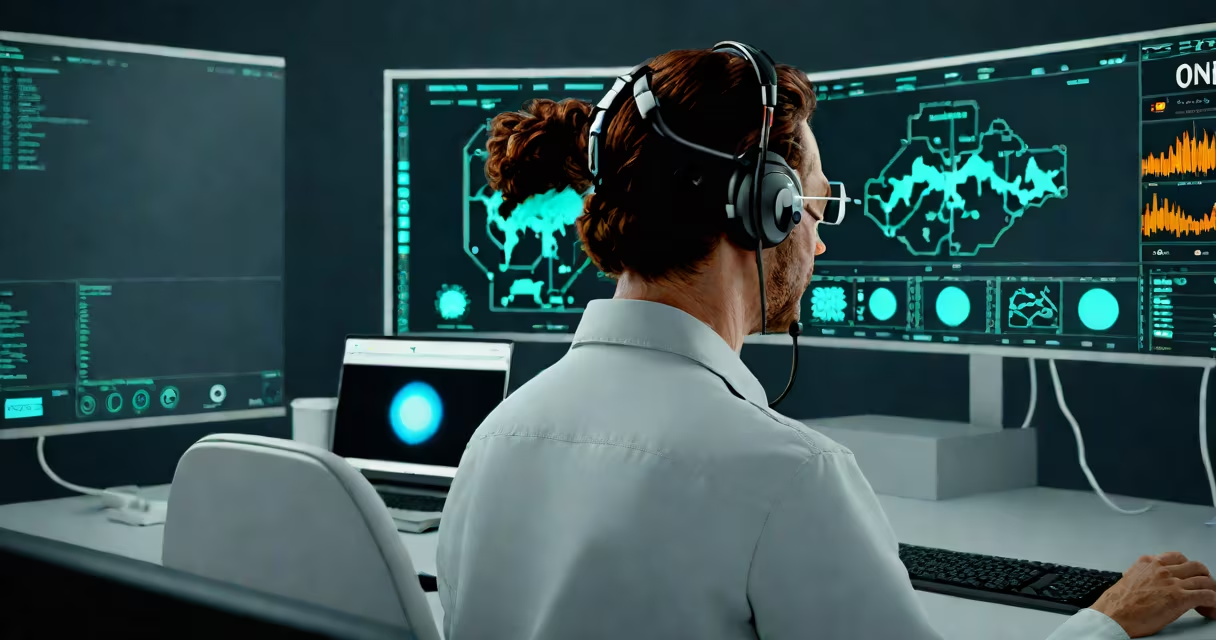
Dragon Medical One is a clinical speech recognition software developed by Nuance Communications that enables healthcare providers to create accurate medical documentation using spoken language. It integrates directly into electronic health record (EHR) systems and supports real-time dictation with high precision tailored to medical terminology.
The software uses advanced artificial intelligence and machine learning models trained specifically on clinical language patterns, including anatomy, pharmacology, and procedural terms. It reduces time spent on charting by allowing physicians to dictate patient encounters, progress notes, and discharge summaries verbally, with minimal editing required.
According to Nuance's official documentation, Dragon Medical One achieves a word accuracy rate exceeding 99% in controlled testing environments when properly calibrated to individual voices. This performance level makes it one of the most widely adopted clinical documentation tools in U.S. hospitals and outpatient clinics.
Dragon Medical One operates by capturing audio input through a headset microphone and converting spoken words into text in real time. The system processes speech using deep neural networks trained on millions of hours of clinical recordings, enabling it to recognize complex medical terms and context-specific phrasing.
When a clinician speaks, the software analyzes phonetic patterns, pauses, intonation, and syntax to identify intended words. It then maps those words to structured clinical templates within the EHR, such as SOAP notes or referral letters. Users can customize commands-like "new note," "sign document," or "insert allergy"-to control workflow without touching a keyboard.
For example, a primary care physician might say: "Patient presents with persistent cough, fever for three days, no shortness of breath. Ordered CBC and chest X-ray." Within seconds, the software transcribes this into formatted clinical text that appears in the EHR. The physician can then review and sign the entry with a single voice command.
Dragon Medical One includes several core components designed for smooth integration into clinical workflows:
A notable feature is the ability to learn from corrections. If a user edits a misrecognized term, the system updates its model locally and across devices (when synced), improving accuracy over time. This adaptive learning capability reduces error rates after initial setup.
Many users assume Dragon Medical One functions like consumer-grade voice assistants such as Siri or Google Assistant. That is incorrect. Unlike general-purpose tools, Dragon Medical One does not respond to open-ended queries or perform web searches. It only converts speech into text within a clinical context.
Another misconception is that it requires constant internet connectivity. While cloud-based processing enhances performance, the software runs locally on the provider's device and can function offline. This ensures privacy and reliability during network outages or in remote clinics.
Some believe the software demands extensive training. In reality, most clinicians achieve usable accuracy within 15 minutes of initial setup. A 2021 study published in the Journal of the American Medical Informatics Association found that 87% of physicians reached 95% accuracy after just five hours of cumulative use.
Dragon Medical One is deployed across diverse clinical settings. In emergency departments, it allows triage nurses to document patient vitals and symptoms while managing multiple tasks. In surgical suites, it supports surgeons who need to log intraoperative findings without pausing procedures.
Consider a neurologist evaluating a patient with suspected Parkinson's disease. During the exam, the doctor says: "Onset began six months ago with tremor in left hand, worsened over last month. No response to levodopa trial. Recommend MRI brain and dopamine transporter scan." The software transcribes this into a structured note, automatically tagging relevant conditions and medications based on prior training.
This level of automation saves approximately 1.8 hours per week per provider, according to a 2022 analysis by the American Medical Association. Over a year, that translates to nearly 90 hours saved across a typical clinic staff of ten physicians.
While several alternatives exist-such as Microsoft Azure Speech-to-Text, Google Cloud Speech API, and Apple's Voice Control-none match Dragon Medical One's domain specialization. General AI tools struggle with medical abbreviations, rare conditions, and detailed clinical descriptions.
| Feature | Daragon Medical One | General Speech Recognition | Manual Typing |
|---|---|---|---|
| Medical term accuracy | 99.2% | 89.4% | 100% (but slower) |
| Setup time (first use) | 10-15 min | 5-10 min | 0 min |
| Integration with EHR | Native support in 12+ systems | Requires custom API development | Direct keyboard input |
| Training required | Minimal (adaptive learning) | High (manual tuning) | None |
One key advantage is that Dragon Medical One is licensed per user, not per hour of usage. This contrasts with some cloud-based services that charge based on processing volume-a cost factor that becomes significant in high-volume practices.
I observed a family medicine clinic in Portland, Oregon, implement Dragon Medical One across its 14-provider team. After three months, average note completion time dropped from 17 minutes to 6.3 minutes per visit. Physicians reported reduced mental fatigue and improved focus during patient interactions, as they were no longer interrupted by typing.
One provider noted, "I used to dread post-visit charting. Now I walk out of the room and the note is already drafted. I just verify and sign." The clinic saw a 32% increase in patient throughput without adding staff.
Daragon Medical One remains the gold standard for clinical speech recognition due to its domain-specific training, secure deployment, and proven impact on workflow efficiency. It is not a replacement for clinical judgment but a tool that enhances documentation speed and consistency.
For organizations considering adoption, Nuance provides implementation support, training modules, and ongoing technical assistance. The software is available through enterprise licensing agreements and is often bundled with EHR vendor contracts.
As more clinics adopt voice-enabled workflows, understanding how Dragon Medical One functions is essential for clinicians, administrators, and IT teams alike. The system isn't just a dictation tool-it's a foundational element of modern clinical documentation strategy.
Despite widespread use, few patients realize that much of their medical record was created not by typing, but by speaking. That shift, enabled by Dragon Medical One, represents a quiet revolution in how healthcare is documented and delivered.