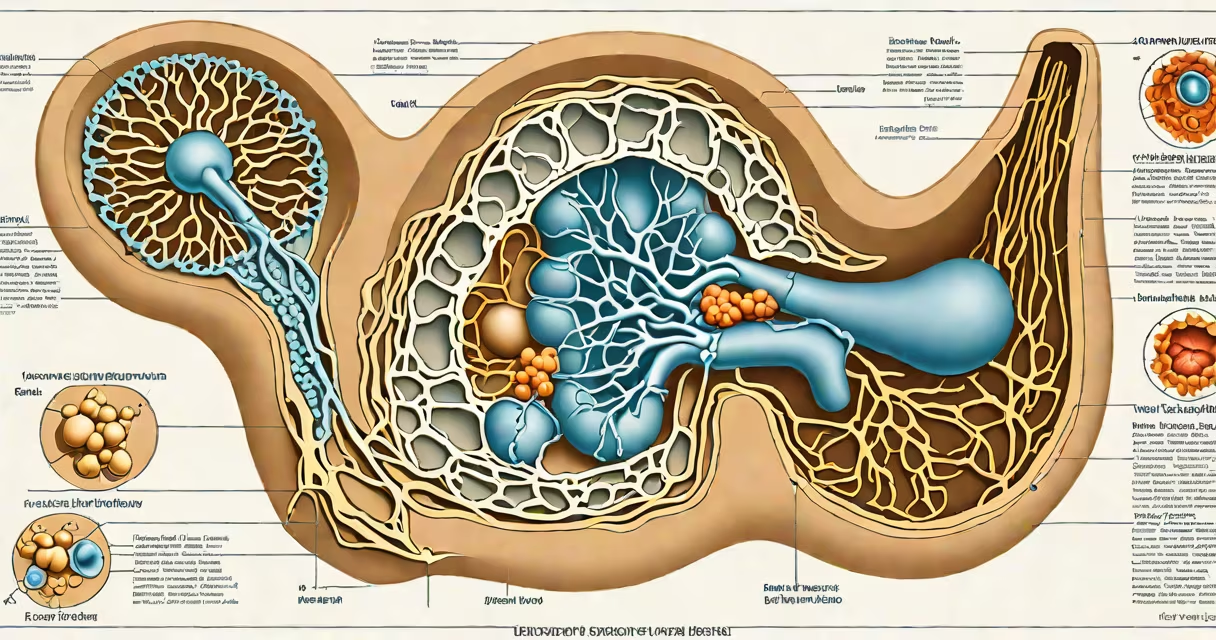
Embryology is the branch of biology that studies the formation, growth, and development of embryos from fertilization through organogenesis. It examines how a single-celled zygote transforms into a complex multicellular organism with distinct tissues and organs, guided by genetic programs and environmental cues.
Modern embryology integrates molecular genetics, cell signaling, and imaging to track changes at the cellular and subcellular level. It explains how identical DNA sequences produce diverse cell types-muscle, nerve, skin-through controlled gene expression during critical windows of development.
Understanding embryology reveals how disruptions in timing or signaling can lead to congenital disorders. For example, failure of the neural tube to close between days 21 and 28 of human gestation results in spina bifida, a condition affecting approximately 1 in 1,000 live births globally (CDC, 2023).
Development begins at fertilization, when sperm and egg fuse to form a diploid zygote. This cell divides rapidly via cleavage, forming a morula, then a blastocyst with an inner cell mass destined to become the embryo and an outer trophoblast layer that forms the placenta.
Implantation occurs around day 6-7 in humans, when the blastocyst embeds into the uterine lining. Gastrulation follows, during which the epiblast layer reorganizes into three primary germ layers: ectoderm (skin, nervous system), mesoderm (muscle, bone, circulatory system), and endoderm (digestive and respiratory linings).
Organogenesis then unfolds over weeks 5-10. The heart begins beating by week 5, and limb buds appear by week 6. These processes rely on precise spatial and temporal control of transcription factors such as Pax6 in eye development and Sonic hedgehog in limb patterning.
Embryology proceeds through well-defined stages, each marked by specific morphological and molecular events. The following table summarizes the major phases in human embryogenesis:
| Stage | Timeline | Key Events | Significance |
|---|---|---|---|
| Fertilization | Day 0 | Sperm penetrates egg; pronuclei fuse | Initiates diploid genome formation |
| Cleavage | Days 1-3 | Cell divisions without growth; morula forms | Establishes early cell lineage potential |
| Blastulation | Day 5 | Blastocyst with inner cell mass and trophectoderm | Prepares for implantation |
| Gastrulation | Week 3 | Formation of three germ layers | Lays foundation for all tissues |
| Neurulation | Week 4 | Neural tube closes; brain and spinal cord begin | Failure causes anencephaly or spina bifida |
| Organogenesis | Weeks 5-10 | Heart beats, limbs form, eyes develop | Most sensitive period for teratogens |
A non-obvious fact: the human embryo lacks a functional immune system until week 12. Until then, maternal antibodies cross the placenta to provide passive immunity, protecting against infections during early vulnerability.
Embryology is often confused with reproductive biology or prenatal care. While related, embryology focuses specifically on developmental mechanisms-not fertility treatments, contraception, or fetal monitoring.
Another misconception is that all embryonic structures persist into adulthood. In reality, many transient features regress. For example, the pharyngeal arches form gill-like structures in fish but in humans give rise to facial bones, ear cartilage, and parts of the neck-demonstrating evolutionary repurposing.
Some assume embryology is purely descriptive. But today's research uses live imaging, CRISPR gene editing, and single-cell RNA sequencing to observe and manipulate development in real time. A 2022 study using light-sheet microscopy captured zebrafish gastrulation at 10-millisecond intervals, revealing changing cell movements previously unseen.
Embryology underpins regenerative medicine. Stem cells derived from the inner cell mass of blastocysts can differentiate into any cell type, making them important for treating conditions like Parkinson's disease and spinal cord injuries.
One fully worked example: researchers at the University of Cambridge used human embryonic stem cells to grow mini-brains called cerebral organoids. By week 10, these structures exhibited organized cortical layers and electrical activity resembling early fetal brain development. This model allows testing of drugs for autism spectrum disorder without human trials.
Another application lies in evolutionary developmental biology (evo-devo). Comparing embryonic stages across species shows conserved pathways. For instance, all vertebrates form a notochord during early development-a structure later replaced by the vertebral column. This shared trait supports common ancestry.
I once observed a mouse embryo stained with fluorescent markers for Hox genes during a lab rotation. At 10.5 days post-fertilization, the pattern of expression along the anterior-posterior axis mapped to segment identity-hindbrain rhombomeres, cervical vertebrae, thoracic ribs. The precision of gene regulation was striking.
Embryology informs clinical practice. Prenatal screening detects chromosomal abnormalities like trisomy 21 (Down syndrome) through amniocentesis or non-invasive blood tests. These tools rely on understanding normal developmental timelines.
Environmental toxins also disrupt embryology. Thalidomide, withdrawn in 1961, caused limb malformations by interfering with angiogenesis during limb bud development. Its legacy led to stricter drug testing protocols.
Embryology remains central to understanding life's earliest moments. It bridges genetics, anatomy, and evolution-revealing how complexity emerges from simplicity.
What is embryology in biology? It is the science of how life begins, grows, and takes form-from a single cell to a functioning organism. Its insights shape medicine, biotechnology, and our view of biological origins.