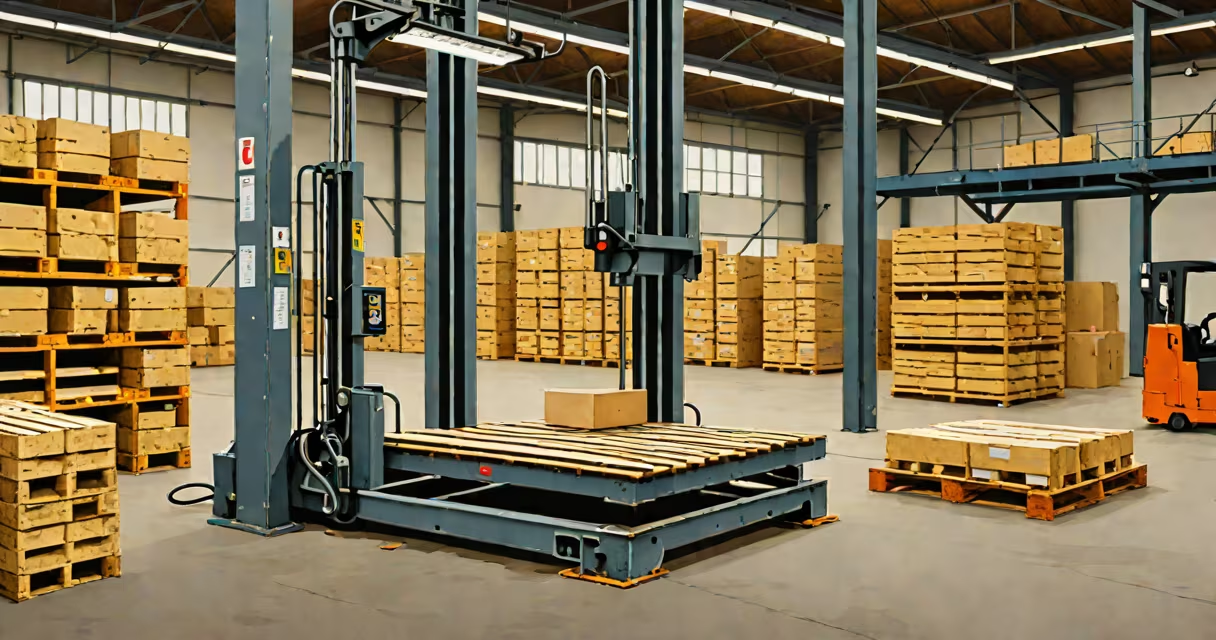
A large scale is a heavy-duty weighing device designed to measure significant masses, typically ranging from hundreds of kilograms to tens of tons. These systems are engineered for industrial environments where accuracy, durability, and high capacity are essential. Unlike small laboratory balances, large scales handle materials like raw ore, packaged goods, or bulk fuel.
Large scales operate using load cells-electromechanical sensors that convert mechanical force into electrical signals. When weight is applied, the load cell deforms slightly, altering its resistance. This change is measured and translated into a digital weight reading. Modern large scales integrate microprocessors and calibration algorithms to maintain precision under variable conditions such as temperature shifts or uneven loading.
These devices are critical in logistics, manufacturing, mining, agriculture, and waste management. For example, a truck entering a grain elevator must be weighed accurately to ensure compliance with shipping regulations and prevent overloading. A single error in measurement can lead to financial loss or safety risks. The U.S. National Institute of Standards and Technology (NIST) sets standards for accuracy and performance in commercial weighing equipment, ensuring consistency across industries.
At the core of every large scale is a load cell system. Most industrial platforms use four load cells mounted beneath the platform, each positioned at a corner. This configuration ensures balanced load distribution and compensates for off-center placement. When a load is applied, each load cell generates a voltage proportional to the force exerted. These signals are combined and processed by an analog-to-digital converter, which sends data to a display or control system.
Calibration is important. Scales must be recalibrated regularly-typically every 6 to 12 months-to account for wear, temperature drift, and mechanical stress. NIST Handbook 44 outlines the procedures for verifying scale accuracy in commercial use. Failure to comply can result in legal penalties during audits by agencies like the USDA or FDA.
For example, a 50-ton platform scale at a steel mill must maintain ±0.1% accuracy under constant vibration and extreme temperatures. Engineers install shock absorbers and thermal compensation circuits to stabilize readings. Without these features, even a 50 kg difference in a batch of molten metal could affect alloy composition and product quality.
Large scales come in several configurations based on application. The most common types include platform scales, hopper scales, belt scales, and railcar scales. Each serves a distinct purpose in material handling and process control.
| Type | Capacity Range | Typical Use Case | Key Feature |
|---|---|---|---|
| Platform Scale | 1,000 kg - 100,000 kg | Warehouse pallet weighing, truck loading | Flat, reinforced surface; often portable |
| Hopper Scale | 500 kg - 50,000 kg | Batch feeding in chemical plants | Integrated discharge gate; automated fill control |
| Belt Scale | 100 kg/h - 10,000 kg/h | Continuous material flow on conveyor belts | Measures weight per unit time; integrates with PLCs |
| Railcar Scale | 60,000 kg - 200,000 kg | Train car freight weighing | Track-mounted; designed for repeated high-volume use |
One non-obvious distinction: belt scales are not inherently accurate unless calibrated against a known reference. They rely on a secondary verification method-such as a gravimetric sampling system-to confirm throughput. Many facilities use both systems in tandem to reduce error margins below 0.5%.
Many assume that "large scale" simply means "big scale." But size alone doesn't define a large scale. A 10-ton platform scale used in a factory is a large scale. A 50-ton crane scale used in a shipyard is also a large scale. What matters is function: measuring mass beyond the capability of standard retail or kitchen scales.
Another confusion arises between large scales and industrial balances. While both measure mass, balances are designed for high resolution at lower capacities. A 100 kg analytical balance can measure to 0.001 g, but it cannot support a 20-ton container. Large scales prioritize durability and capacity over fine resolution.
A third misconception is that large scales don't require maintenance. In reality, daily checks for debris, corrosion, and sensor drift are mandatory. During a 2021 audit of a cement plant in Texas, a failure to clean load cell joints led to a 3.2% under-reading across five days. This caused over 12,000 pounds of excess material to be shipped, resulting in a $47,000 loss and regulatory fines.
In 2022, a food processing facility in Iowa installed a 25-ton platform scale to weigh incoming shipments of frozen chicken parts. The scale was integrated with a barcode scanner and inventory software. Each delivery arrived on a flatbed trailer, driven onto the scale's platform. The system automatically recorded weight, batch ID, and timestamp.
During the first week, the system flagged a discrepancy: a shipment listed as 12,500 kg actually registered 12,340 kg. An investigation revealed that the trailer's suspension had settled unevenly, causing one load cell to bear 15% more pressure than others. The facility adjusted the leveling jacks and recalibrated the scale. After correction, the reading matched the supplier's manifest within 0.1% tolerance.
This incident highlights a key principle: large scale accuracy depends not just on hardware, but on proper setup and environmental awareness. Even minor tilting or uneven loading can introduce measurable error. Operators must follow NIST guidelines for installation and alignment to avoid false readings.
When selecting a large scale, consider not just capacity but also environmental factors. A scale used outdoors must have IP68-rated enclosures to resist dust and water. A scale in a chemical plant may need explosion-proof components. Always verify compliance with local safety codes and industry-specific standards.
Understanding what is large scale involves recognizing its role in maintaining operational integrity across supply chains. From tracking raw material inputs to verifying finished product weights, these systems ensure accountability, efficiency, and compliance. Their design reflects decades of engineering refinement, grounded in metrology standards and real-world demands.