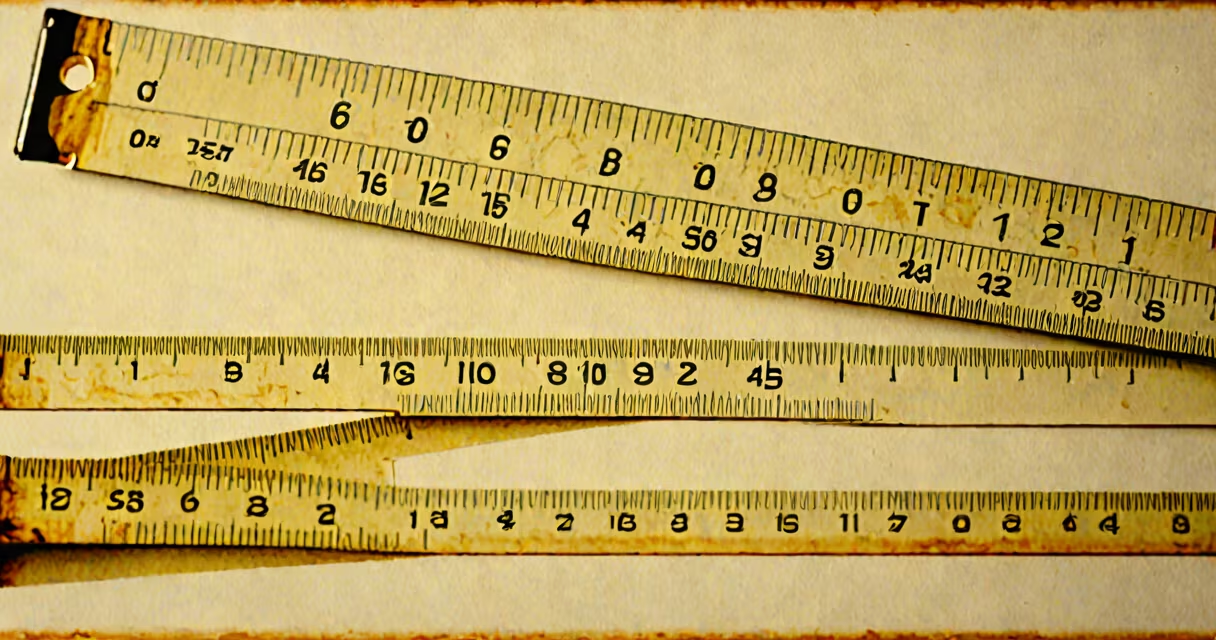
The standard measurement system refers to a globally accepted set of units used to quantify physical properties such as length, mass, volume, and time. These systems ensure consistent communication across science, engineering, commerce, and daily life. The most widely adopted version is the International System of Units (SI), which uses base units like meters, kilograms, and seconds.
Measurement systems exist because people need to agree on quantities. Without standardized units, trade, construction, medicine, and research would be inconsistent and error-prone. For example, a surgeon using milliliters to measure medication must rely on a known standard to avoid overdosing. Similarly, a factory producing car parts must use precise dimensions to ensure compatibility across regions.
The two dominant systems are the metric system (SI) and the imperial system. The metric system is used in nearly every country and is based on powers of ten. The imperial system, primarily used in the United States, relies on non-decimal units like feet, pounds, and gallons. While both systems serve functional purposes, the SI system dominates international contexts due to its simplicity and scalability.
At its core, the standard measurement system operates through defined base units and derived units. Base units are fundamental and cannot be broken down further. Derived units combine base units to express more complex measurements. For example, speed is measured in meters per second (m/s), combining the base units of length (meter) and time (second).
Each unit is tied to a physical constant or reproducible standard. Since 2019, the SI system redefined all seven base units using fixed values of fundamental constants. The kilogram, for instance, is now defined by Planck's constant, not a physical artifact stored in France. This change ensures stability and replicability anywhere in the world.
Consider a laboratory measuring the concentration of a chemical solution. A scientist might use moles per liter (mol/L), a derived unit. The mole is defined by Avogadro's number (6.02214076×10²³), a fixed value. This allows labs in Tokyo, Berlin, and Toronto to report identical results without ambiguity.
There are two primary systems in use today: the International System of Units (SI) and the Imperial system. The table below outlines their key differences.
| Property | SI (Metric) | Imperial |
|---|---|---|
| Length | meter (m) | foot (ft), yard (yd) |
| Mass | kilogram (kg) | pound (lb), ounce (oz) |
| Volume | liter (L) | gallon (gal), pint (pt) |
| Time | second (s) | second (s) |
While the SI system uses decimal prefixes (kilo-, centi-, milli-) to scale units, the imperial system lacks consistent scaling. Converting between units often requires memorization: 1 foot = 12 inches, 1 yard = 3 feet, 1 mile = 1,760 yards. This complexity contributes to errors in fields like healthcare and aviation.
A lesser-known but critical component is the concept of traceability. All standard measurements must be traceable to a national or international standard. In the U.S., the National Institute of Standards and Technology (NIST) maintains reference standards. In Europe, the European Metrology Network oversees calibration. These institutions ensure that a scale in New York measures the same as one in Vienna.
Standard measurement systems are essential in scientific research, manufacturing, transportation, and public health. In clinical trials, drug dosages must be reported in milligrams per kilogram of body weight. A 10 mg/kg dose for a 70 kg patient equals 700 mg. Using inconsistent units risks fatal overdoses.
In manufacturing, tolerances are measured in micrometers (µm). A microchip's circuitry may require precision within ±0.1 µm. If production lines in different countries use different standards, components fail to fit. The automotive industry relies on ISO 26262, a safety standard requiring metric-based design and testing.
Even everyday tasks depend on standard systems. Cooking recipes use cups and teaspoons in the U.S., but grams and milliliters elsewhere. A recipe calling for 250 mL of milk yields a different amount than 1 cup (236.6 mL). This discrepancy can alter outcomes in baking, where ratios matter.
Many assume the metric system is "better" simply because it's used in science. But the imperial system remains valid in specific domains. The U.S. aerospace industry still uses feet and pounds for aircraft specifications. NASA's Mars Climate Orbiter failed in 1999 not because of imperial units, but because one team used metric while another used imperial - a mismatch in software inputs caused the spacecraft to burn up during entry.
Another misconception is that the metric system is universally adopted. While 95% of countries use SI, the U.S., Liberia, and Myanmar retain partial use of imperial units. Even in those nations, science and trade follow metric standards. The U.S. government mandates metric use in federal contracts, though enforcement varies.
The term "standard measurement system" does not imply a single global system. Multiple systems coexist. What matters is consistency within a context. A construction project in Canada uses metric; a home renovation in Florida may use imperial. As long as units are stated, confusion is minimized.
Suppose you're buying carpet for a room that measures 12 feet by 15 feet. You want to know how many square meters of carpet to order. First, convert feet to meters: 1 foot = 0.3048 meters. So:
If you had used imperial units throughout, you'd calculate 12 × 15 = 180 square feet. But since carpet is sold by the square meter in most countries, conversion is necessary. This example shows why understanding both systems matters, especially in cross-border transactions.
I once helped a small business owner in Vermont order custom shelving from a supplier in Germany. The client provided dimensions in feet and inches. I converted them to centimeters using 1 inch = 2.54 cm. The final order matched the blueprint exactly. Without consistent units, the shelves would have been too short.
Do not confuse the standard measurement system with performance measurement systems. The latter evaluates outcomes in business, education, or operations. For example, a company might track employee productivity using KPIs like sales per hour or customer satisfaction scores. This is unrelated to physical units.
Performance measurement systems focus on goals and results. They use metrics like percentages, ratios, or scores. In contrast, standard measurement systems define physical quantities. One measures effort; the other measures matter. Understanding this difference prevents misapplication in planning and reporting.
The standard measurement system enables clarity across borders and disciplines. following a recipe, accurate units prevent failure. The choice of system matters less than consistency. Once a unit is chosen, stick to it - and always specify the system used.