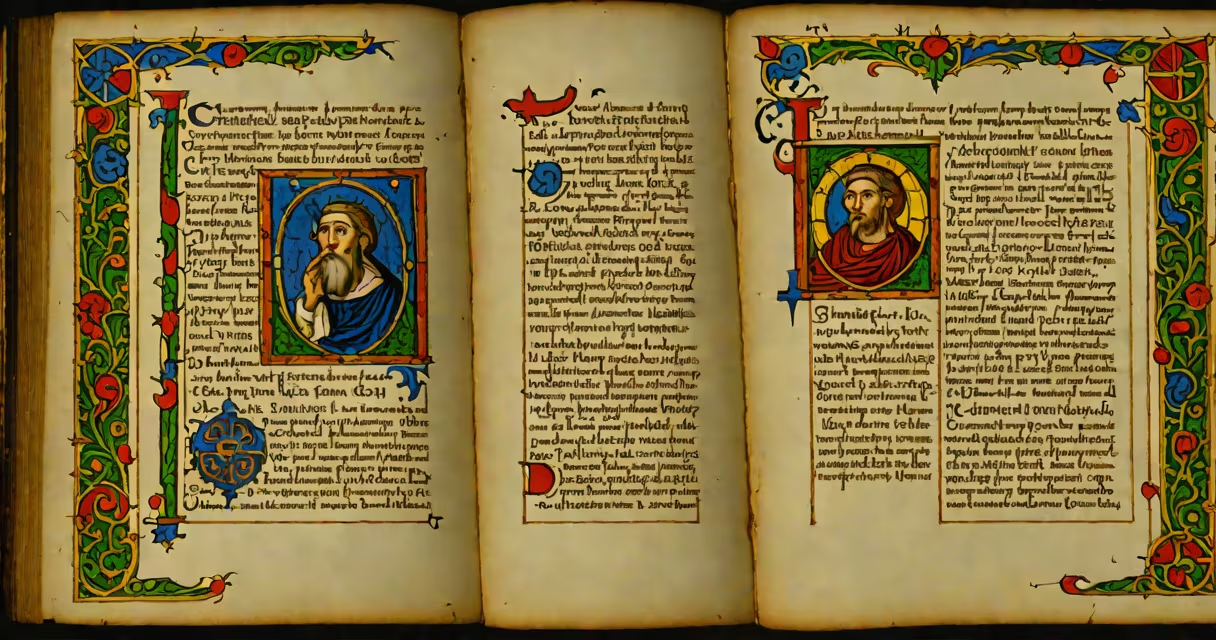
The word Christian refers to a person who follows the teachings of Jesus Christ, identifies with his life and message, and adheres to the beliefs and practices of Christianity as a faith tradition. This definition originates in the New Proof and has evolved through centuries of theological development, cultural adaptation, and denominational diversity.
Christianity began as a Jewish sect in the 1st century CE, centered on the belief that Jesus of Nazareth was the Messiah prophesied in Hebrew scripture. The term "Christian" first appears in Acts 11:26, where followers of Jesus were called Christians in Antioch. The name likely derived from the Greek word *Christos*, meaning "anointed one," reflecting Jesus's role as the promised deliverer.
Today, the definition encompasses people across thousands of denominations-from Roman Catholic and Eastern Orthodox to Protestant, Pentecostal, and independent churches. While core elements include belief in the divinity of Christ, salvation through grace, and resurrection, interpretations vary widely on sacraments, church authority, and moral doctrine.
Within Christian theology, being a Christian involves both personal faith and communal practice. It is not merely a label but a lived identity marked by baptism, participation in worship, adherence to ethical teachings such as the Sermon on the Mount, and engagement with sacred texts like the Bible.
According to the Pew Research Center, over 2.4 billion people identify as Christian globally, making it the largest religion in the world. This includes 1.3 billion Catholics, 500 million Protestants, and 200 million Orthodox believers. These groups differ in doctrine, liturgy, and leadership structures, yet all trace their foundation to the life and teachings of Jesus.
A key distinction lies in the difference between ethnic or cultural Christians and those whose identity is rooted in personal conversion. A person raised in a Christian family may identify culturally as Christian without active faith. Conversely, someone converted later in life may hold a deeply personal, major understanding of the term.
Core components of the Christian definition include:
These elements form a structure, but their application varies. For example, the Catholic Church emphasizes apostolic succession and sacramental rites, while many evangelical churches prioritize personal conversion experiences and Bible study.
Many misunderstand the term Christian as synonymous with "moral person" or "good person." But Christianity is not defined by behavior alone. A person may live ethically without believing in Christ's divinity or resurrection. The term requires doctrinal alignment, not just conduct.
Another misconception is equating Christianity with Western culture. While historically dominant in Europe and North America, Christianity originated in the Middle East and remains strongest in sub-Saharan Africa, Latin America, and parts of Asia. Over 60% of global Christians now live outside the West, according to the World Religion Database.
Some assume all Christians share the same beliefs. In reality, doctrinal differences exist on issues like the nature of the Trinity, the role of Mary, and whether salvation is guaranteed. The Nicene Creed (325 CE) established foundational beliefs, but regional and denominational variations persist.
| Type | Definition | Examples |
|---|---|---|
| Catholic | Follows the teachings of the Roman Catholic Church, recognizing the Pope as supreme authority. | Roman Catholic, Eastern Catholic Churches |
| Protestant | Descended from the Reformation; emphasizes sola scriptura (scripture alone) and justification by faith. | Lutheran, Baptist, Methodist, Presbyterian |
| Eastern Orthodox | Rooted in the early Church, maintains traditional liturgy and sacraments without papal supremacy. | Greek Orthodox, Russian Orthodox |
| Pentecostal | Emphasizes the Holy Spirit's active presence, including speaking in tongues and healing. | Assemblies of God, Church of God in Christ |
One non-obvious fact: the term "Christian" was originally used by outsiders, not believers. In Acts 11:26, it was applied by non-believers in Antioch to describe followers of Jesus. The early disciples did not adopt the label themselves until later. This reflects how identity can emerge externally before being embraced internally.
In 2018, a man in rural Kenya converted to Christianity after surviving a severe illness. He had previously practiced ancestral worship. After recovery, he attended a local church, was baptized, and began studying the Bible. His community saw him as a Christian based on public profession, ritual participation, and changed behavior.
This illustrates how the definition operates in practice: external markers (baptism, church attendance) align with internal transformation (faith, repentance). The term applies not just to belief but to visible commitment.