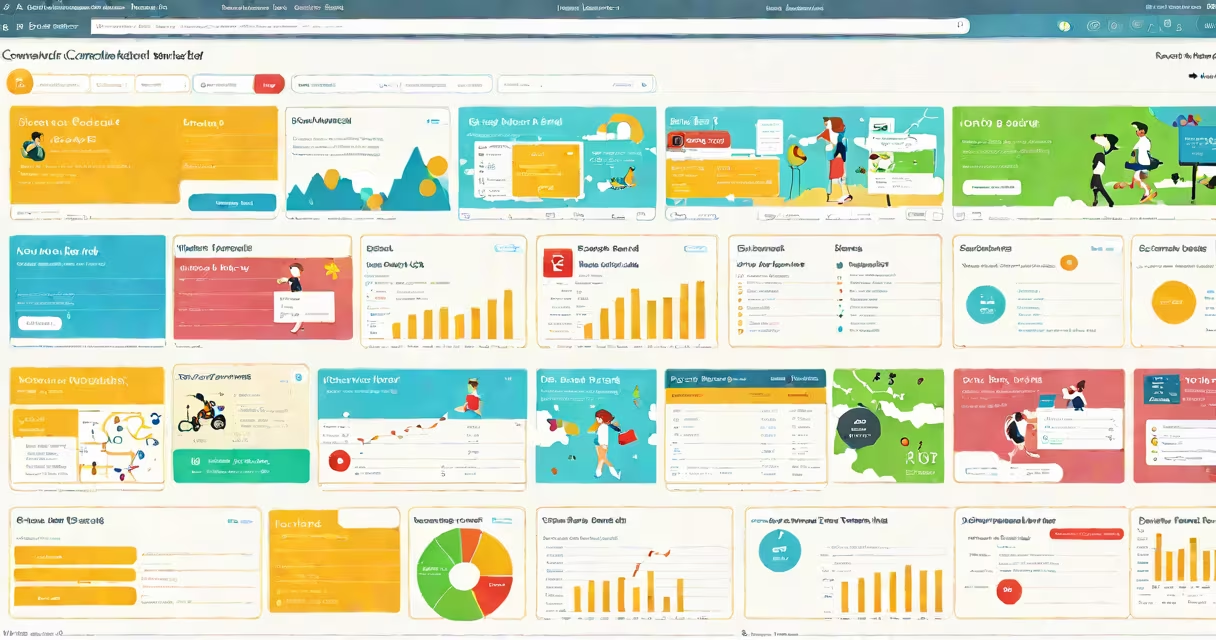
Canvas is a widely adopted learning management system used by over 16 million users across more than 1,000 higher education institutions and thousands of K-12 school districts in the United States and globally. It serves as the central hub for course materials, assignments, grades, and communication between students and educators.
Developed by Instructure, Canvas operates on a cloud-based architecture, allowing access from any device with internet connectivity. Its interface emphasizes simplicity and consistency, reducing cognitive load for both instructors and learners. The platform supports asynchronous and synchronous learning models, making it suitable for hybrid, remote, and in-person instruction.
Adoption began in U.S. higher education around 2011, driven by demand for flexible, scalable systems. By 2023, over 70% of public four-year universities in the U.S. had implemented Canvas as their primary LMS, according to a survey by the Educause Center for Applied Research. This includes institutions such as the University of California system, Georgia State University, and the University of Washington.
Canvas functions as a centralized digital classroom. Instructors upload syllabi, lecture videos, readings, and assignment instructions. Students view course content, submit work through integrated submission portals, and receive feedback via gradebook entries. Real-time notifications alert users to due dates, new announcements, and peer interactions.
The platform uses a modular design. Each course consists of "modules" that organize content into weekly or thematic units. For example, a college biology course may have modules titled "Cell Structure," "Mitosis," and "Genetic Variation." Within each module, instructors place resources like PDFs, YouTube links, and interactive quizzes. Students complete tasks in sequence, with Canvas tracking completion status automatically.
Administrators manage roles, permissions, and data exports through a centralized dashboard. They can generate reports on student engagement, such as login frequency, time spent on assignments, and quiz scores. These metrics support early intervention programs for at-risk students, a feature used by institutions like Arizona State University to improve retention rates.
Canvas adoption spans multiple educational levels. The following table outlines common institutional types and representative examples:
| Level | Examples | Key Features Used |
|---|---|---|
| Public Universities | University of Michigan, University of Texas at Austin | Course templates, analytics dashboards, integration with campus ID systems |
| Community Colleges | Los Angeles Pierce College, Central Piedmont Community College | Open educational resources (OER) hosting, mobile app access |
| K-12 School Districts | Denver Public Schools, San Diego Unified School District | Parent portal access, standards-aligned grading, lesson planning tools |
| Private Institutions | Stanford University, New York University | Advanced assessment tools, AI-driven feedback, secure exam proctoring |
Many K-12 districts use Canvas not just for core courses but also for special education planning and extracurricular coordination. For instance, the San Diego Unified School District uses Canvas to track Individualized Education Program (IEP) timelines and assign accommodations across classrooms.
One widespread misunderstanding is that Canvas is exclusively a tool for online-only education. This is incorrect. Many institutions use Canvas in blended or face-to-face formats. For example, at the University of Wisconsin-Madison, 85% of undergraduate courses still meet in person, yet all include Canvas components for syllabus distribution, discussion forums, and file sharing.
Another misconception is that Canvas replaces teaching. It does not. Instructors remain responsible for curriculum design, facilitation, and student evaluation. Canvas automates administrative tasks-like sending reminders, compiling grades, and archiving course records-but does not substitute pedagogical judgment.
A lesser-known fact: Canvas supports accessibility compliance under Section 508 and WCAG 2.1 standards. In 2022, the National Center for Accessible Media confirmed that Canvas met Level AA accessibility benchmarks across 92% of its features. This makes it suitable for students with visual, auditory, or motor impairments, a critical factor in federal funding eligibility for public institutions.
At Central Piedmont Community College in Charlotte, North Carolina, Canvas was rolled out across all credit-bearing courses in Fall 2021. Prior to adoption, faculty relied on multiple platforms-Blackboard, Google Drive, and email-which led to inconsistent workflows and student confusion.
After migration, the college reported a 37% drop in student inquiries related to missing assignments and unclear deadlines. Faculty noted that grading took 22% less time due to automated rubric alignment and bulk feedback options. One instructor, Dr. Lena Torres, shared that she reduced her weekly prep time by 4.5 hours by reusing course templates across semesters.
Student satisfaction surveys showed a 28-point increase in perceived clarity of course expectations. The college attributed this to Canvas's consistent layout and the ability to embed video walkthroughs for complex assignments.
Unlike legacy systems such as Moodle or Blackboard, Canvas prioritizes user experience through intuitive navigation and frequent updates based on educator feedback. Instructure releases new features quarterly, often testing them in pilot programs with partner institutions before full rollout.
For example, the "SpeedGrader" tool allows instructors to review submissions side-by-side with annotations, audio feedback, and instant rubric application. A 2023 study by the Journal of Educational Technology Systems found that instructors using SpeedGrader reported 40% faster turnaround times on written assignments compared to traditional methods.
Another differentiator is API-first design. Canvas enables smooth integration with external tools like Zoom, Turnitin, and Google Workspace. A district in rural Oregon connected Canvas to its local library's digital database, allowing students to search and cite scholarly articles directly within course assignments.
When comparing Canvas to other platforms, consider that while some schools use multiple LMS tools, Canvas dominates in scale and interoperability. According to the 2023 EDUCAUSE Annual IT Survey, 64% of institutions with more than 10,000 students chose Canvas over alternatives due to its reliability and support system.
Understanding what schools use Canvas reveals a trend toward unified, accessible, and data-informed education delivery. From large state universities to small rural school districts, Canvas provides a stable foundation for teaching and learning in the digital age.