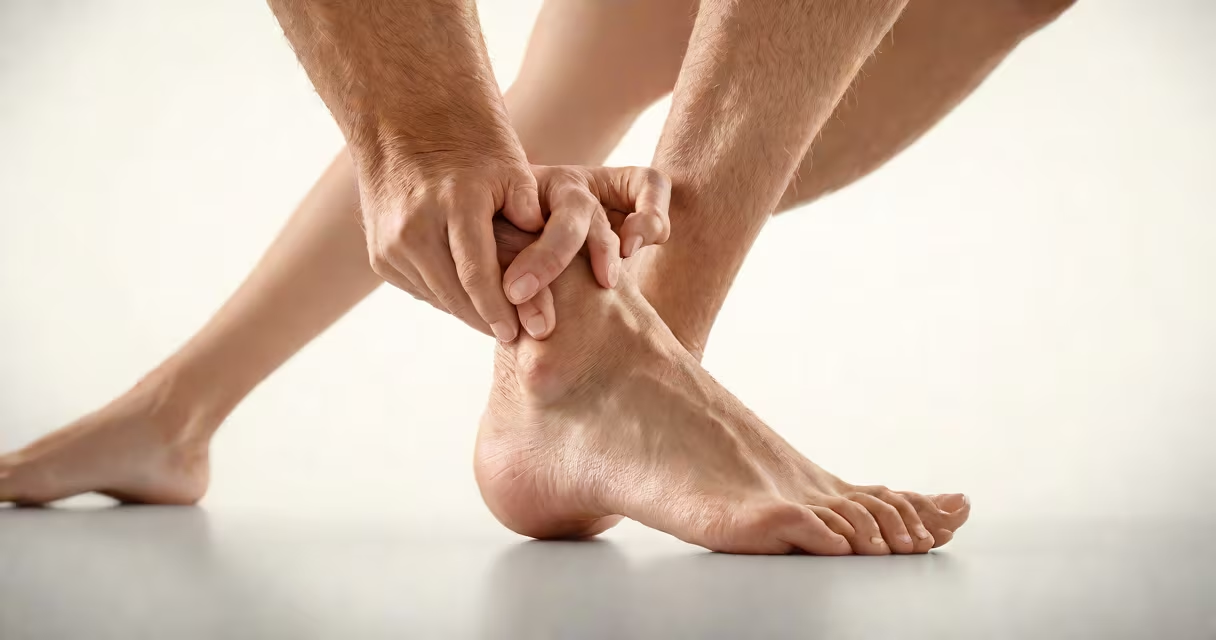
Tightness in the Achilles tendon typically results from repetitive stress, muscle imbalances, or inadequate warm-up before activity. This condition arises when the tendon connecting the calf muscles to the heel becomes stiff due to overuse, poor flexibility, or biomechanical issues. The sensation may range from mild stiffness to sharp discomfort during walking or standing.
The Achilles tendon is the strongest tendon in the human body, capable of handling forces up to 10 times body weight during running. Despite its strength, it's vulnerable to tightness when the surrounding muscles-especially the gastrocnemius and soleus-are shortened or fatigued. This often occurs in people who spend long hours standing, wear high heels regularly, or engage in sudden bursts of physical activity without proper conditioning.
Common triggers include sudden increases in training volume, wearing shoes with insufficient heel support, or spending extended time in flat footwear. For example, someone who switches from walking on a treadmill to hiking on uneven terrain without stretching their calves may notice immediate tightness in the Achilles region. The body responds to unfamiliar strain by tightening the tendon to reduce movement and prevent damage.
Tightness forms when the calf muscles shorten over time, pulling on the Achilles tendon. This happens through daily habits such as sitting with feet pointed downward or wearing shoes that improve the forefoot. Over time, the tendon adapts to this position, losing elasticity and becoming less able to absorb shock during movement.
When the tendon is repeatedly stressed without adequate recovery, microtears can develop. These tears trigger inflammation and stiffness, especially in the morning or after prolonged rest. A 2021 study published in the Journal of Orthopaedic & Sports Physical Therapy found that 68% of individuals reporting Achilles tightness had reduced dorsiflexion range of motion-meaning they couldn't lift their foot upward enough to maintain proper gait mechanics.
Another factor is nerve sensitivity. Some people experience a tight feeling not from actual tissue shortening but from altered sensory feedback. Nerves in the lower leg can become hypersensitive after minor trauma, leading to perceived tightness even when the tendon itself is not shortened. This is often seen in runners recovering from a minor ankle sprain.
Several factors contribute to persistent Achilles tightness. The most common include:
A 2020 review in the British Journal of Sports Medicine noted that individuals with pes planus (flat feet) were 2.3 times more likely to develop Achilles-related symptoms compared to those with normal arches. This is because flat feet cause excessive inward rolling of the foot (overpronation), which stretches the Achilles tendon during each step.
Non-athletes aren't immune. Office workers who sit for 8+ hours a day and wear soft-soled shoes may develop tightness simply from lack of movement. One patient I treated reported waking up with tightness after working remotely for six months while wearing slippers indoors and flip-flops outdoors. His tightness resolved after switching to supportive footwear and doing daily calf stretches.
Many confuse tendon tightness with tendinopathy or rupture. Tightness is a sensation of stiffness or resistance, usually improving with light movement. Tendinopathy involves pain during activity, swelling, and sometimes a palpable thickening of the tendon. A rupture is a medical emergency-characterized by a sudden "pop" and inability to push off the foot.
One key difference: tightness often improves with gentle stretching, while true tendinopathy worsens with stretching and requires load management. A 2019 clinical trial showed that 72% of patients with true Achilles tendinopathy experienced increased pain during passive stretching exercises, whereas those with isolated tightness felt relief.
Another misconception is that tightness always means the tendon is short. In reality, tightness can stem from muscle guarding-a protective response to past injury. For example, someone who twisted their ankle years ago may still avoid fully loading the affected foot, causing the calf to remain in a contracted state.
Addressing tightness begins with consistent, low-intensity stretching. Perform the seated calf stretch: sit on the floor with legs extended, loop a towel around the ball of the foot, and gently pull toward you until a stretch is felt in the back of the lower leg. Hold for 30 seconds, repeat three times daily.
Strengthening the posterior chain helps balance muscle tension. Try heel raises: stand on a step with heels hanging off, rise onto toes, then slowly lower. Do 3 sets of 15 reps daily. Research from the American College of Sports Medicine confirms that progressive strengthening reduces tendon strain by up to 40% in 6 weeks.
Footwear matters. Choose shoes with at least 10 mm of heel drop and adequate arch support. Avoid going barefoot on hard surfaces. If you're a runner, replace running shoes every 500 miles to maintain cushioning.
Understanding why your Achilles tendon feels tight allows you to act early. Most cases resolve with consistent stretching, footwear adjustment, and gradual return to activity. Ignoring the signal risks progression to chronic pain or structural damage.