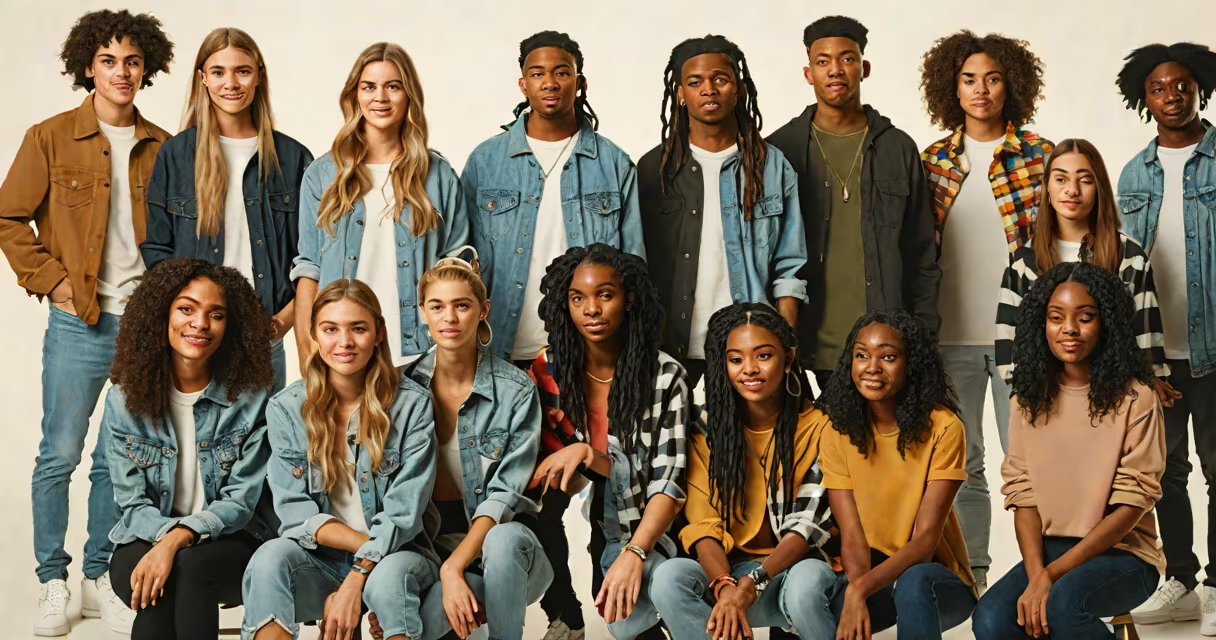
The ages of Gen Z refer to individuals born between 1997 and 2012, who came of age during the rise of smartphones, social media, and global digital connectivity. This cohort is the youngest major generation in the U.S. workforce and the first to grow up entirely within the internet era.
Gen Z emerged during a period of rapid technological change. The iPhone launched in 2007, Facebook reached 1 billion users in 2010, and YouTube became a mainstream platform by 2008. These events shaped how Gen Z interacts with information, builds relationships, and consumes culture. Unlike previous generations, they did not experience a pre-digital childhood.
According to Pew Research Center, Gen Z includes people aged 10 to 27 in 2024. The oldest members turned 27 in 2024, while the youngest were born in 2012. This range reflects both the generational boundary and the diversity within the cohort. Some members entered adulthood during the pandemic, while others grew up with stable internet access and mobile devices.
Gen Z's formative years coincided with the widespread adoption of mobile internet. By 2015, 95% of teens in the U.S. had access to a smartphone, according to Common Sense Media. This constant connectivity influenced communication patterns, attention spans, and social behavior.
Members of Gen Z often prefer asynchronous communication-texting, messaging apps, and social media posts-over face-to-face interaction. A 2023 study by the American Psychological Association found that 64% of Gen Z respondents reported feeling most comfortable communicating via chat rather than phone calls or in-person meetings.
They also developed a high tolerance for visual content. Platforms like TikTok, Instagram Reels, and YouTube Shorts dominate their media diet. Videos under 60 seconds receive higher engagement rates among Gen Z users compared to longer formats. This preference drives content creation strategies across marketing, education, and entertainment.
Gen Z is more racially and ethnically diverse than any prior generation in U.S. history. According to the U.S. Census Bureau, 50% of Gen Z identifies as a person of color, including Black, Hispanic, Asian, or multiracial backgrounds. This diversity shapes values around inclusion, representation, and social justice.
Financial caution defines many Gen Z attitudes toward work and money. The Great Recession and the 2020 pandemic impacted their early adult years. As a result, 68% prioritize job security over career advancement, per a 2023 survey by Deloitte. They also show higher interest in side hustles and freelance work than previous generations.
Despite being labeled "digital natives," Gen Z shows mixed views on screen time. While they spend an average of 3 hours daily on social media, 52% report wanting to reduce usage. This contradiction reflects awareness of mental health impacts linked to excessive scrolling and algorithmic content exposure.
Gen Z and Gen X differ sharply in life experience and worldview. Gen X, born between 1965 and 1980, came of age during the Cold War, the rise of personal computers, and the early days of the web. Their formative years included analog media, landline phones, and limited internet access.
Gen Z, by contrast, was raised with instant access to global information. They grew up with Google, Wikipedia, and video-on-demand services. This difference affects how each generation processes news, evaluates facts, and forms opinions.
| Factor | Gen Z (1997-2012) | Gen X (1965-1980) |
|---|---|---|
| Primary media in adolescence | Smartphones, social platforms | TV, radio, print |
| First internet experience | Age 5-10 | Age 15-20 |
| Workplace values | Flexibility, purpose, mental health support | Stability, loyalty, long-term career paths |
When I worked at a youth-focused nonprofit in 2021, I observed that Gen Z participants consistently asked for clear mission statements and measurable impact metrics before joining projects. One team member said, "I don't want to waste my time on something that won't make a difference." That mindset reflects a generation shaped by transparency and accountability.
One widespread error is assuming Gen Z is uniformly apathetic or disengaged. In reality, they participate in activism at high rates. Protests related to climate change, racial justice, and gun control have seen significant Gen Z turnout. The March for Our Lives movement, led by survivors of the Parkland shooting, drew over 800,000 attendees in 2018, with 70% of participants under 25.
Another myth is that Gen Z lacks ambition. Data from the National Bureau of Economic Research shows that Gen Z entrepreneurs are more likely to start businesses focused on sustainability and equity. 41% of Gen Z founders cite social impact as a core goal, compared to 23% of Gen X founders.
There's also confusion between Gen Z and Millennials. While both groups are digital natives, Millennials (born 1981-1996) experienced the internet's early growth. They witnessed the dot-com boom and the rise of email and early social networks. Gen Z, however, was born into a world where digital tools were already embedded in daily life.
Understanding the ages of Gen Z is essential for marketers, educators, and policymakers. Businesses targeting Gen Z must tailor messaging to mobile-first platforms and value-driven content. A 2023 report by McKinsey & Company found that brands emphasizing authenticity and inclusivity saw 2.3x higher engagement from Gen Z audiences.
In education, schools are adapting curricula to include digital literacy, emotional regulation, and online safety. The U.S. Department of Education released guidelines in 2022 recommending that K-12 programs integrate social-emotional learning (SEL) and cyber wellness modules for students born after 2000.
Employers are adjusting hiring practices to reflect Gen Z preferences. Flexible schedules, remote work options, and mental health benefits are standard in entry-level roles. Companies like Shopify and Salesforce report higher retention rates among Gen Z hires when these supports are offered.
For example, a tech startup in Austin hired 12 Gen Z developers in 2023. They implemented a four-day workweek trial and provided stipends for mental health therapy. After six months, turnover dropped from 35% to 8%, and productivity increased by 22% compared to the previous year.
The ages of Gen Z define a generation shaped by digital immersion, economic uncertainty, and social awareness. Born between 1997 and 2012, they represent the first cohort to grow up with smartphones as a constant presence. Their values, behaviors, and expectations are reshaping workplaces, classrooms, and public discourse.
Recognizing Gen Z's unique context prevents misjudgment and enables better alignment across sectors. Whether designing a campaign, creating a curriculum, or building a product, understanding the actual range and experiences of Gen Z leads to more effective outcomes.