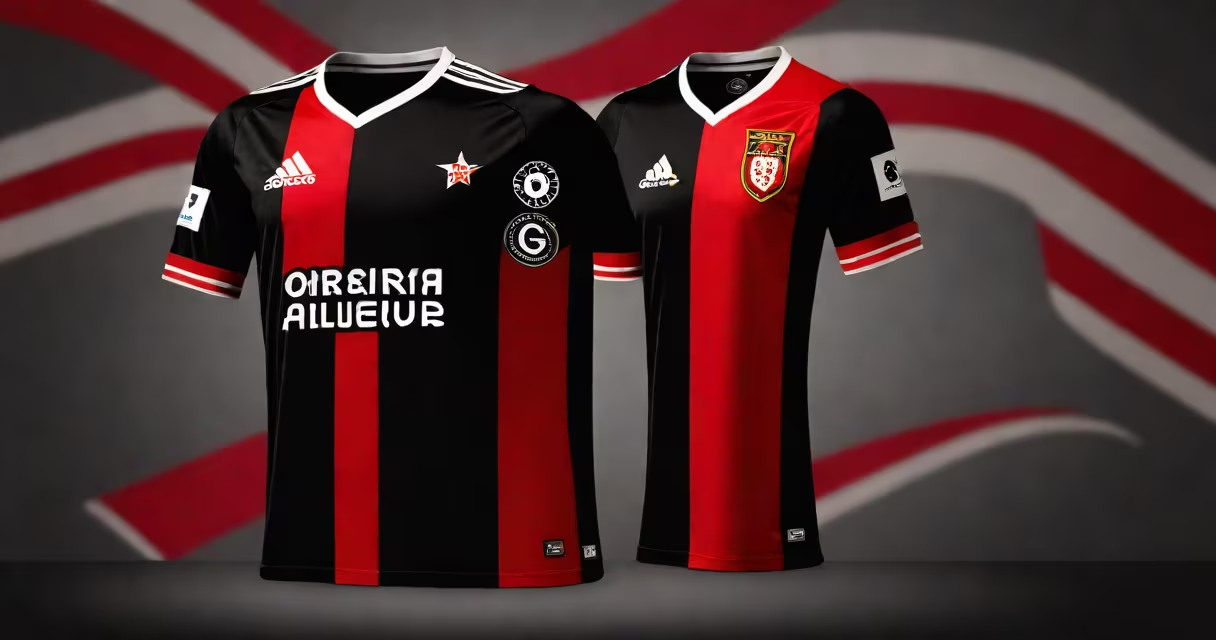
Internacional de Porto Alegre, commonly known as Internacional or Inter, is a Brazilian professional football club based in Porto Alegre, Rio Grande do Sul, competing in the Campeonato Brasileiro Série A. Founded in 1909, the club plays its home matches at Estádio Beira-Rio, a stadium with a capacity of 50,600 spectators.
The club's identity is rooted in regional pride and historical continuity. It was established by a group of German immigrants and local residents who sought to create a sports institution reflecting both European heritage and southern Brazilian culture. The team's nickname, "Colorado," derives from its primary color-red-though the club's official colors are red and black. This duality reflects its dual cultural origins: the red symbolizes passion and strength, while black represents discipline and resilience.
Internacional de Porto Alegre competes annually in the top tier of Brazilian football, the Campeonato Brasileiro Série A. The club has won the national championship five times-1975, 1976, 1979, 2006, and 2010-making it one of the most successful clubs in Brazil's history. It also holds the record for most appearances in the Copa Libertadores finals, reaching the final nine times between 1989 and 2010, winning the tournament in 2010.
Internacional operates under a formalized structure governed by a board of directors and a professional management team. The club's youth academy, known as the Centro de Treinamento Luiz Carlos da Silva, produces players who often debut in the senior squad. Notable graduates include Ronaldinho, who played for the club from 1998 to 2001 before moving to Paris Saint-Germain.
Internacional's senior squad is managed by a head coach supported by technical staff, including fitness trainers, analysts, and medical personnel. The club uses performance tracking systems such as Catapult Sports wearable devices to monitor player workload and reduce injury risk. Data from the 2022 season showed that players averaged 11.3 kilometers per game, with high-intensity running exceeding 15% of total distance covered.
Financially, the club operates under transparency standards set by the Brazilian Football Confederation (CBF). In 2021, Internacional reported revenues of R$320 million (approximately $60 million USD), with 42% coming from commercial partnerships and 38% from broadcast rights. The club's revenue model emphasizes long-term sustainability over short-term gains, a strategy aligned with CBF regulations on financial fair play.
Internacional de Porto Alegre participates in several domestic and international tournaments. The primary competitions include:
A notable achievement occurred in 2010, when Internacional won the Copa Libertadores and then went on to win the FIFA Club World Cup, defeating TP Mazembe of the Democratic Republic of the Congo in the final. This victory marked the first time a Brazilian club had won the Club World Cup since 2006.
Internacional's success in continental competitions is attributed to a disciplined defensive system and high pressing intensity. According to Opta Sports data from the 2010 Libertadores campaign, the team recorded 142 tackles per 90 minutes-among the highest in the tournament-and conceded only 13 goals across 13 matches.
Internacional de Porto Alegre is frequently confused with Grêmio, another major club from Porto Alegre. While both teams share a city and compete in the Gaúcho Championship, they are distinct entities with different histories, fanbases, and rivalries. The derby between Internacional and Grêmio, known as the "Grenal," is one of the fiercest in Brazilian football. Matches between the two have drawn crowds exceeding 50,000 at Estádio Beira-Rio and are broadcast nationally.
Another misconception is that Internacional is primarily a youth-focused club. While its academy is highly regarded, the club maintains a competitive senior squad with players from diverse backgrounds. For example, in the 2023 season, the squad included Brazilian-born players such as Thiago Galhardo and foreign nationals like Lucas Lima (from Argentina) and Matheus Fernandes (from Portugal).
A lesser-known fact is that Internacional was the first Brazilian club to wear a sponsor logo on its jersey. In 1983, the club partnered with the telecommunications company Telefônica, placing the logo on the left chest of the shirt-a move that preceded similar implementations by other clubs by nearly a decade.
During the 2010 Copa Libertadores, Internacional advanced through the group stage undefeated, finishing first in Group D. They defeated Deportivo Cali (Colombia), Club Atlético Lanús (Argentina), and Universidad de Chile in the group phase.
In the quarterfinals, Internacional faced Bolivian side Club Bolívar. The first leg ended in a 1-1 draw at home, with a goal from Éderson. The return leg in La Paz saw Internacional lose 2-1 due to a controversial penalty decision. However, they advanced on away goals, a rule applied at the time.
The semifinals featured a dramatic tie against São Paulo FC. After a 0-0 draw in São Paulo, Internacional won 2-1 at Beira-Rio, with goals from Adriano and Rodrigo. The final was contested against Olimpia of Paraguay. Internacional won 3-2 on aggregate, with a decisive 2-1 victory in the second leg at Estadio Defensores del Chaco in Asunción.
This run solidified Internacional's reputation as a club capable of sustained excellence in high-pressure environments. The 2010 campaign remains a benchmark for South American club football.
For fans interested in the broader context of Brazilian football, a short overview of the Brazilian football system provides insight into how clubs like Internacional fit within the national structure.