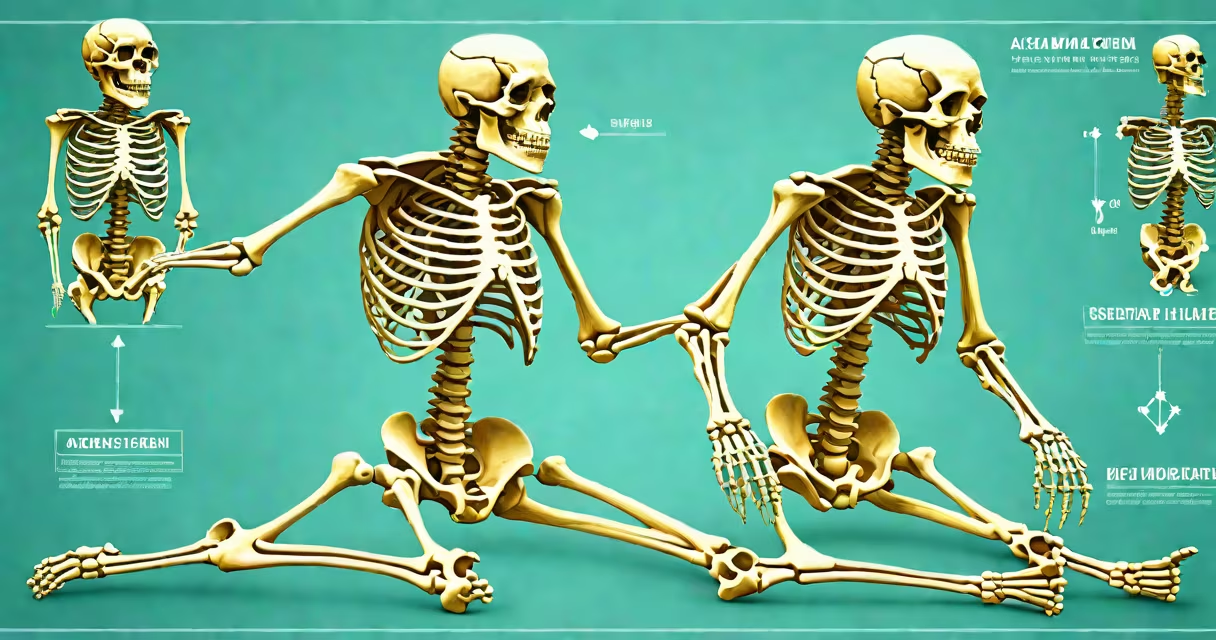
Anatomy games skeletal system are interactive digital activities that teach human bone structure, joint types, and skeletal functions using visual puzzles, drag-and-drop labeling, and timed quizzes. These tools simulate real anatomical relationships and reinforce memory through repetition and feedback.
These games operate on core principles of cognitive load theory and spaced repetition. They present learners with a skeletal diagram or 3D model and prompt identification of specific bones-like the femur, scapula, or mandible-through matching, naming, or spatial arrangement tasks. Immediate feedback corrects errors and strengthens neural pathways associated with recognition and recall.
Each game tracks progress via scores, completion times, and error frequency. Some include leaderboards or achievement badges to increase motivation. Games may run on web browsers, mobile apps, or classroom software platforms, often integrating with learning management systems like Google Classroom or Canvas.
Users interact with a digital representation of the human skeleton. Tasks typically involve selecting a bone from a list and placing it in the correct location on a blank skeleton outline. Others require rotating a 3D model to view joints from multiple angles or identifying which bone belongs in a specific region-such as the axial versus appendicular skeleton.
For example, a common task asks players to match 12 cranial bones to their positions on a skull model. Correct placements trigger animations showing blood vessels or nerve pathways. Incorrect choices show the error and offer hints-like "This bone forms the forehead" or "It's part of the vertebral column."
Advanced versions include biomechanical simulations. A player might adjust limb angles to see how muscle contractions affect movement, or test how fractures alter weight distribution. These features mirror clinical scenarios seen in orthopedic training.
Different game formats emphasize distinct learning outcomes. The table below outlines common types and their intended skills:
| Type | Focus Area | Example Task | Learning Outcome |
|---|---|---|---|
| Drag-and-Drop Labeling | Bone recognition | Place "tibia" on the lower leg bone in a silhouette | Visual memory of bone locations |
| Multiple Choice Quizzes | Functional knowledge | "Which bone protects the brain?" (Answer: frontal bone) | Association between structure and purpose |
| 3D Rotation Challenges | Spatial reasoning | Rotate a pelvis to identify the acetabulum | Understanding anatomical planes and orientation |
| Fracture Simulation | Clinical application | Select the correct bone to stabilize after a fall | Problem-solving under pressure |
Some games blend formats. A single module might begin with a quiz on bone classification, then shift to a 3D puzzle where users reconstruct a spine from vertebrae pieces, and end with a scenario-based challenge: "A patient reports pain in the left hip. Which bone is most likely affected?"
Teachers use anatomy games skeletal system in middle school science, high school biology, and college-level anatomy courses. According to the National Science Teaching Association (NSTA), students who engage with interactive content score 27% higher on post-unit assessments than those using static diagrams alone.
Medical schools and nursing programs integrate these tools into pre-clinical training. For example, the University of Michigan's medical curriculum includes a custom-built game called "Bone Builder," which simulates fracture repair procedures. Students practice identifying displaced fragments and selecting appropriate fixation methods before moving to cadaver labs.
One educator reported that after introducing a weekly 15-minute session with a skeletal labeling game, student performance on lab practicals improved by 31% over six weeks. The game reduced reliance on rote memorization and increased confidence during dissection exercises.
Many assume anatomy games skeletal system are only for younger learners. This is incorrect. Advanced versions include detailed histology layers, such as trabecular patterns in spongy bone or periosteal vascular networks. These features support graduate-level study in osteology and biomechanics.
Another misconception is that games replace hands-on learning. They do not. Instead, they prepare students for physical labs. A 2022 study published in *Anatomical Sciences Education* found that students who played skeletal games before cadaver sessions spent 40% less time locating structures and made 55% fewer errors during dissection.
Also, not all games are equal. Some use inaccurate proportions-like making the humerus twice its actual size-or mislabel bones. Always verify that a game uses anatomically accurate models from trusted sources such as Visible Body, Complete Anatomy, or the National Library of Medicine's Visible Human Project.
In a 10th-grade biology class in Portland, Oregon, a teacher introduced a 30-minute daily session using an online anatomy game focused on the axial skeleton. The game required students to label 26 bones across the skull, spine, and ribcage within 3 minutes.
After four weeks, the class took a standardized assessment. Average scores rose from 68% to 89%. Students cited the game's immediate feedback and visual cues-like color-coded regions for cranial bones-as key to their success. One student noted, "I kept getting the ethmoid wrong until the game showed me its position relative to the nasal cavity."
Another teacher used the same game format but added peer review: students submitted their highest scores and explained one mistake. This promoted metacognition and collaborative learning.