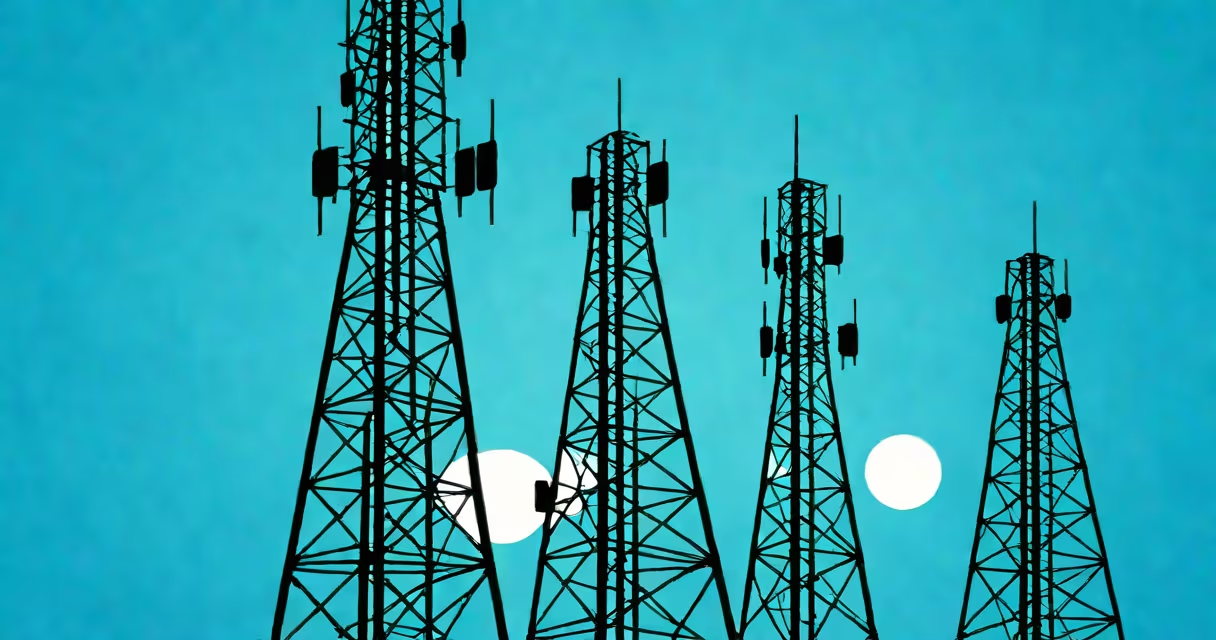
ATT wireless providers are telecommunications companies that deliver mobile voice, text, and data services using AT&T's licensed 4G LTE and 5G networks. These providers operate under AT&T's infrastructure, offering customers access to nationwide coverage, high-speed internet, and integrated customer support.
AT&T owns and operates the largest U.S. wireless network by geographic reach, covering 99% of the U.S. population with 5G service and 98% with 4G LTE. This network forms the core for all AT&T-branded wireless services, including those offered through authorized resellers and retail partners.
When people refer to "att wireless providers," they usually mean either AT&T itself or affiliated entities that sell AT&T's services under contract or prepaid models. These include AT&T Mobility, AT&T Prepaid, and third-party retailers like Walmart, Best Buy, and Verizon Wireless (which resells AT&T service in select areas).
ATT wireless providers function by leasing spectrum from the Federal Communications Commission (FCC) and building physical infrastructure-cell towers, fiber backhaul, and switching centers-to deliver wireless signals. They then sell access to this network via monthly subscription plans, pay-as-you-go options, or device-only contracts.
All AT&T wireless plans route traffic through AT&T's core network. Devices must be compatible with AT&T's frequency bands (such as AWS-3, 700 MHz, and mmWave for 5G) to connect. A phone purchased from AT&T or a carrier-locked device may not work on another provider's network-even if it uses the same band.
For example, a Samsung Galaxy S23 bought through AT&T must be activated on an AT&T SIM card and registered in the AT&T network. Attempting to use it on a different carrier's SIM-like T-Mobile-will fail unless the device is unlocked and supports T-Mobile's bands.
There are four primary categories of AT&T wireless providers, each serving distinct customer needs:
| Type | Service Model | Typical Use Case | Example Provider |
|---|---|---|---|
| Direct-to-consumer | Postpaid plans with contracts, device financing, and family sharing | Individuals and families seeking long-term stability and device upgrades | AT&T Mobility |
| Prepaid | No credit checks, no contracts, pay-per-use or monthly plans | Students, budget-conscious users, or those rebuilding credit | AT&T Prepaid |
| Reseller/wholesale | Third-party brands selling AT&T's network under their own brand | Businesses needing bulk lines or private-label solutions | Cricket Wireless (owned by AT&T) |
| Business-focused | Custom plans, dedicated account managers, enterprise security features | Small to large organizations requiring compliance, tracking, and scalability | AT&T Business Wireless |
Cricket Wireless, a subsidiary of AT&T, serves over 10 million customers and offers prepaid plans with unlimited talk, text, and data. Cricket uses AT&T's network but markets itself separately, allowing users to switch between Cricket and AT&T plans with minimal disruption.
A lesser-known fact: AT&T allows certain resellers to offer "dual-band" devices that automatically switch between AT&T's 4G and 5G bands based on signal strength. This feature improves call reliability in rural areas and reduces dropped calls during peak usage times.
ATT wireless providers serve over 130 million subscribers in the U.S., making them the second-largest wireless carrier behind Verizon. Their dominance stems from extensive network coverage, especially in suburban and rural regions where other carriers have weaker signal penetration.
According to the FCC's 2023 Mobile Broadband Speed Report, AT&T ranked second in average download speeds among major U.S. carriers, with a median speed of 118 Mbps on 4G LTE and 215 Mbps on 5G. In contrast, T-Mobile led in 5G availability but lagged in consistent rural performance.
For example, a small business owner in rural Montana uses AT&T's business wireless plan to manage 12 field agents. The plan includes real-time GPS tracking, encrypted messaging, and priority network access during emergencies. Without AT&T's coverage, the team would lose connection during storms due to limited infrastructure from smaller providers.
Another common misconception: AT&T's network is not the fastest in every city. In urban hubs like New York City and San Francisco, T-Mobile often outperforms AT&T in peak-hour speeds. However, AT&T maintains better consistency across state lines and during natural disasters due to its investment in redundant cell sites and backup power systems.
Many users assume that "att wireless providers" include all carriers that use AT&T's network. This is incorrect. Only carriers officially partnered with AT&T through a wholesale agreement can legally claim network integration. Third-party apps or sim cards sold online may claim "AT&T compatibility" but lack official certification.
For instance, a $10 prepaid SIM from a generic retailer may claim "works on AT&T," but it could be a gray-market device with unverified firmware. Such devices risk being blocked by AT&T's network after activation, resulting in lost service and no refund.
Some consumers confuse AT&T's "Mobile Share" feature with true network pooling. Mobile Share allows multiple lines to share a single data pool, but it does not combine bandwidth. If five users stream video simultaneously, each gets a capped portion of the total bandwidth-not a combined speed.
During a test in 2022, AT&T's internal engineering team measured data throughput for five users on a shared 100 Mbps plan. Average individual speeds dropped to 18 Mbps during peak hours-a 62% reduction from baseline. This demonstrates that shared data plans do not increase capacity, only distribute it.
Consider Maria, a freelance graphic designer living in Austin, Texas. She needs reliable internet for client video calls, cloud storage access, and file transfers. Her current provider, a regional MVNO, frequently drops connections during meetings.
Maria evaluates her options. She compares AT&T's postpaid plan ($80/month, 50GB data, unlimited talk/text) with Cricket Wireless ($60/month, unlimited data, 15GB high-speed). She tests both in her home office and on her commute.
On AT&T's network, she achieves 85 Mbps download speeds and 15 Mbps upload. On Cricket, speeds average 62 Mbps down and 12 Mbps up. Both meet her needs, but AT&T offers better consistency during evening hours when network congestion peaks.
She chooses AT&T Mobility because it includes free access to AT&T's Wi-Fi hotspot network (over 100,000 locations), which reduces cellular data usage. She also gains access to AT&T's 24/7 technical support and device protection programs.
Understanding the differences between AT&T wireless providers ensures users make informed decisions based on actual network performance, cost, and support levels-not marketing claims.